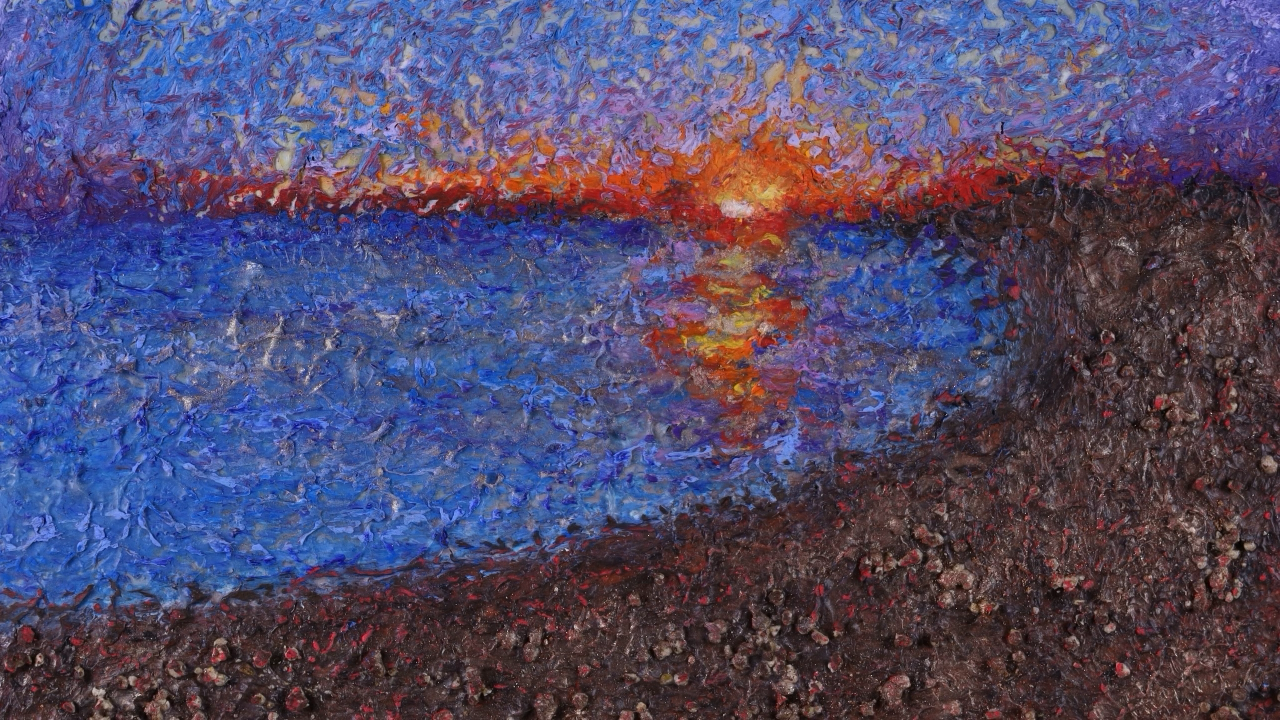
Animating Oil Pastel under the camera
Pastel is a medium made of finely ground pigment, a dry filler, and a binder, mixed with water to form a paste (or pastello) and rolled into cylindrical sticks. Its popularity in fine arts grew because of its immediacy and vibrant rendering qualities, attributed to its composition of almost pure color. In animation, the textures of pastels are further pronounced through their movement. Workshop research assistants Celine Chein and Agrani Rasgotra conducted experiments practicing a technique modeled by artist-scholar Alisi Telengut. This post focuses on the work created by Chien, with Rasgotra’s work featured in a complementary post.
Alisi Telengut’s practice is rooted in an interest in “new animism” and Indigenous cosmology. Her animation process seeks to disrupt anthropocentric views and depict a symbiosis of human and other-than-human entities. Working primarily with oil pastels under-the-camera, she has developed a unique method to physically embody a rich topography of painted and sourced elements that bring to life animate landscapes. More on Telengut’s animation method and research on new animism can be read elsewhere on this site.
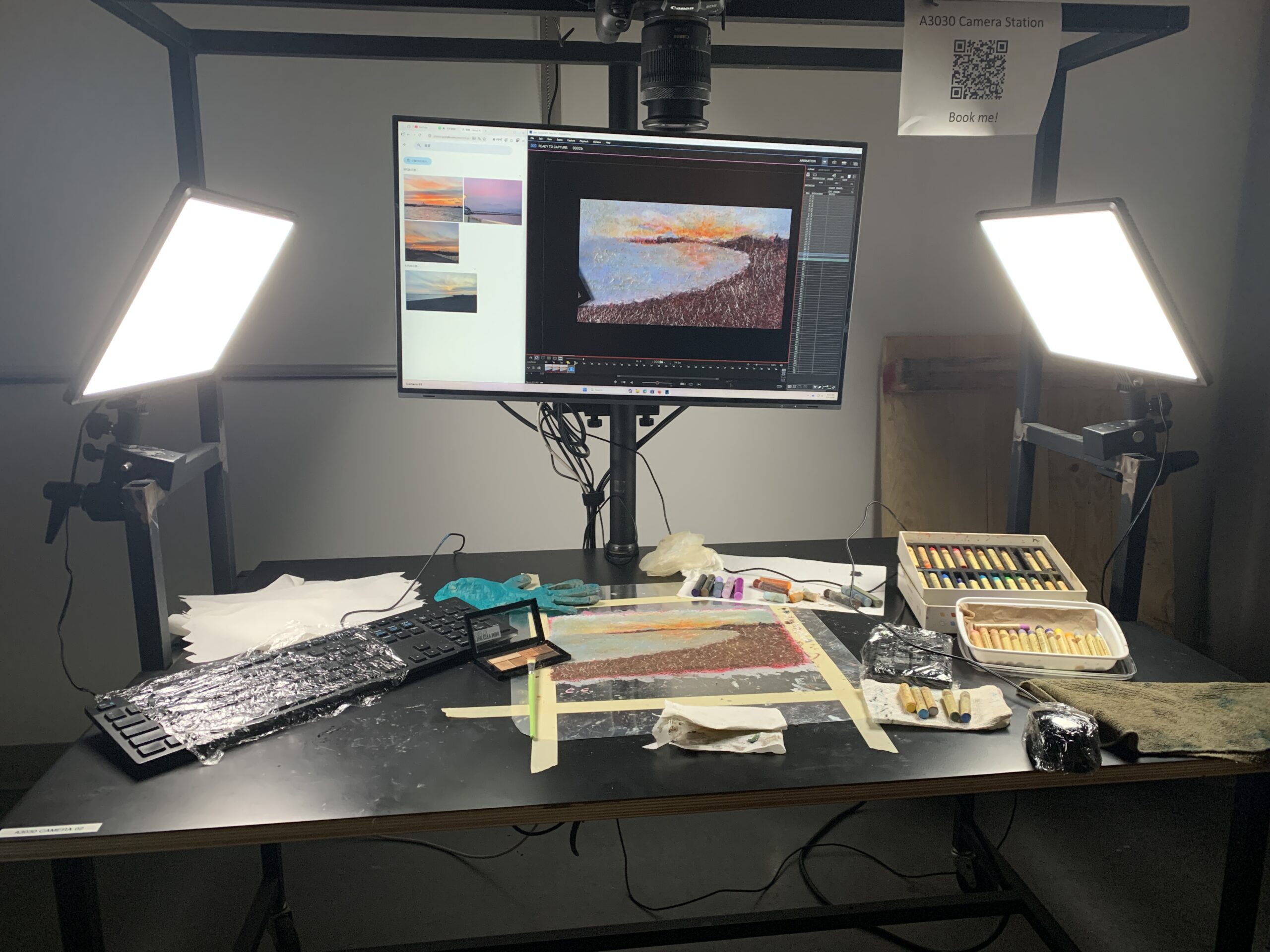
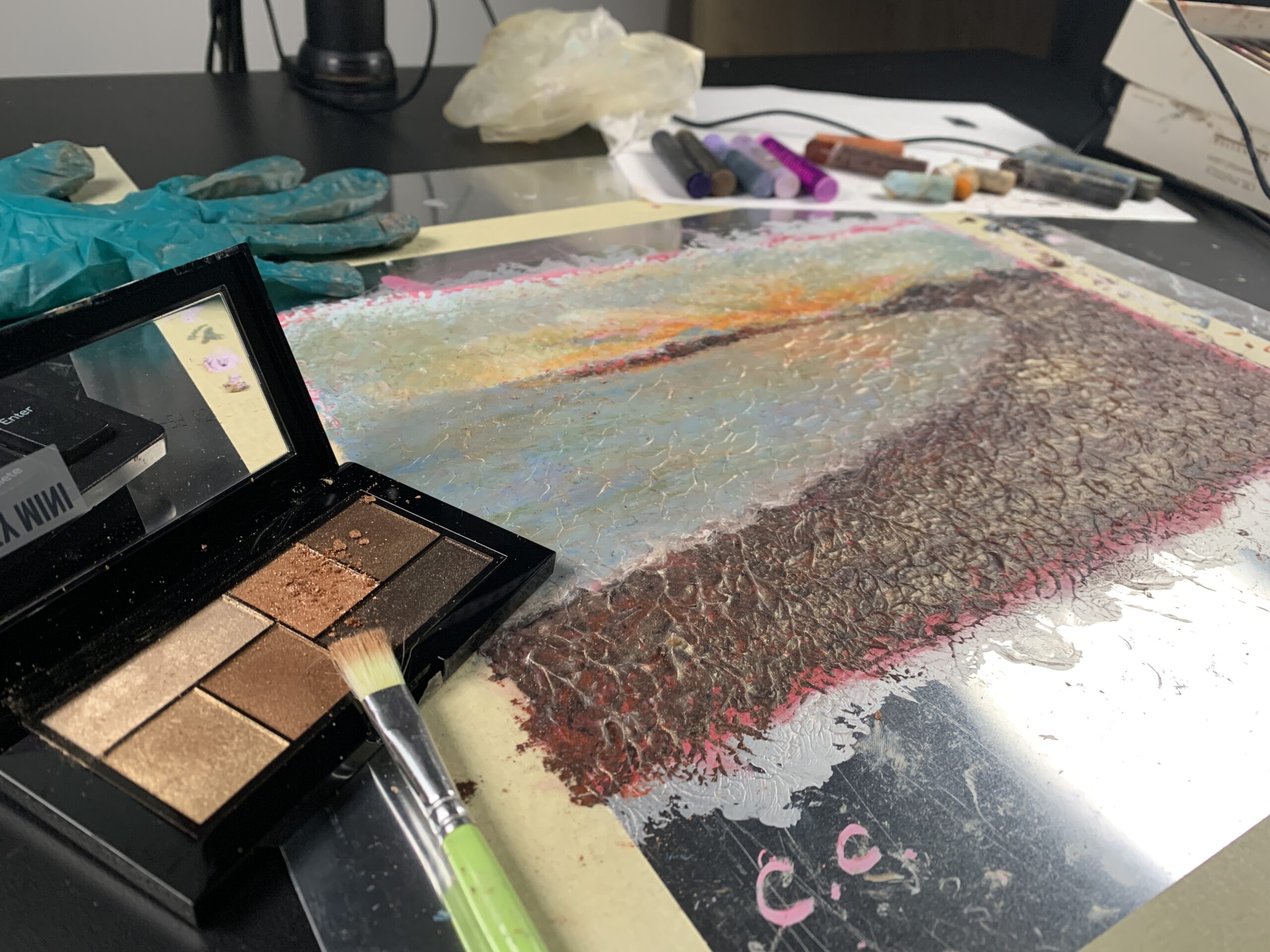
Under-the-camera setup Chien used to conduct Telengut’s animation method.
The thematic inspiration for the workshop assistants’ compositions came from anthropologist Tim Ingold’s essay “Rethinking the Animate, Re-Animating Thought,” where he conceptualizes “weather-worlds” as a cosmological alternative to the inert world posed by Western scientific rationalism. As Ingold explains, “In the animic ontology, beings do not simply occupy the world, they inhabit it, and in so doing — in threading their own paths through the meshwork – they contribute to its ever-evolving weave. Thus we must cease regarding the world as an inert substratum” Seen through this lens, weather transcends mere atmospheric phenomena and becomes an active being.
Chien responded to this prompt by focusing on oil pastel’s inherent malleability and blending qualities. She observed how this made the elements rendered by the medium hard to separate, with boundaries naturally diffused. Telengut’s method further created surface relief, making any definitive contours virtually impossible. Chien traced inspiration to the Taiwanese landscape– drafting thumbnails of rich, biodiverse sceneries from mountains and beaches to streets and backyards. Her concepts centered on unfolding phenomena, whether the formation of a typhoon, a change in weather, or the transition of time of day.
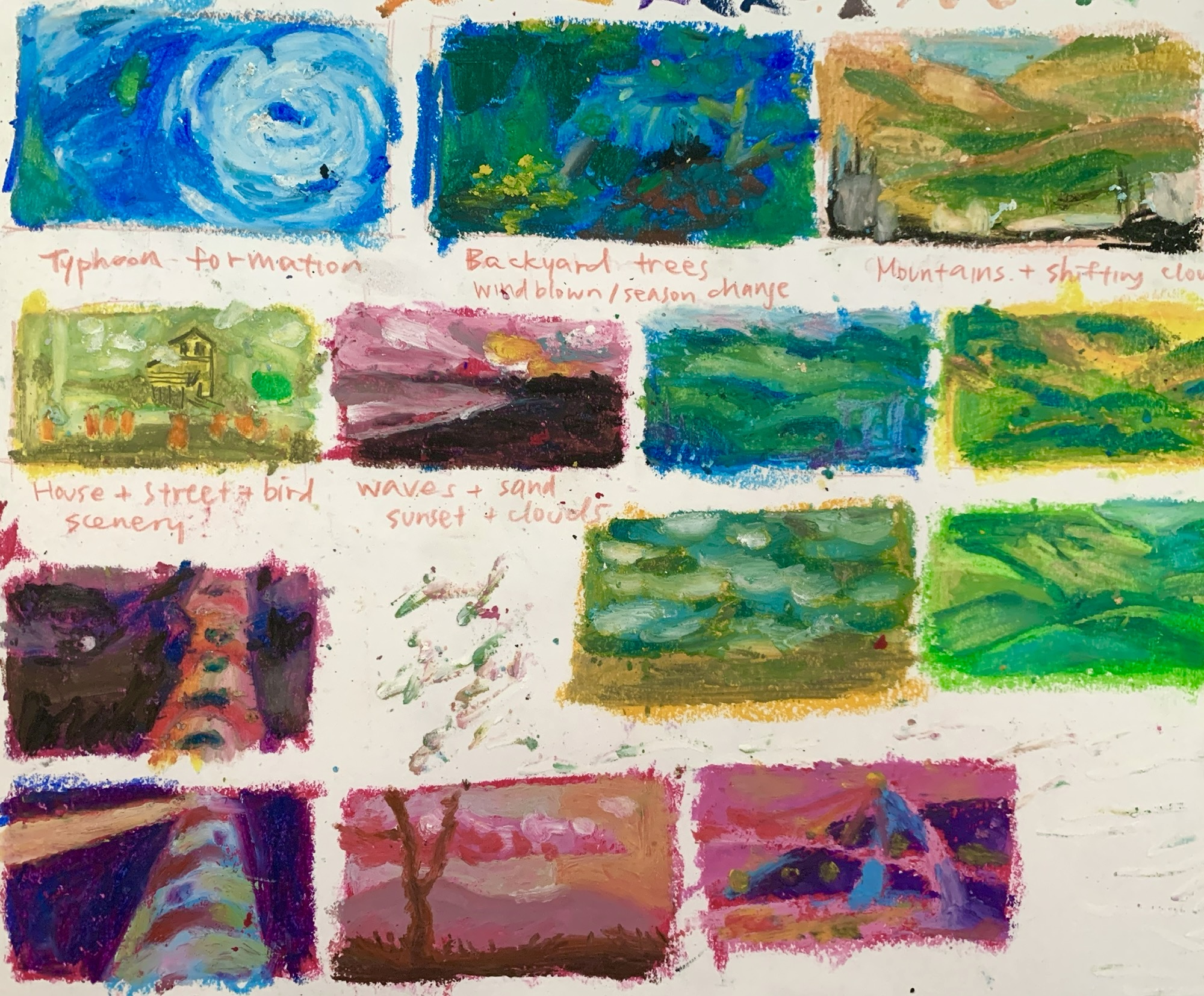
Thumbnails prepared by Chien visualizing Taiwanese landscapes.
Ultimately, she settled on the scene of a shimmering ocean shoreline, where the sky, earth, and water converge, thresholded between twilight and nighttime. Her decision came from the exciting material possibilities of integrating sand into her canvas to embed textures of the beach, as well as the use of mica powder to capture sunlight reflections on water and sand. The focus was on textures and fluid transitions, making steady, cyclical movement ideal to approach this technique for the first time.
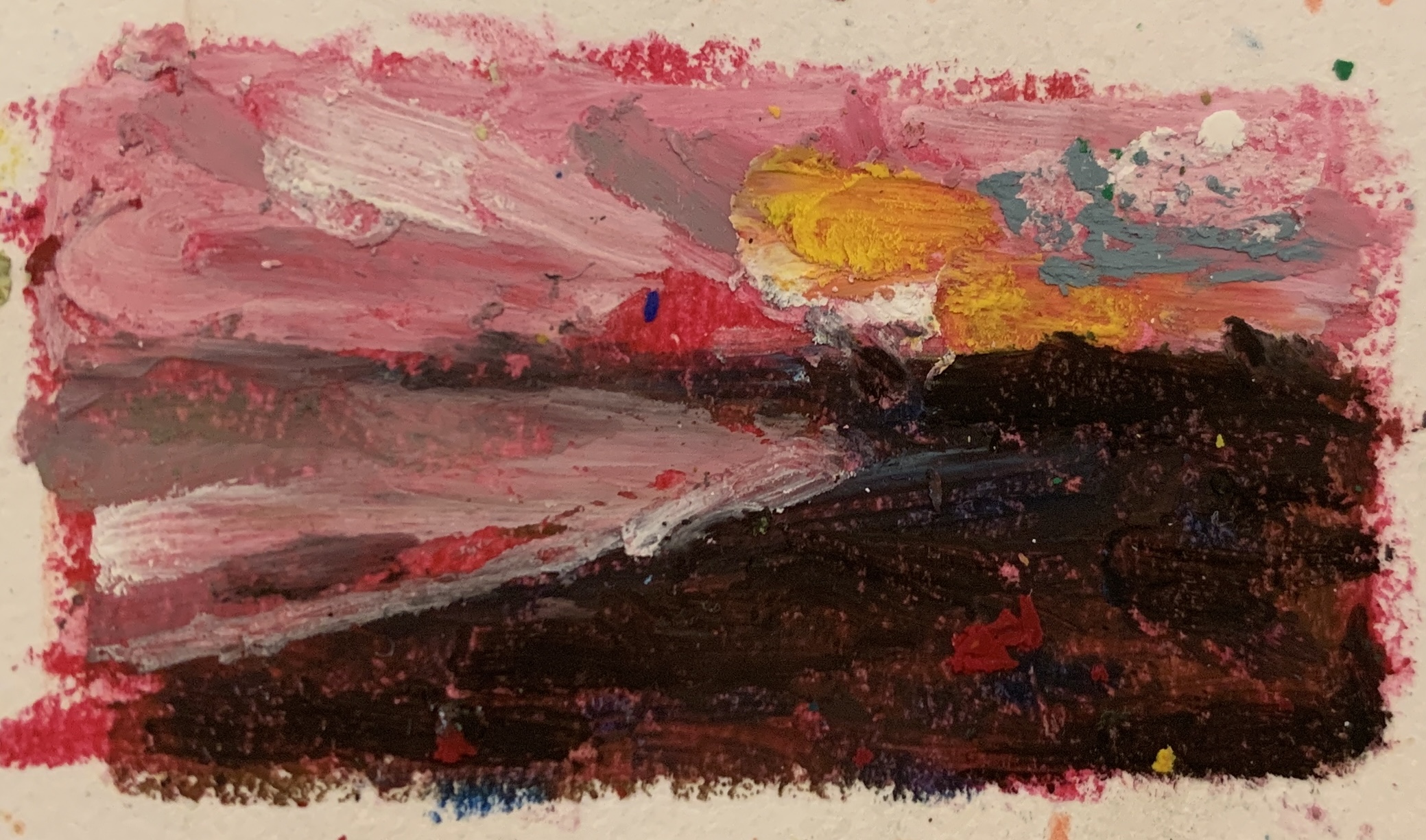
Concept image finalized for her composition.
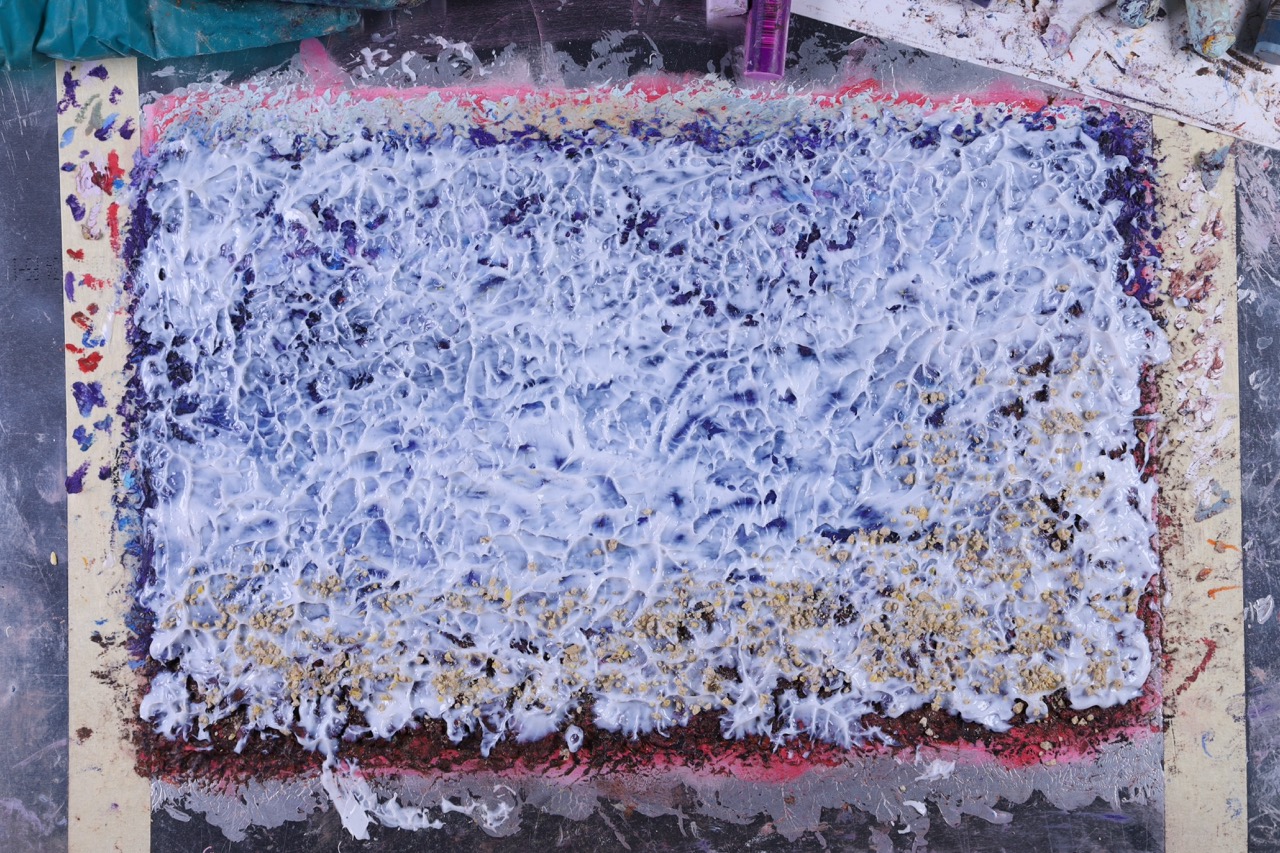
To prepare the surface of a recycled photolithography metal sheet, Chien applied pink pastel, forming the foundational base layer, then adding the first layer of acrylic gel medium on top. This method diverged slightly from Telengut’s demonstrated technique, with Chien adopting a classic painterly approach of underpainting. This aided in the color perception of the strokes of oil pastels laid atop, and – more strategically – pigmented any potential negative spaces. This served especially well in the first few frames while the image was still being formed, filling any gaps in the hue of the sunset.
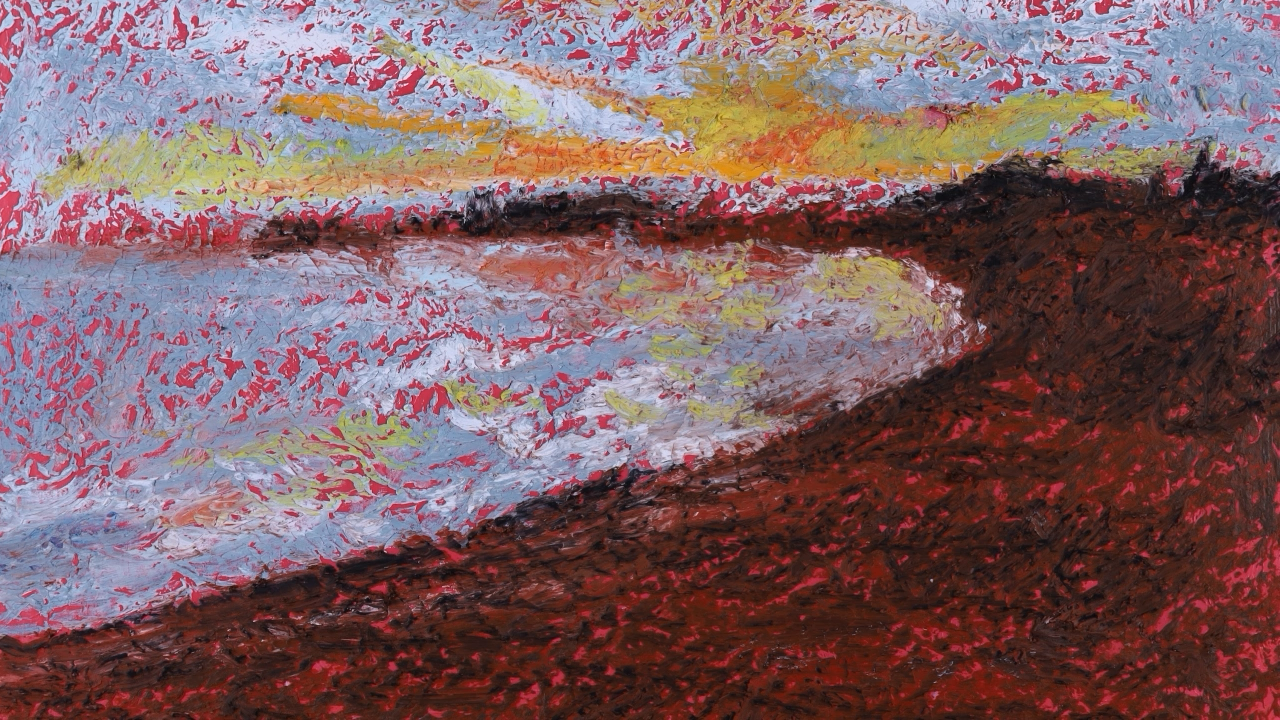
An early frame from Chien’s composition where the underpainting fills the negative spaces with a pink hue.
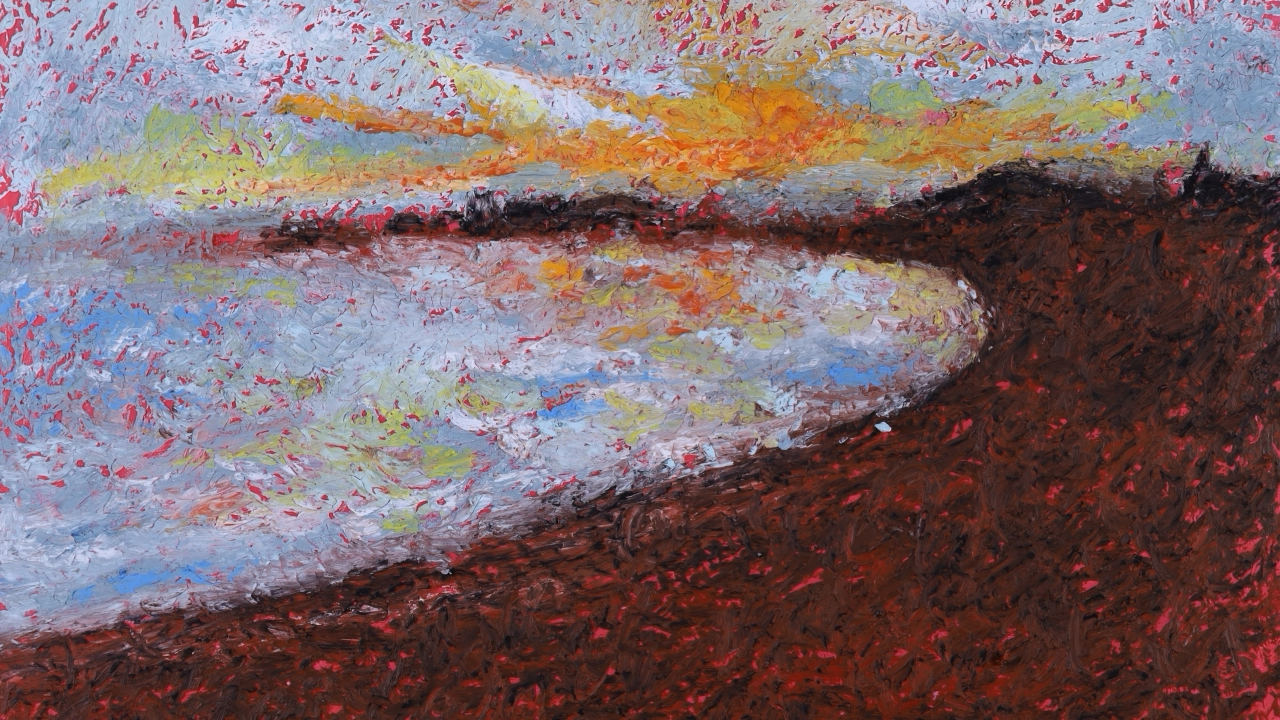
Subsequent frames fill these gaps with more layers of pastel.
Chien was also attentive to textural nuances from the first coat of the acrylic gel, applying varied relief treatments to each natural element. For the water, she swiped her fingertips through the gel in broad, horizontal gestural strokes, mimicking undulating waves. The sandy area, by contrast, received a tighter, stippled texture by dabbing gel with wrinkled plastic to create organic, veiny clusters. During the animation, she further staggered the timing of each element’s movement to maintain their individual properties while keeping the overall animation from feeling too frantic.
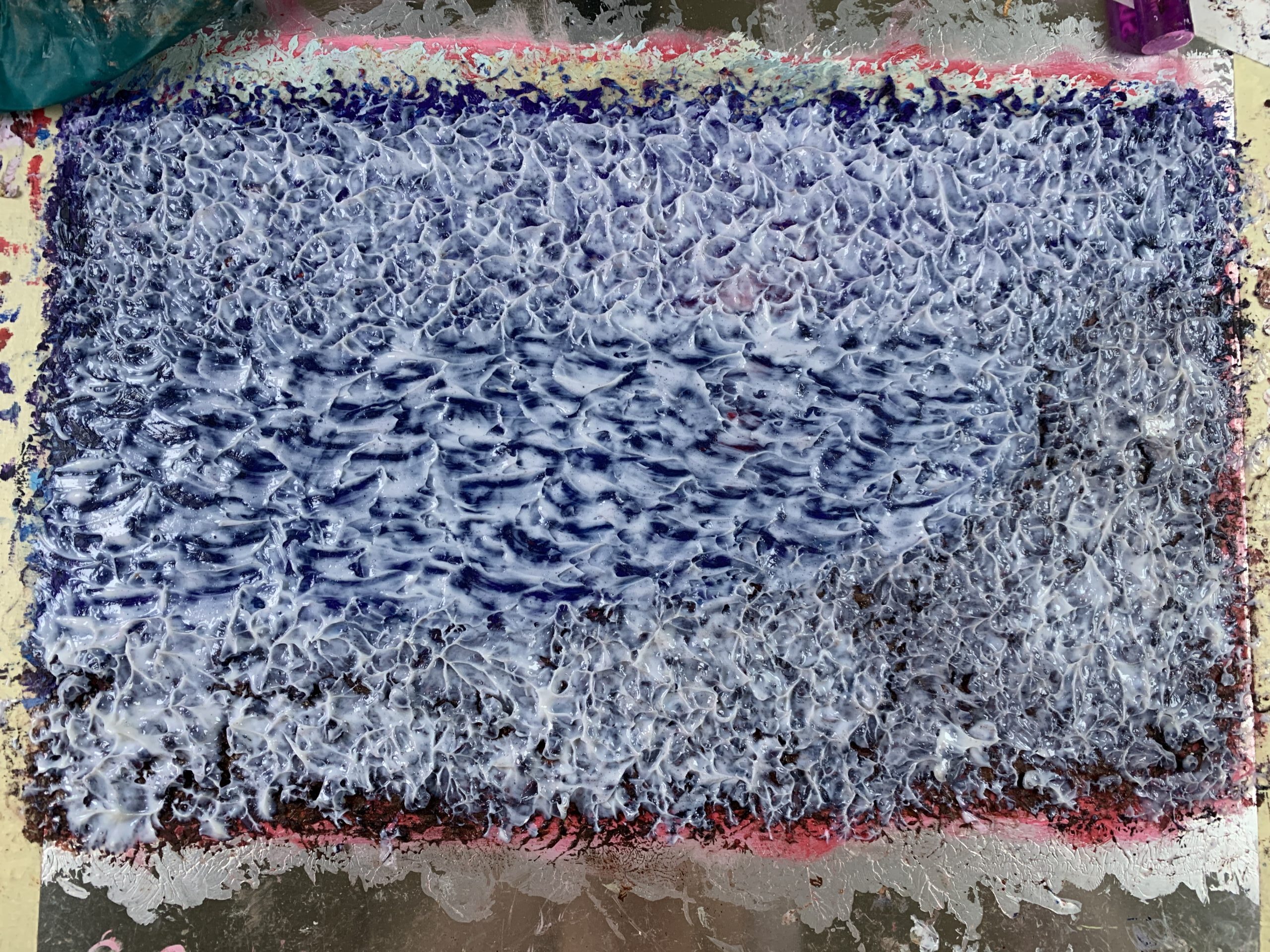
Acrylic gel medium applied with various tools and methods to yield unique textures for each element of the composition.
Chien noted that oil pastels, when layered enough, created a sticky, muddy mass that made the surface unreceptive to further applications. She alternated between different pastel brands and hardness levels, maximizing the potential for stacking colours before needing gel intervention. The gel was used to secure sand of different particle sizes, the larger particles yielding crevices the pastel could not reach, creating a heavily textured appearance with previous layers peeking through. The other material used for the composition was glitter, either dusted gently on the surface for a wider spread or swiped across with a brush to create dense, shiny clusters.
After the sun sets, her composition shifts in hue, approaching the cool, dark blues of a night sky. Anchored by the motif of a pulsating light in the receding skyline, the shot transitions to a lighthouse emitting a sweeping beam across the sky. Chien’s inspiration for this transition came from Telengut’s films, wherein shots grew out of each other through steadily building forms, often introducing a simultaneous shift in perspective and field of view. Chien modeled after this approach by progressing from a lateral wide shot to a more dynamic close-up. She observed how maintaining the same color palette across the two images ensured a seamless metamorphosis despite the more significant shifts in camera framing.
-
Different materials used in Telengut’s animation method, as adopted by Chien in her composition, in order: glitter, acrylic gel medium, sand.
-
Different materials used in Telengut’s animation method, as adopted by Chien in her composition, in order: glitter, acrylic gel medium, sand.
-
Different materials used in Telengut’s animation method, as adopted by Chien in her composition, in order: glitter, acrylic gel medium, sand.
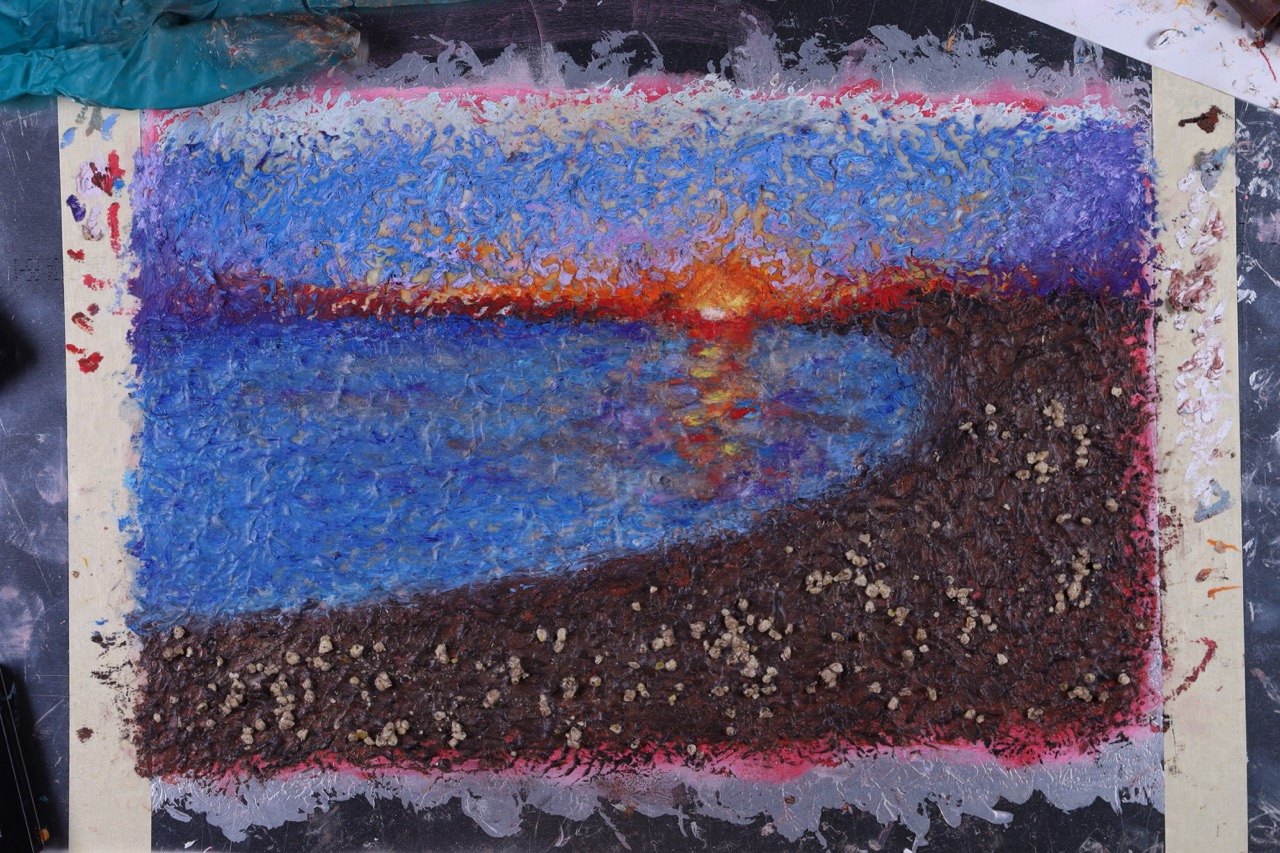
After the sun sets, her composition shifts in hue, approaching the cool, dark blues of a night sky. Anchored by the motif of a pulsating light in the receding skyline, the shot transitions to a lighthouse emitting a sweeping beam across the sky. Chien’s inspiration for this transition came from Telengut’s films, wherein shots grew out of each other through steadily building forms, often introducing a simultaneous shift in perspective and field of view. Chien modeled after this approach by progressing from a lateral wide shot to a more dynamic close-up. She observed how maintaining the same color palette across the two images ensured a seamless metamorphosis despite the more significant shifts in camera framing.
-
Selected frames of transition between the two scenes.
-
Selected frames of transition between the two scenes.
-
Selected frames of transition between the two scenes.
-
Selected frames of transition between the two scenes.
-
Selected frames of transition between the two scenes.
-
Selected frames of transition between the two scenes.
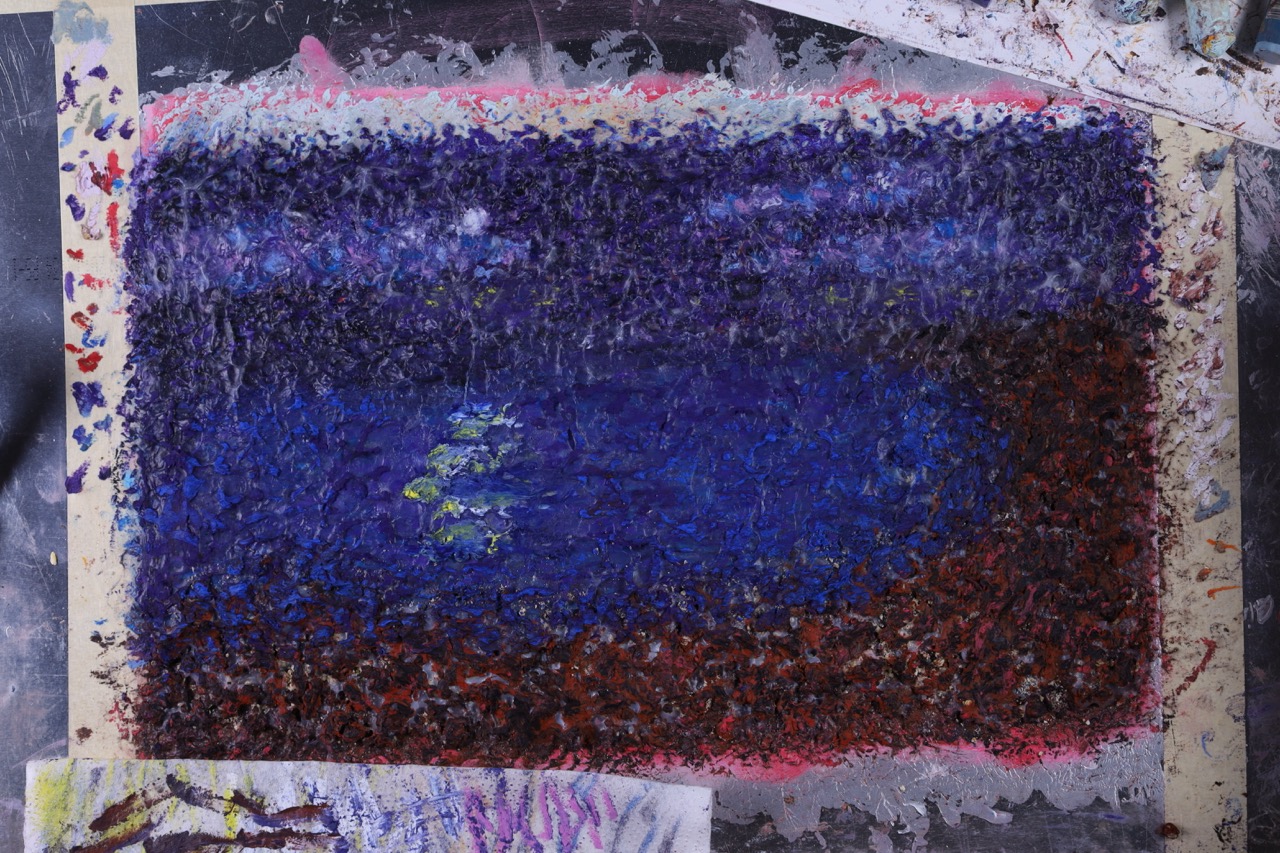
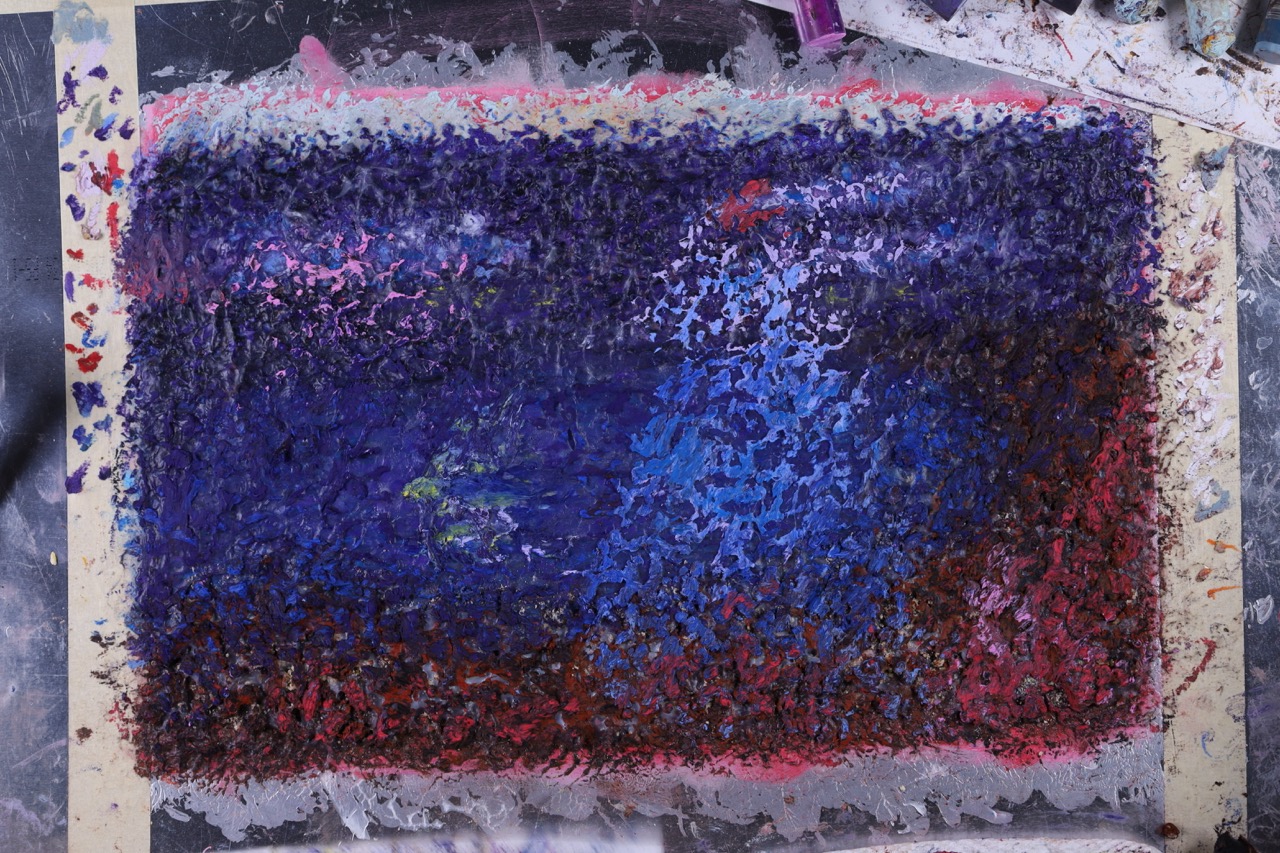
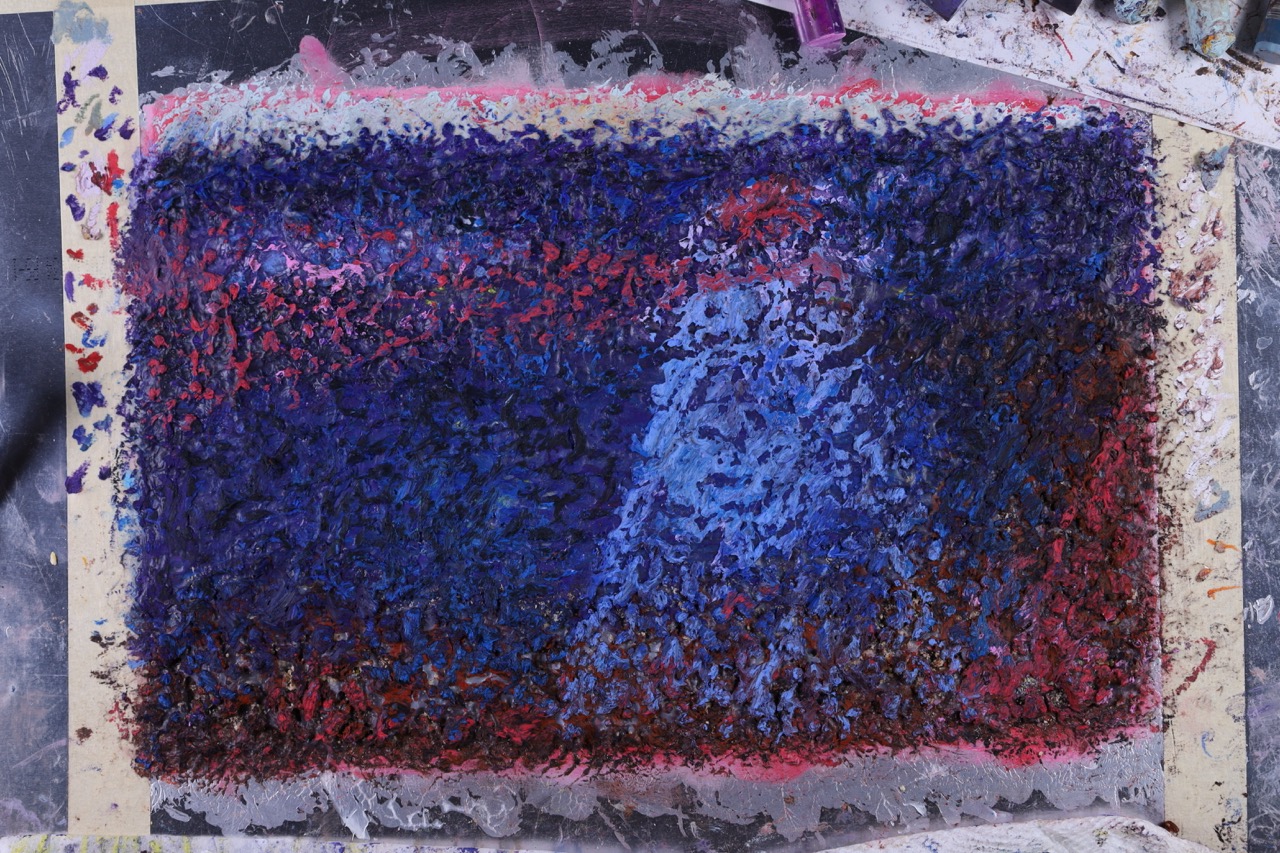
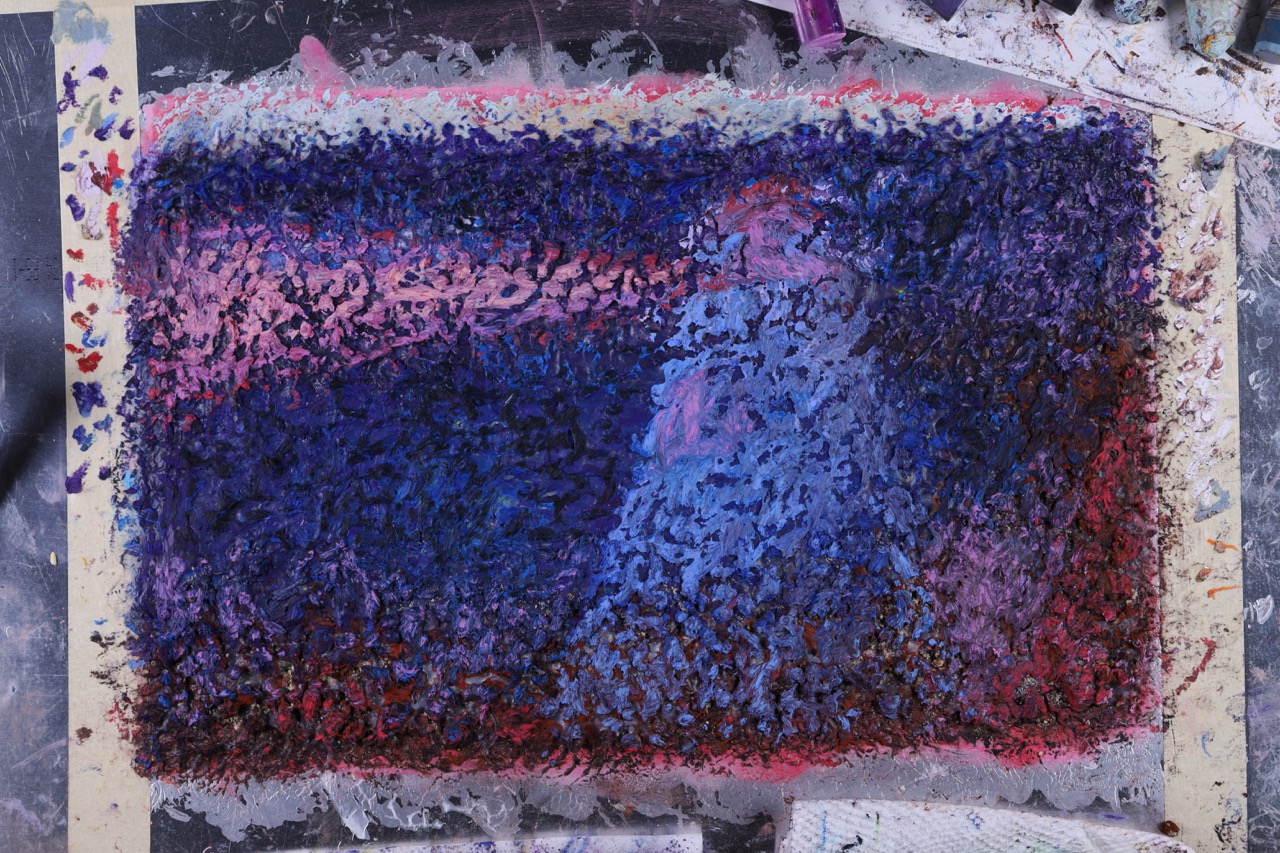
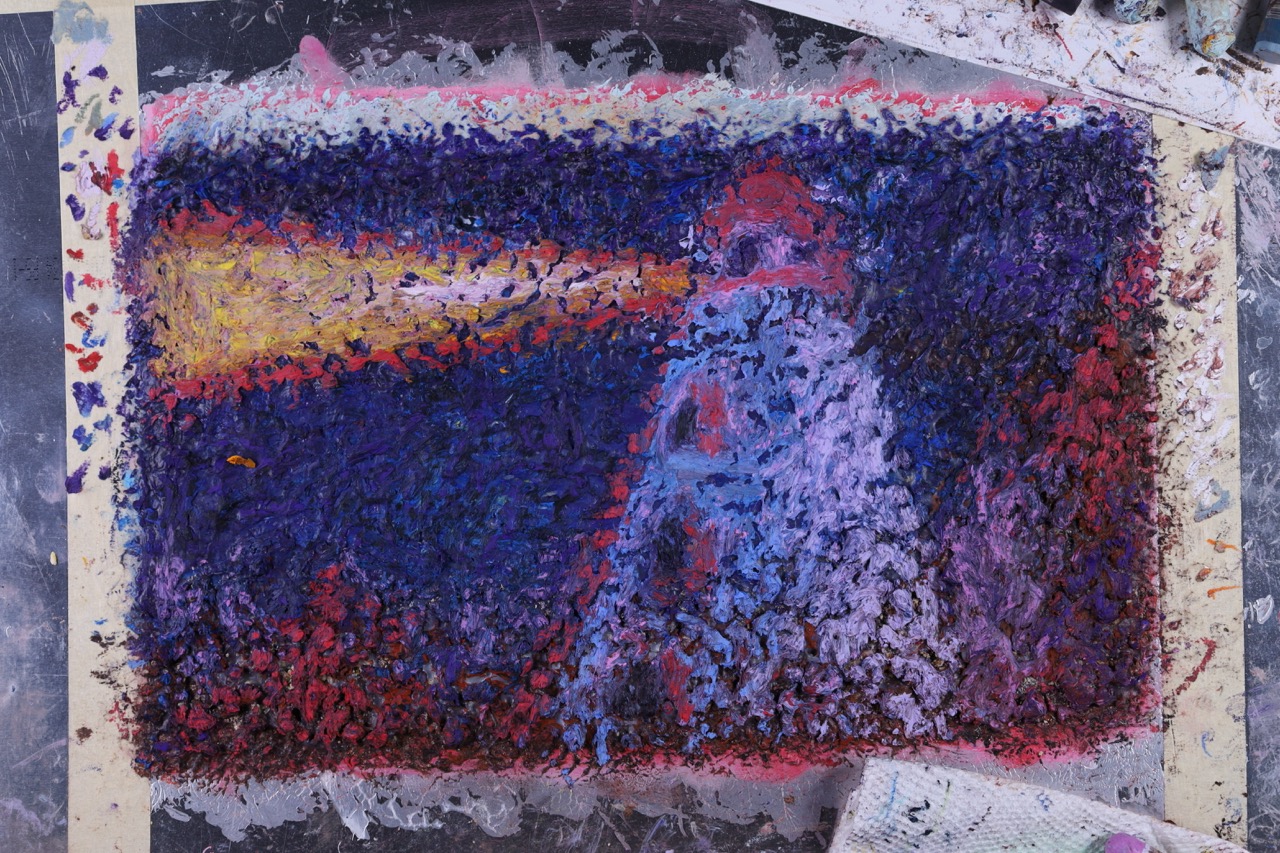
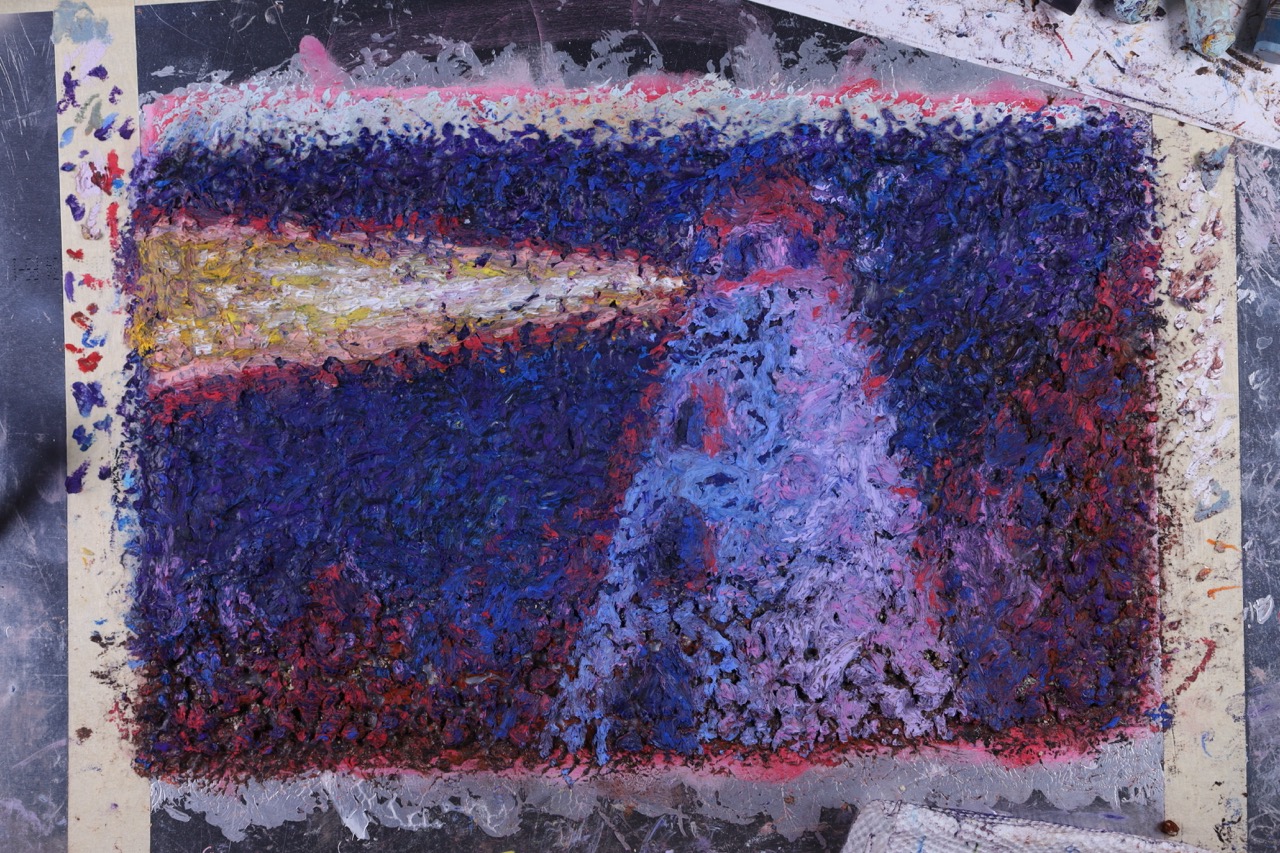
The major challenge of this process was managing the oil pastel’s workability, as shades often stuck together and created slurries. Chien’s heavy reliance on acrylic gel medium to keep the layers from blending meant waiting hours at a stretch before completing a few frames, disrupting a continuous workflow. For the saturated, bright yellows of the lighthouse beam, the animation process was especially slowed by these wait times, with acrylic gel applied to almost every other frame to maintain the color. At the same time, this composition sparked Chien’s curiosity to explore the technique further. The transition was the most compelling part of the process for her, and she hopes to further explore the metamorphosis of scenes once each movement is dynamic.
Chien’s completed composition of an oceanline sunset transitioning to a lighthouse emitting sweeping rays against a night sky.

Rethinking the animate, re-animating thought
Anthropologist Tim Ingold’s article that provides the thematic inspiration for this composition and conceptualizes “weather-worlds”.
Read the full article hereColor into Line: Pastels from the Renaissance to the Present
A comprehensive analysis of pastel as a medium, published by the Fine Arts Museum of San Francisco, that traces its historical, cultural, and artistic significance in visual arts.
Read an excerpt of the book here