Notes on the film
John and Faith Hubley – creative and married partners – based Moonbird on a recorded free-play session with their two sons. The influential filmmaking duo depict the intimate experience of childhood play as a journey into an expressive, imaginative world. Two brothers embark on a quest to catch a fictitious creature (the titular Moonbird), and their adventure unfolds into a nocturnal landscape of inks and paper. The film embodies the Hubleys’ shared commitment to liberate animation from commercial studio aesthetics and constraints. Rejecting the hard edges, opaque colours, and polished surfaces of classical cel animation, Moonbird embraces improvisational linework and texture materials. The film’s world is alive with energy, achieved through double-exposure layering of expressively painted backgrounds with ghostly translucent characters.
-
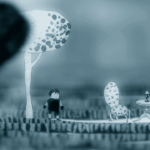
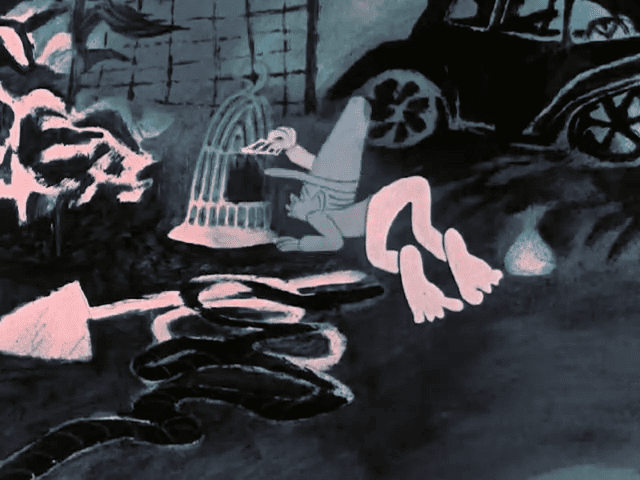
The film’s textures are rich and fluid, constantly pushing against the limits of confined forms through stylisation and distortion.
-
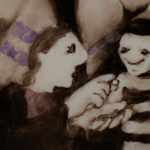
The film’s textures are rich and fluid, constantly pushing against the limits of confined forms through stylisation and distortion.
-
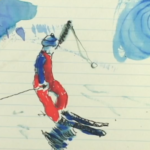
The film’s textures are rich and fluid, constantly pushing against the limits of confined forms through stylisation and distortion.
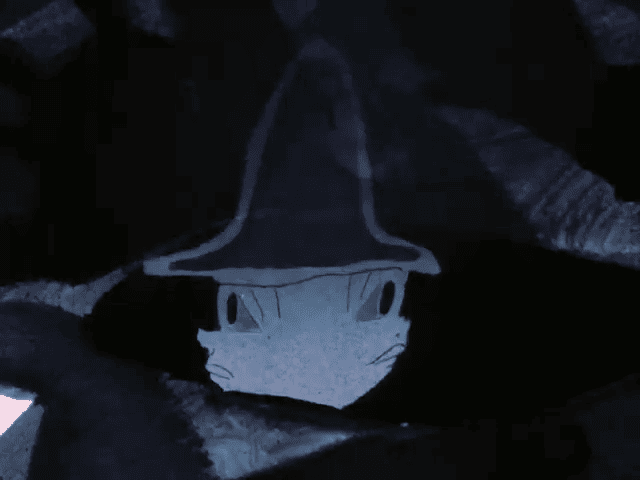
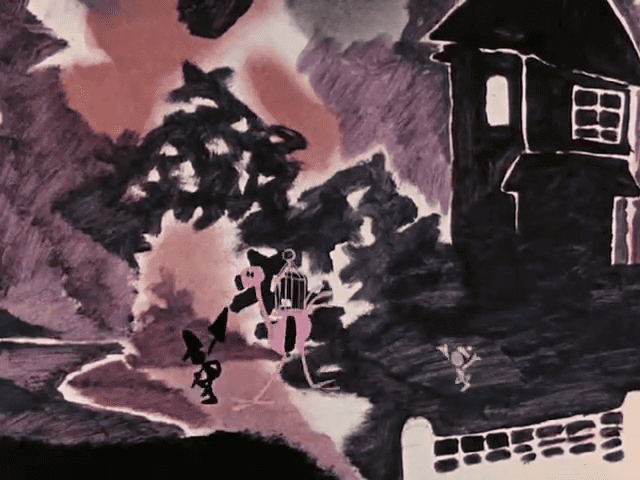
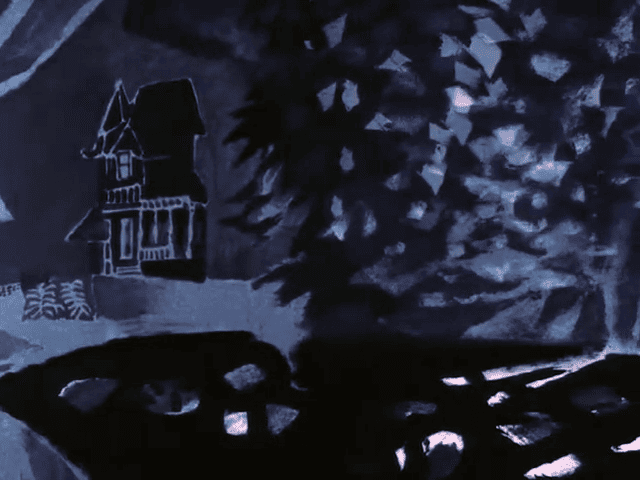
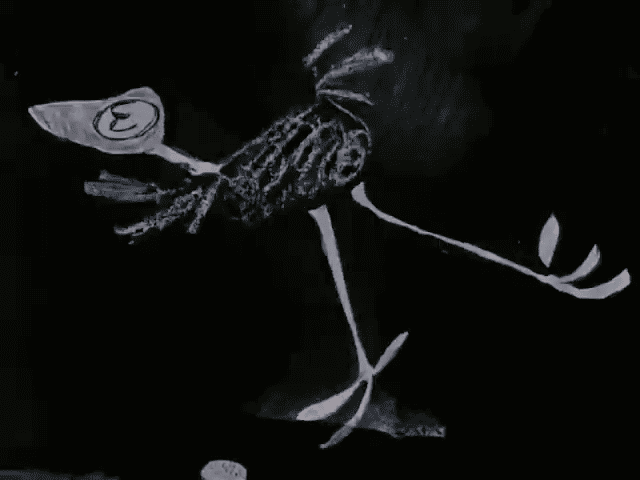
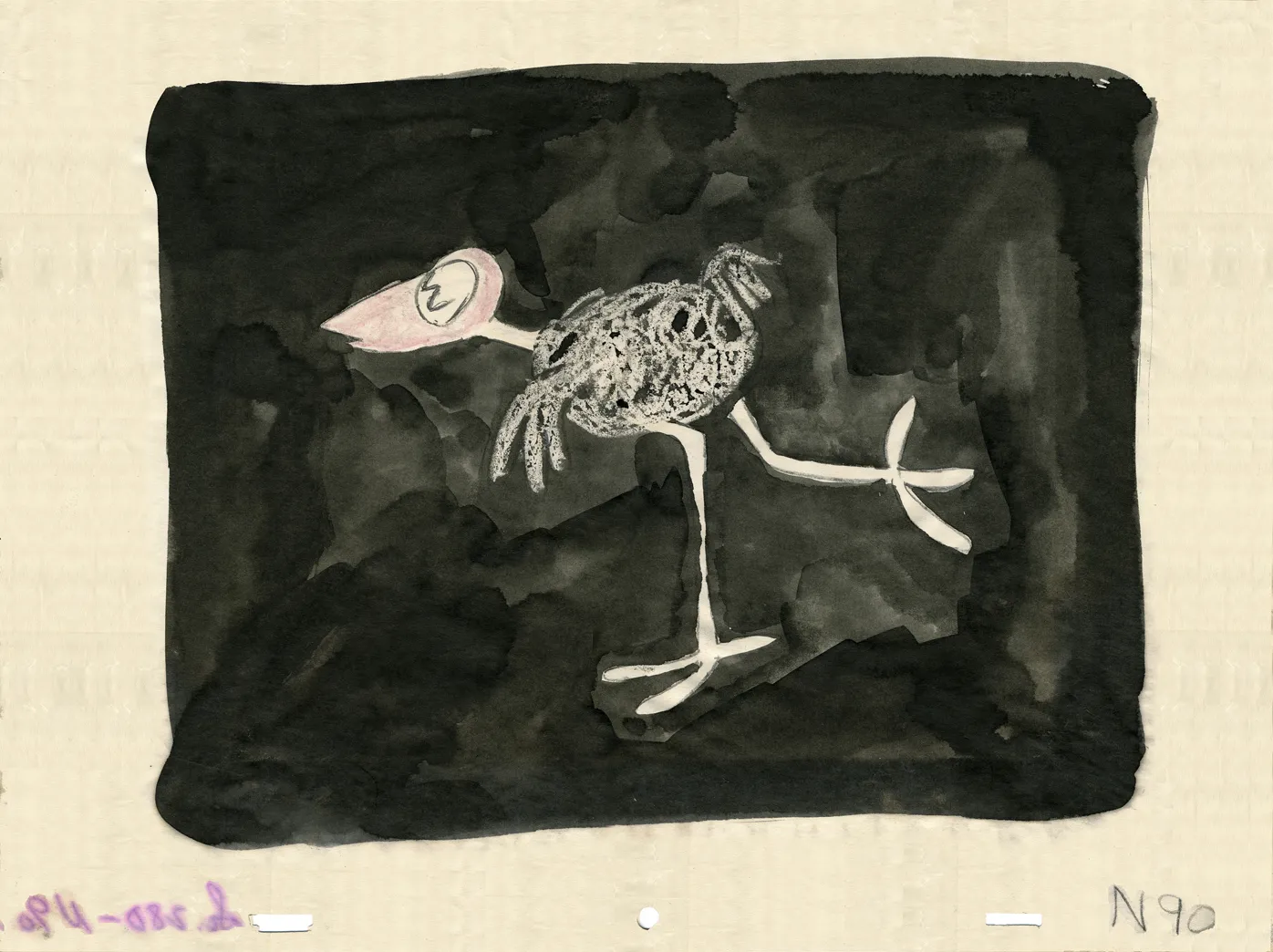
Overhearing their sons plotting to catch a bird, the Hubley’s brought them to the studio with a birdcage, a shovel, and a bag of candy, recording the boys’ improvised play and developing character animation around their vocal personalities. The younger brother, excitable and easily distracted, moves in hyperventilated, springy bursts, while the older, calmer and more focused son moves in steady gaits. The film’s animators, Robert Cannon and Ed Smith, develop loose stretched poses that convey the essence of play, rather than mimic gestural realism. Sketchy contours that establish the two figures – animated “roughs” – are kept in the film, rather than polished. “For my taste”, Faith Hubley once said, “I think the obligation of animation is to deal with material that live action can’t.” This belief is evident in the visual treatment of Moonbird. The unique grittiness of the background is owed to a “wax-resist technique” –as John calls it– wherein drawing with wax first and splashing it with paint gave it a resisted texture. These abstract, expressionist compositions drew their aesthetic from artists like Picasso and Matisse, rejecting perfection in favour of free emotive strokes and colors that spill past the lines. The characters follow suit, especially in their stylisation, the moonbird a cluster of circular strokes, like something a child might sketch. There are no strict rules or limitations in true authenticity to an imaginary adventure. Heads distort and regain shape, joints almost break like the neck twisting past the shoulders to pick up candy, and sometimes, characters disappear for a few frames before popping back in.
-
The imaginary Moonbird highly stylised in both its visual design and eccentric movement.
-
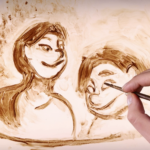
The imaginary Moonbird highly stylised in both its visual design and eccentric movement.
Perhaps the film’s most distinctive imagery lies in its use of translucency, layered to suit the themes. Characters appear as faint apparitions or shadows, inhabiting a world conjured up by imagination rather than the everyday physical realm. This was achieved with an in-camera analogue compositing technique: painting a black matte around characters using thick non-reflective oil paint and subsequently bringing down exposure during filming to 60%, before reshooting backgrounds and other layers onto the same filmstrips.
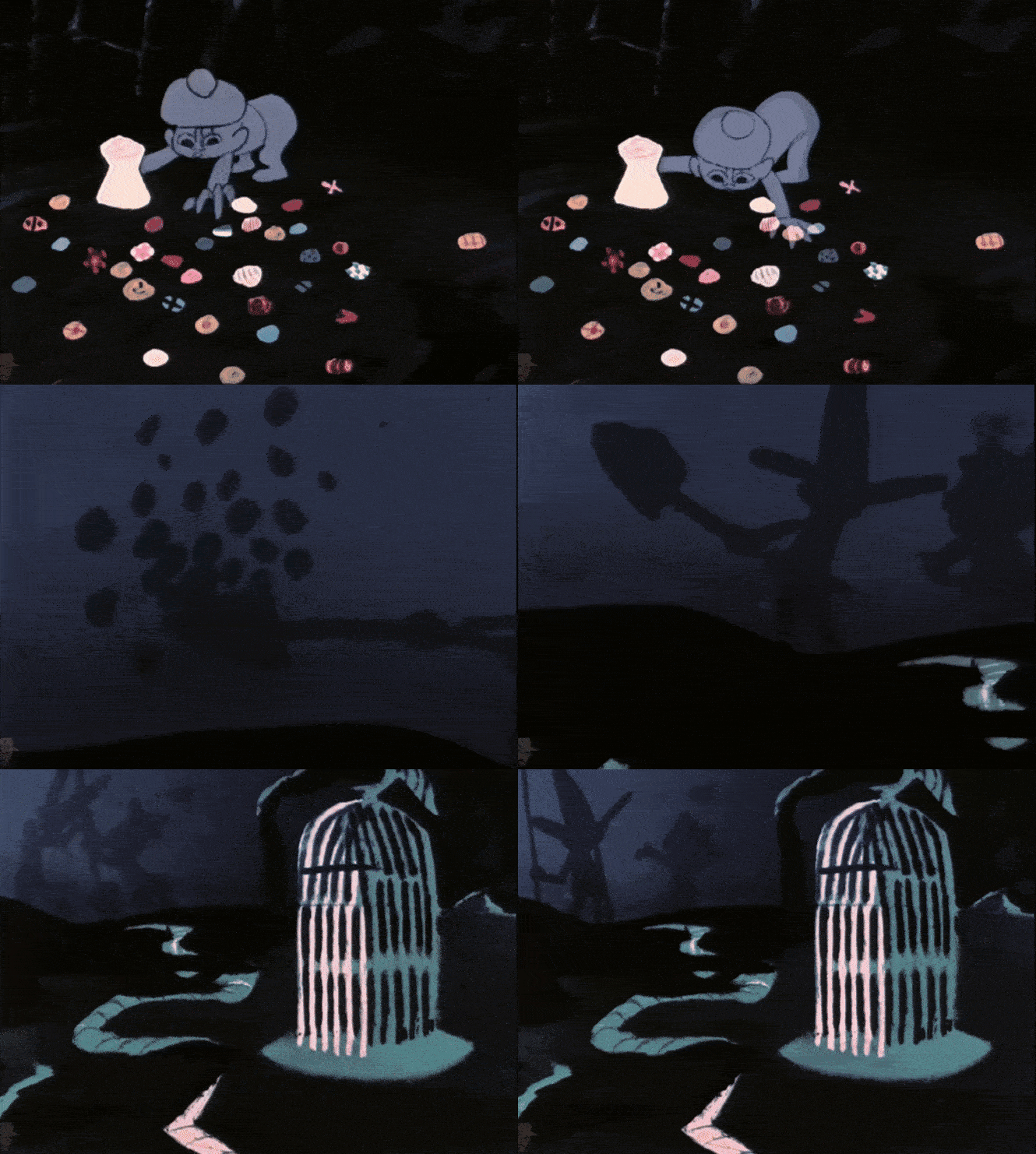
Translucency of characters achieved by double exposure and their expressive movements with construction lines of animation add vitality.

Interview with John and Faith Hubley
This archival record of an old interview from 1973 with the filmmaking couple lays down their experimental verve, process and care that goes into every project, and their backgrounds in film and art that brought them together.
Animation: A Creative Challenge – John & Faith HubleyDouble exposure in traditional animation
An excerpt from the Layout Manual where the technical process of using double exposure in cel animation to create transparency is explained.
Walt Disney Classified: The Layout Manual, Part 6 – Camera Ops |