Examining the fragility of Nylon
-
images of nylon stocking packages, emphasising how nylon was advertised and spoken about
-
images of nylon stocking packages, emphasising how nylon was advertised and spoken about
-
images of nylon stocking packages, emphasising how nylon was advertised and spoken about
-
images of nylon stocking packages, emphasising how nylon was advertised and spoken about
-
images of nylon stocking packages, emphasising how nylon was advertised and spoken about
-
images of nylon stocking packages, emphasising how nylon was advertised and spoken about
-
images of nylon stocking packages, emphasising how nylon was advertised and spoken about
-
images of nylon stocking packages, emphasising how nylon was advertised and spoken about
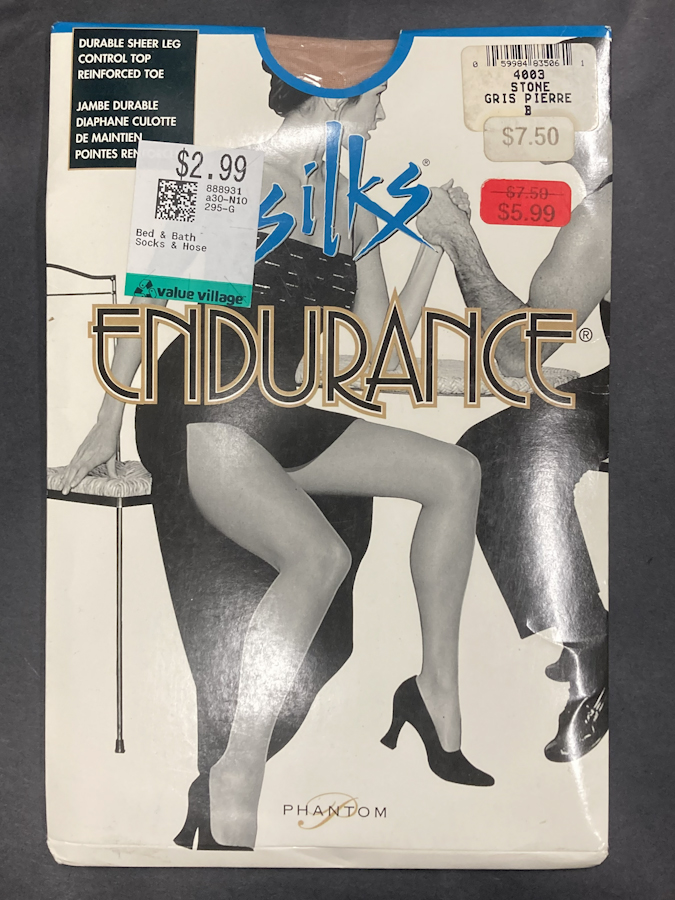
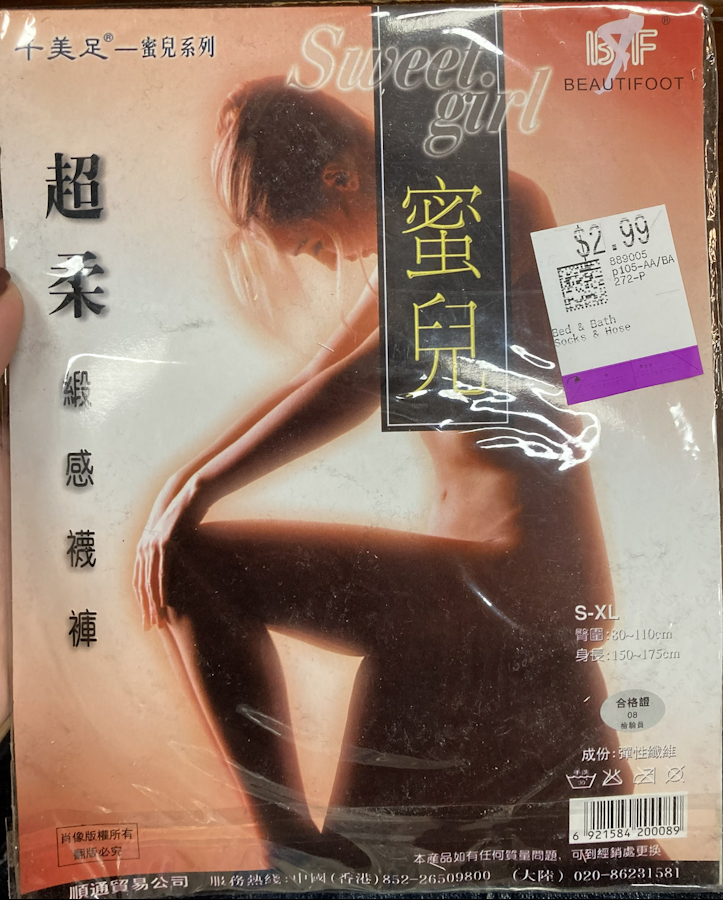
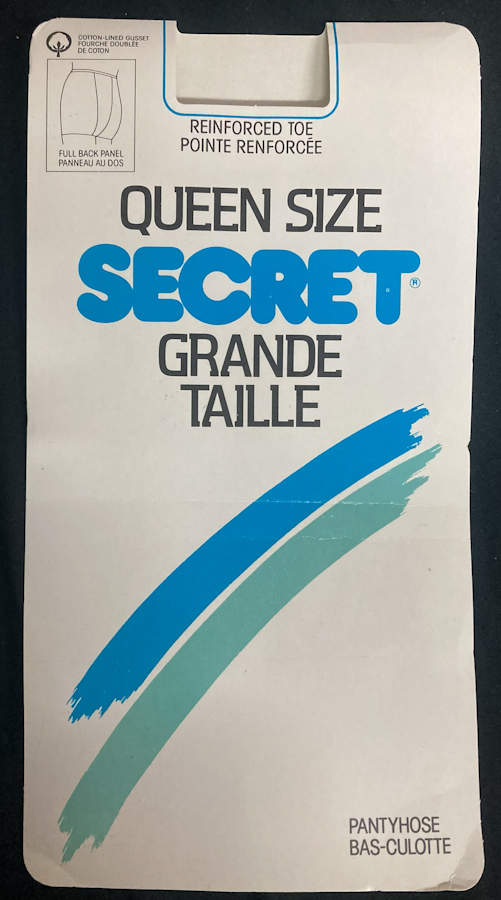
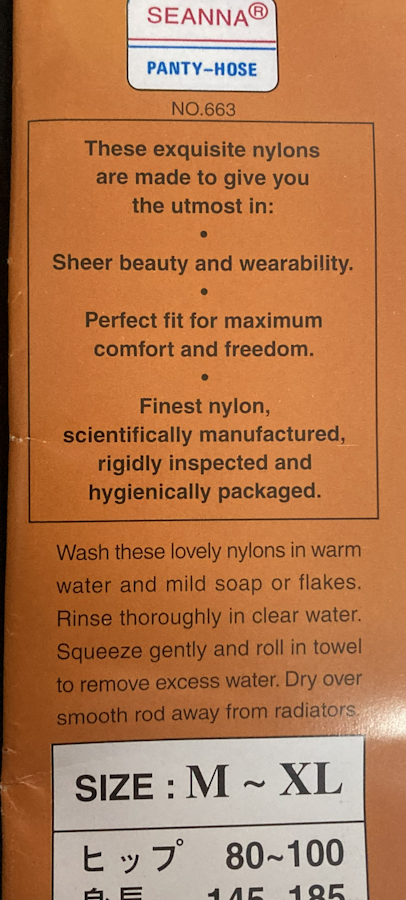
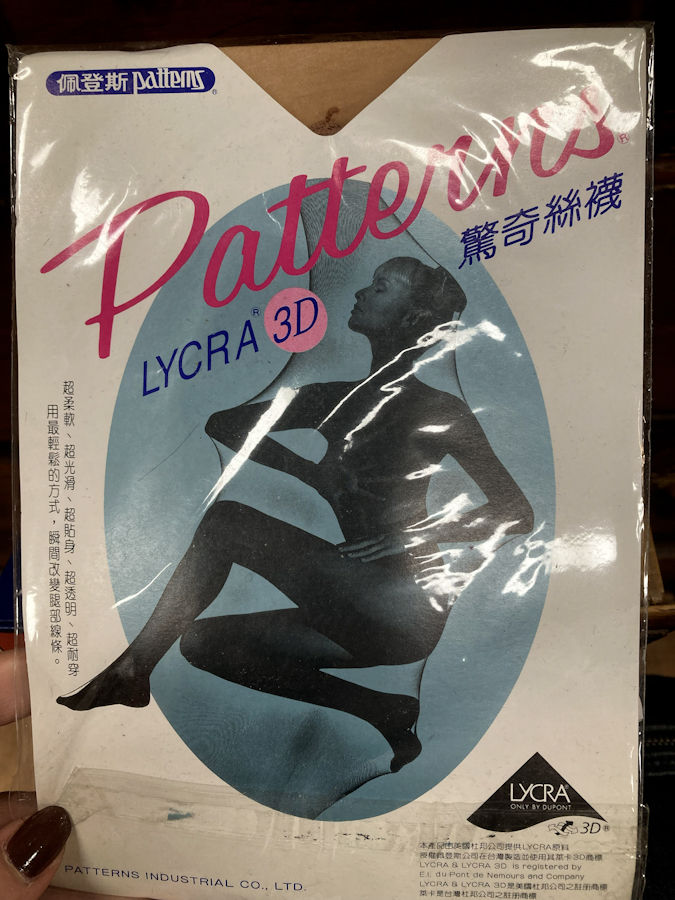
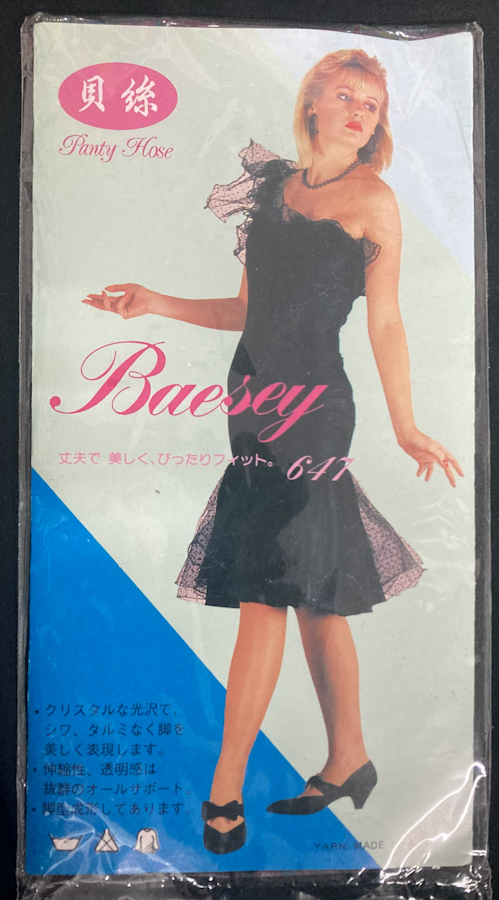
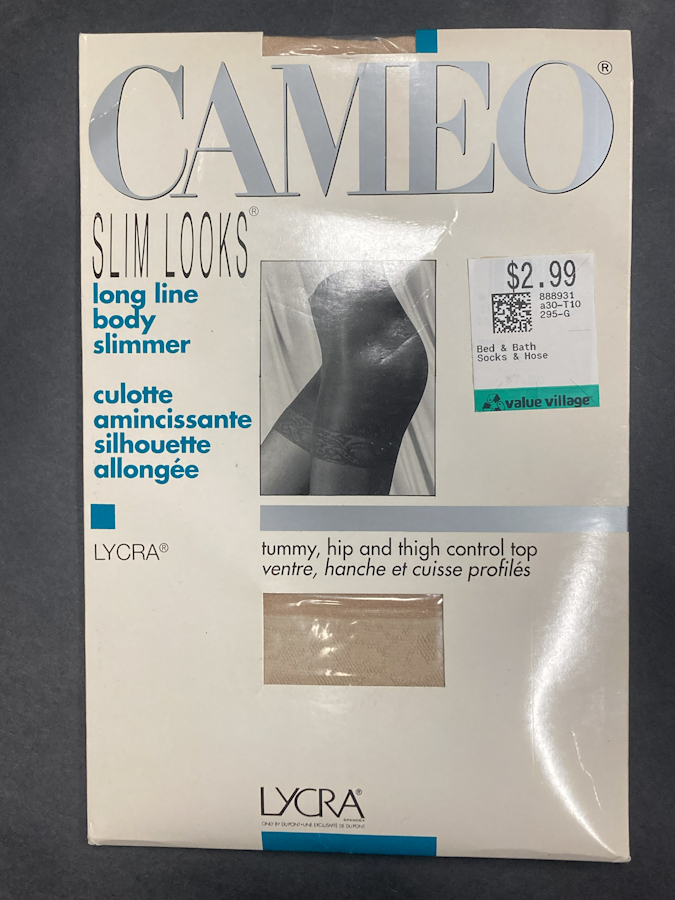
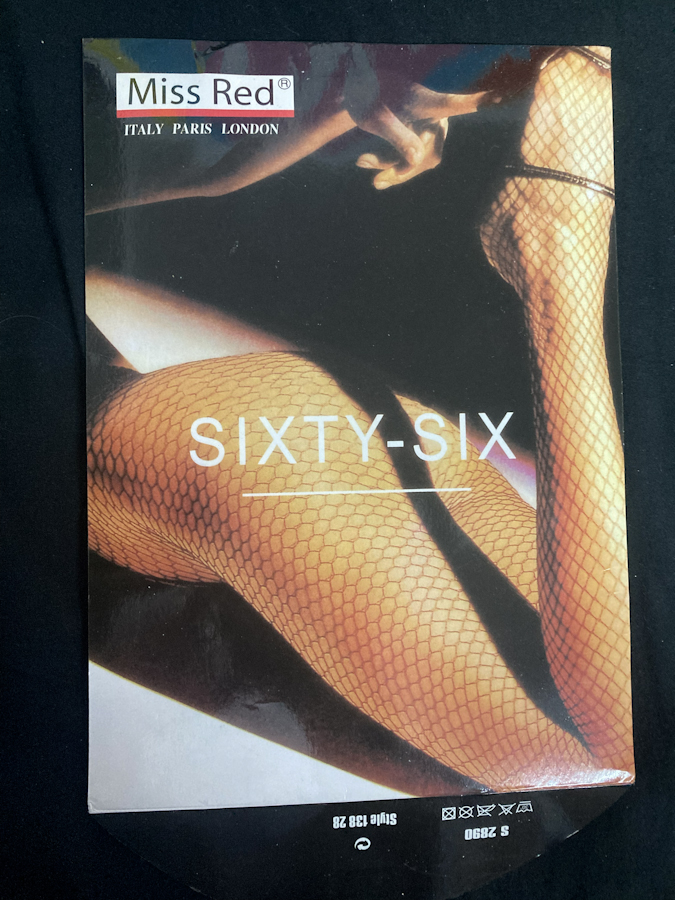
Before the invention of nylon, hosiery and stockings made of natural fibres were widely regarded as fragile. With nylon’s introduction to the world, there was suddenly a more accessible alternative to fabrics such as silk, offering similar texture and sleekness. Their luxurious feel, flexibility, and strength, especially, were heavily pushed in advertisements and packaging. Advertisers wove a cultural net as strong as this so-called miracle fibre, setting the standard for what is expected of the modern, put-together woman.
cutting, revealing, and suturing many layers of hosiery
The inherent tension within the tightly knit fibres of hosiery results in an inevitable release when subjected to force. This property became the foundation for Ila’s next series of tests. The act of rupture suggested a cathartic breaking away from the social and gendered associations that hosiery has long represented.
Drawing inspiration from hosiery’s role as a second skin, Ila layered hosiery and fabric in shades of pink, orange, and red. As the fibres were agitated and eventually cut through, nylon’s physical properties produced notable visual effects. Under tension, the threads began to fray, and the texture accumulated progressively throughout the animation. Tears ruptured the surface in expanding organic shapes as the textile relaxed, releasing the stored tension while remaining connected through surviving fibres. The result is a visceral peeling through layers of fabric, culminating in a dark red marbled surface evoking a fleshy membrane or exposed wound. Following this striking image, Ila was instinctively curious whether this synthetic skin could be sutured.
To examine this possibility, Ila experimented with various techniques. Starting with a simple hand stitch, she tried to close the tears tightly with each successive loop. However, the ripped fabric resisted these constraints, and threads frequently snapped under the pressure. Consequently, she modified her approach by sewing all the stitches first and tightening them only once the thread was fully in place. While this method proved more reliable and consistent, repeatedly introducing a thread to already weakened hosiery created additional points of tension. Ila quickly realised that once a tear appeared in hosiery, any further tension would only aggravate the unravelling. Regardless of the technique, the seams left the surrounding fabric weakened and distressed, suggesting that even a synthetic skin designed to embody perfection was not immune to scarring.
hosiery unravelling one thread at a time
The next test closely examined how nylon hosiery breaks down by unravelling it under controlled conditions. To set off the process, a single thread was cut. From there, Ila used a needle to pick at consecutive loops, disconnecting the threads one row at a time.
Nylon hosiery is constructed as a knit fabric, with threads running horizontally while looping vertically, each row secured by the one before it. This structure allows the material to stretch as the loops straighten under tension, but it also renders the fabric vulnerable. When a single thread breaks, little remains to prevent the subsequent loops in the chain from coming undone. This phenomenon, commonly known as laddering or a “run”, is named after the line that appears on stockings as the threads unravel and straighten. A familiar occurrence for those wearing nylon tights, it’s known to escalate rapidly, as only a small amount of tension is enough to make the unravelling uncontrollable.
different stitches resisting tearing
After focusing on the tearing of hosiery, Ila shifted her attention to methods of reinforcing it. Building on the imagery of scarring from the previous tests, she used a sewing machine to add different types of horizontal stitches on the surface of beige, skin-toned hosiery. Despite the variations in the stitch type, no discernible differences were observed, as all the stitches straightened out under their own tension.
Something notable, however, was that straight stitches were the most rigid and allowed no flexibility, while zigzag stitches could be pulled straight, behaving much like the hosiery’s knit fibres. Ila determined that, provided the stitches are not cut intentionally, they added rigidity and resisted tension and fraying that would otherwise compromise the knit structure. In this way, the technique could be used to predetermine areas of fabric that would not rip apart under tension, facilitating selective tearing.
tears in hosiery being followed by stitches, creating travelling subjects from negative space
Having developed reinforcement techniques for hosiery, Ila revisited a concept she had already explored in some of her earlier tests: animating synthetic creatures made from nylon cutouts. This time, her subject emerged from the material’s negative spaces rather than from the hosiery itself. She began by cutting a small hole in a stretched piece of hosiery. By simultaneously expanding the opening in one direction and sewing it shut in another, she maintained the form’s overall size, thereby creating the illusion of a creature moving across the scene. A visible thread tracked the subject’s path, documenting its movement across the fabric.
The two tests in this series were conducted at different times, allowing Ila to develop her skills and consider bolder creative decisions. She explored how varying lighting choices could define her visual language and influence the viewer’s focus. For the first test, she paid little attention to lighting; her focus was primarily on the chase sequence itself. As her confidence with the technique increased in time for the second test, she introduced a backlight to enhance textures and emphasise the contrast between intact and torn hosiery. Further experimentation led her to use a single standing light source, producing striking aesthetics that revealed the colour and texture of the fibrous thread, while shadows added depth and made the stitches appear more tactile. Inspired by these results, Ila began using close-up shots to highlight such changes, realising that lighting could powerfully shape the viewer’s perspective.
For the equipment, she found a curved needle to be especially advantageous for hand-stitching loops around the flat, tensioned fabric. Despite cleaner repairs over time, these stitches left permanent traces on the surface they traversed. Ila noticed how this dynamic between the thread and the subject recalled the animation trope of a chase sequence, representing a continual struggle between tear and repair. This responded to hosiery’s deceptive marketing as a strong, durable fabric when, in reality, it required constant reinforcement. Repairs that were made quietly and invisibly became fully visible in her animation.
-
images of the process and rigs behind the animated tests
-
images of the process and rigs behind the animated tests
-
images of the process and rigs behind the animated tests
-
images of the process and rigs behind the animated tests
-
images of the process and rigs behind the animated tests
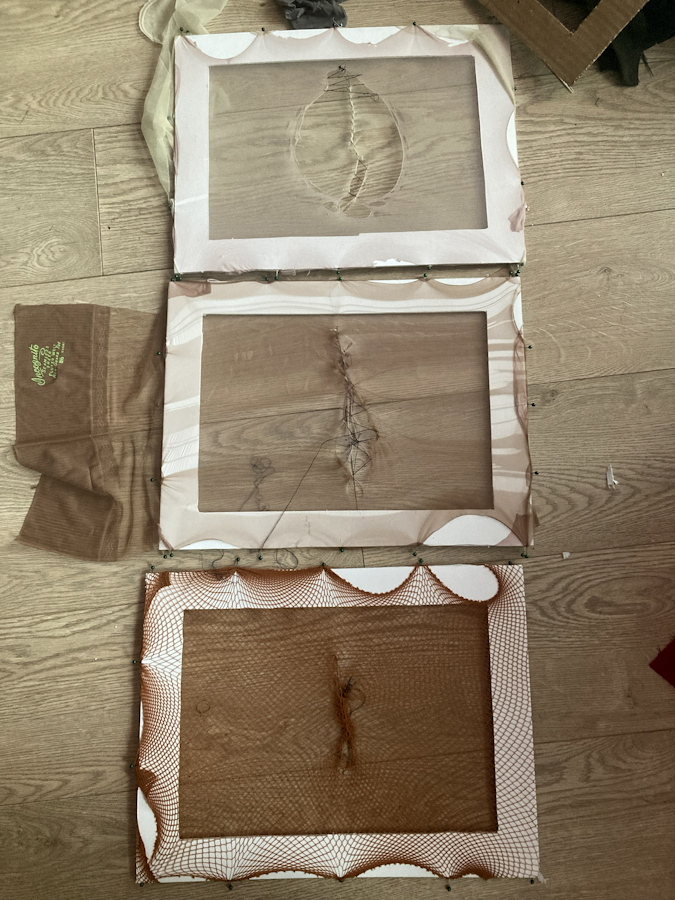
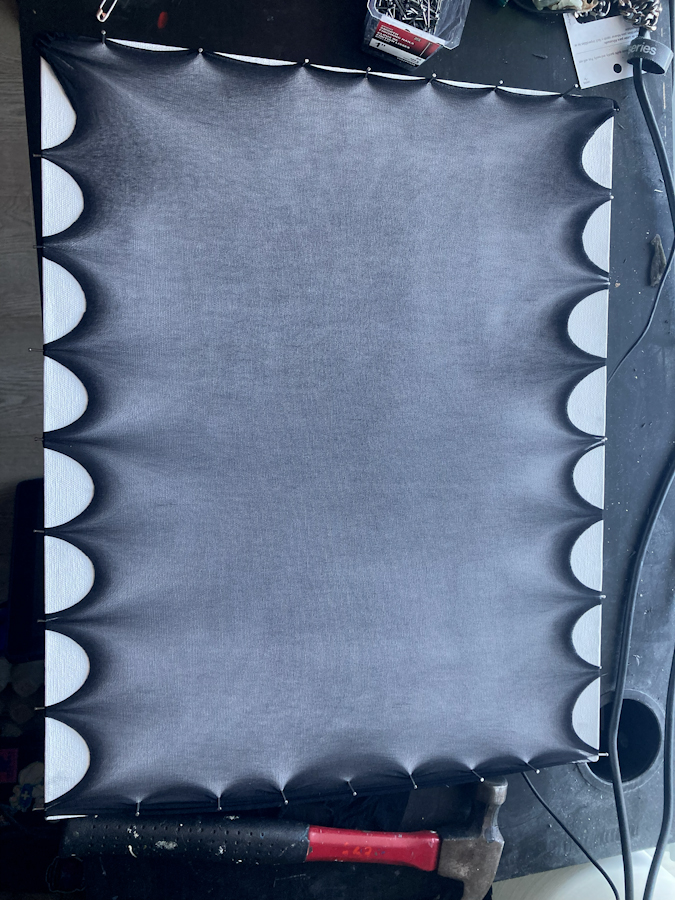
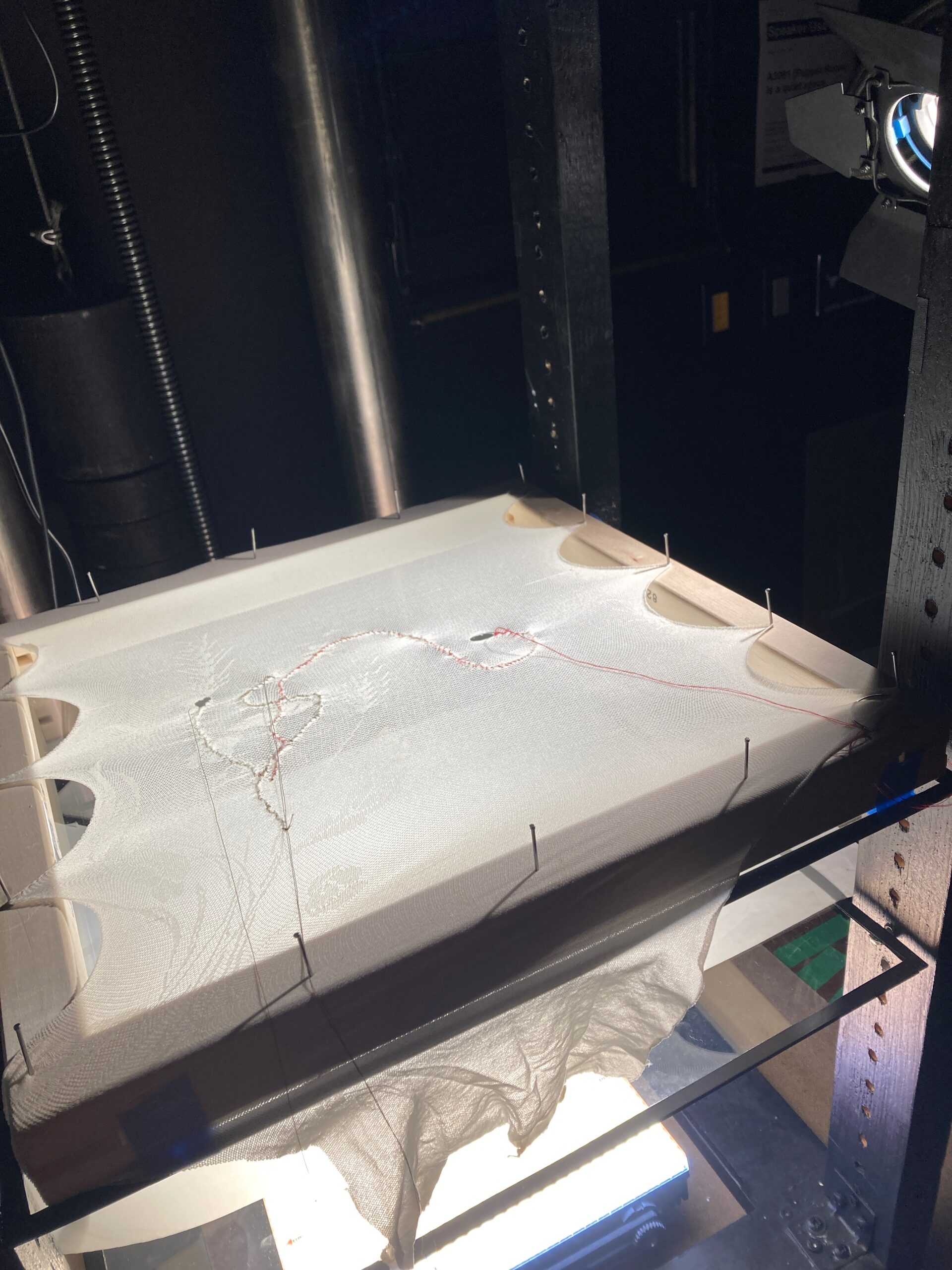
Progressing with the tests required optimisation and experimentation with materials and equipment for animation. Frames used to secure the hosiery underwent several iterations. Those cut from foam board were easy to construct and allowed for pins to be inserted, but they failed under extreme tension. Transitioning to wooden frames, although more difficult to set up, virtually eliminated the risk of collapse when hosiery was held by nails. Ila sourced wood by recycling prestretched canvases and, sometimes, purchasing individual slabs of wood panels designed to interlock and form rectangular frames.
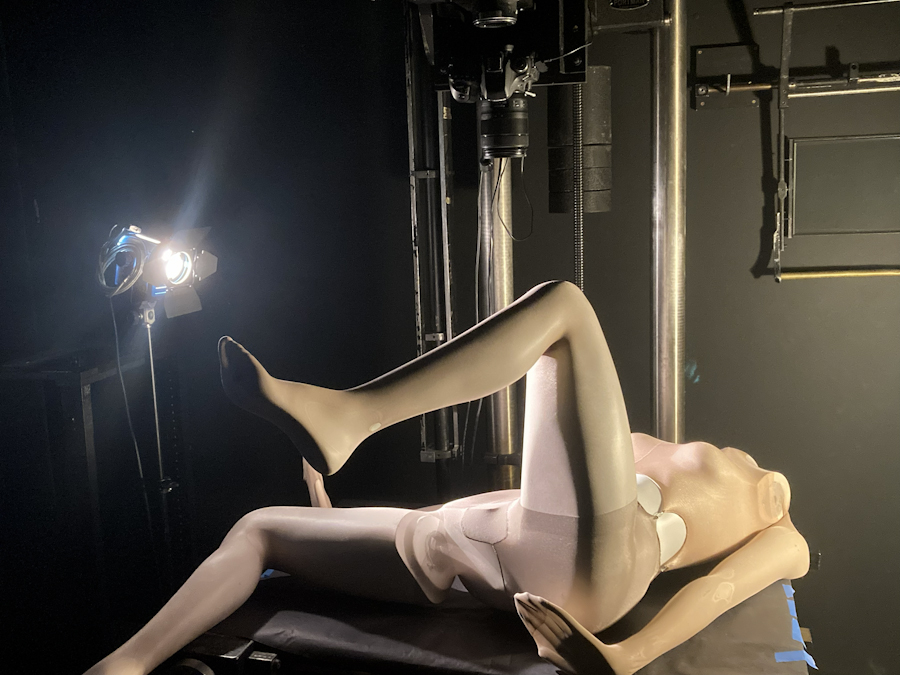
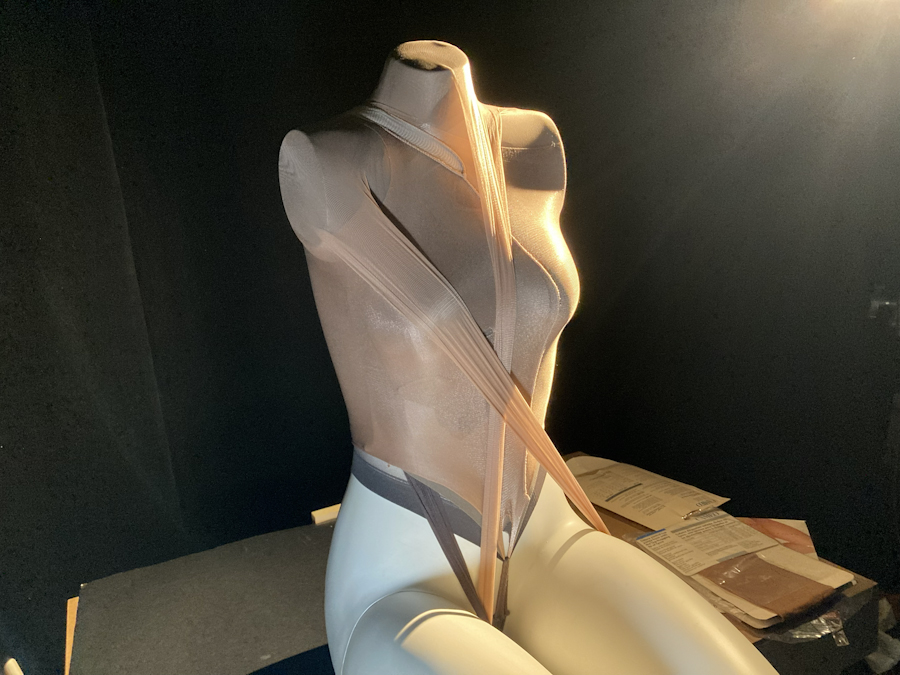
In the studio space at Emily Carr University of Art+Design, Ila gained greater flexibility in lighting and camera setups. Working in a dark room allowed for precise control over hosiery’s interaction with light. Its dimensionality could be enhanced by lighting the material from various angles and at different intensities. Lighting was a key factor in shaping a scene’s focus, intent, and overall mood. These considerations further influenced the tests when three-dimensional forms were introduced using mannequins. As the tests expanded beyond under-the-camera setups, cameras were mounted on tripods and scenes were staged in ways that more closely resembled stop-motion productions.
The first few movements were relatively steady, making them easier to track as the holes left in the foam board by the pins became markers of previous positions – an unexpected analogue to digital onion-skinning. Throughout the process, Ila became increasingly fascinated by the ways the hosiery transformed under repeated manipulation. Pushing the material to its limits, she experimented with extreme squash and stretch and irregular movement. The fabric frayed, unravelled, weakened, detached from its pins, and occasionally resisted the intended motion altogether. While hosiery cutouts may not be especially durable as standalone animated subjects, their disintegration introduces a reactive and unpredictable quality that invites further exploration.
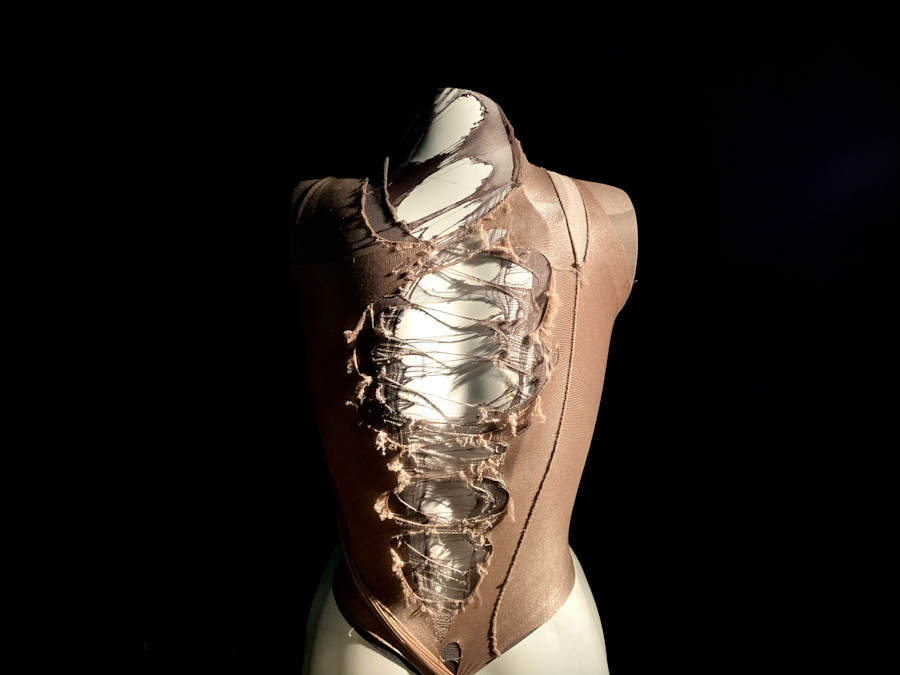
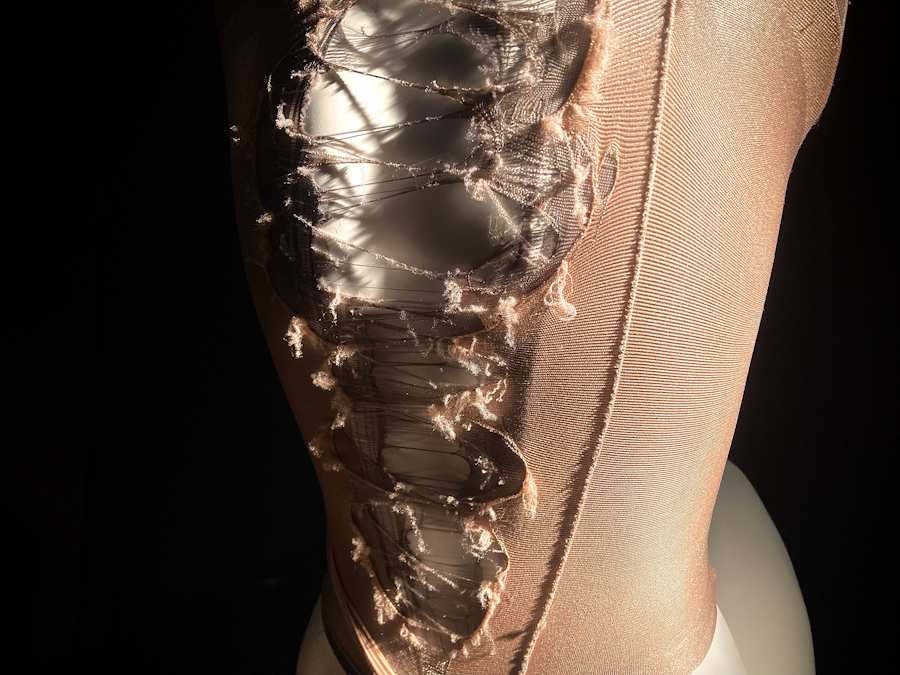
tear and repair along various parts of a mannequin
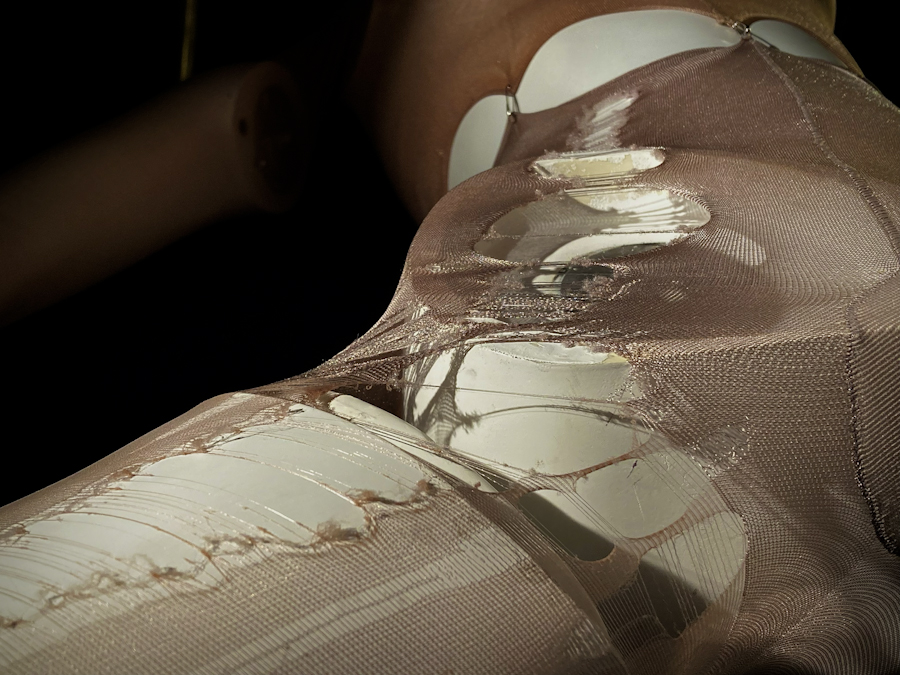
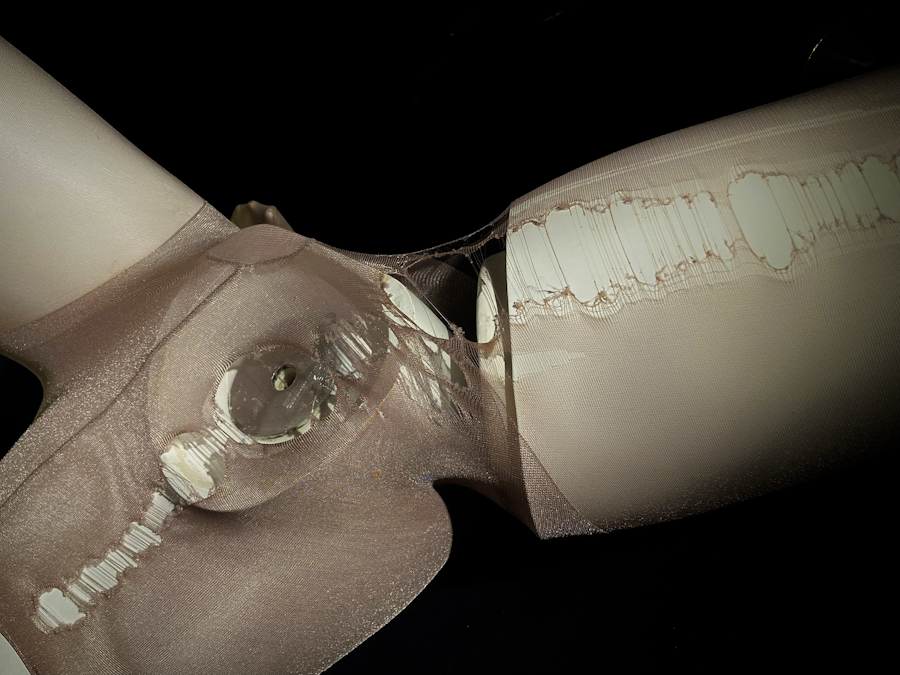
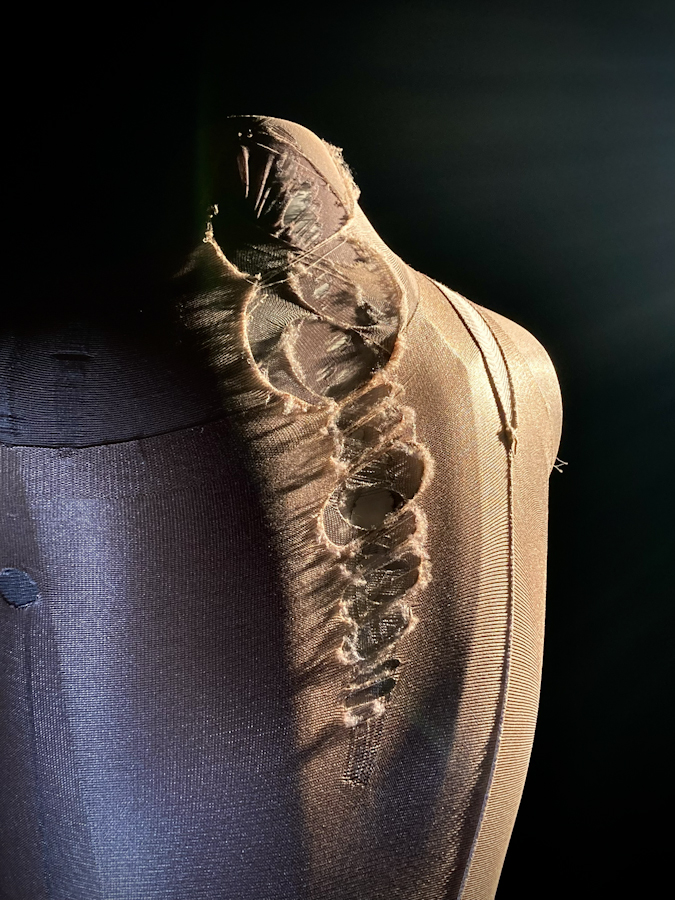
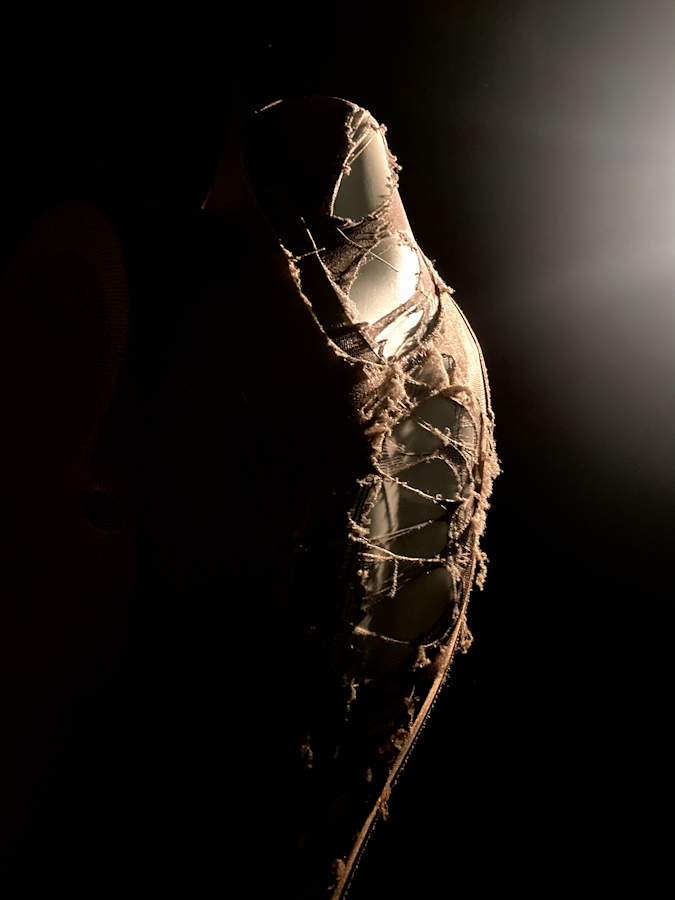
Throughout her time in the workshop, Ila developed techniques of layering, controlled tearing, and hand-sewing torn hosiery. She became familiar with how the material behaved, its role as a synthetic skin informing a provocative connection between its physical qualities and the cultural narratives surrounding it. Pursuing this further, she chose a mannequin to serve as the canvas for her final tests.
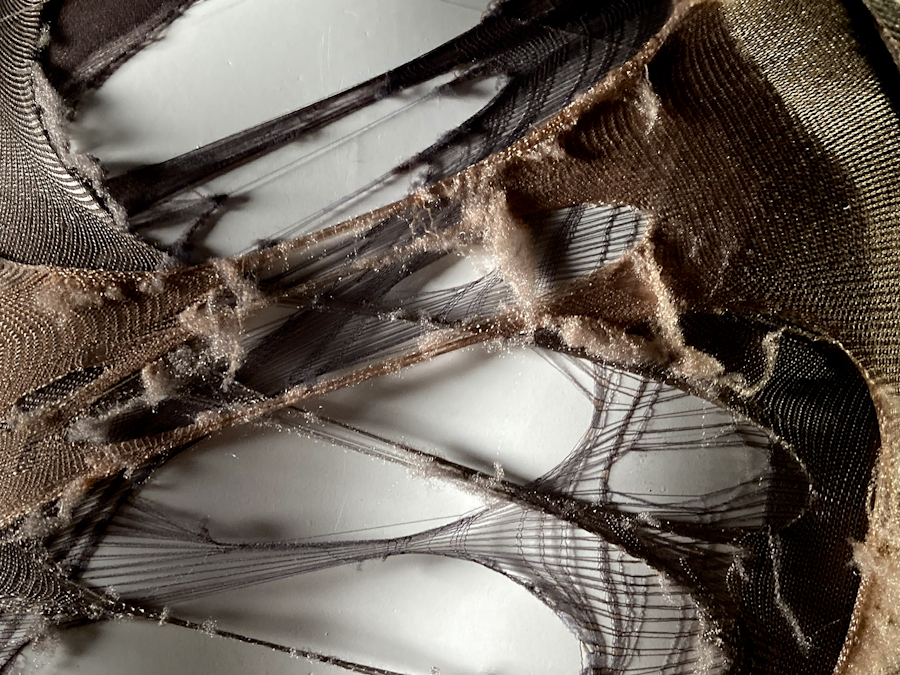
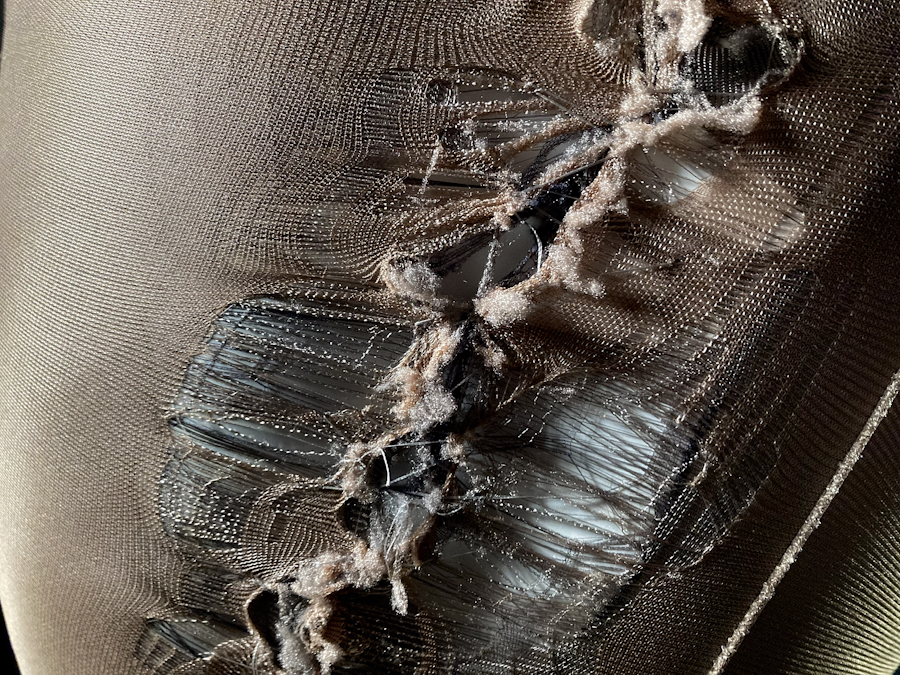
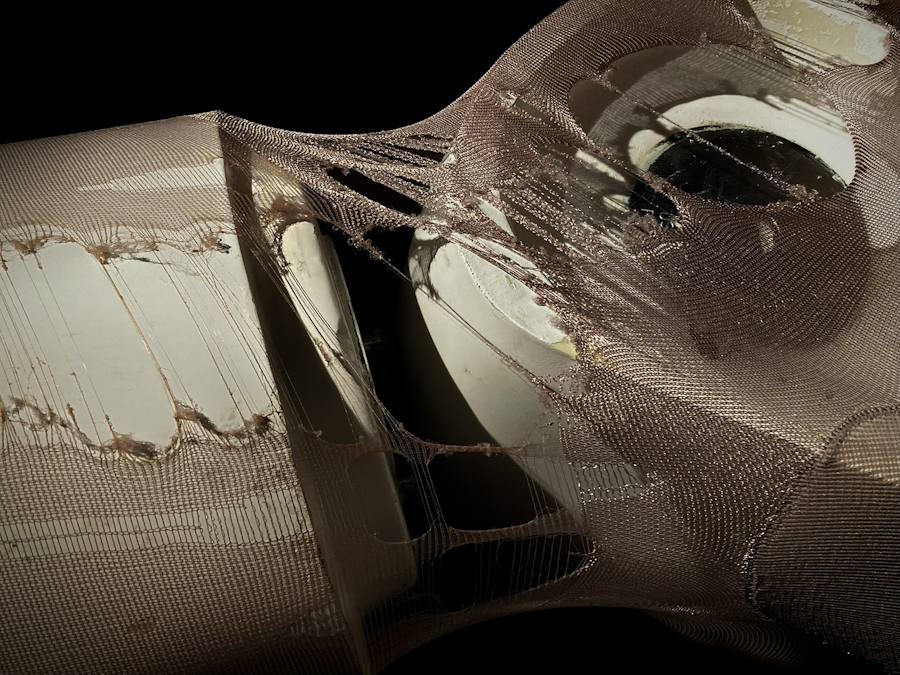
The mannequin, as a subject, carried symbolic associations similar to those of hosiery. Both directly reference the human body while often presenting an idealised form. By featuring disconnected sections rather than a complete figure, Ila introduced a sense of unease to an otherwise familiar object. Her intention was to create a subject that appeared almost human yet ultimately remained detached. The composition put the viewer in close proximity to the subject, with a black void background intensifying the sense of intimacy. Lighting was achieved through a combination of focused studio light and softer, diffused filler light to highlight the fabric’s textures and qualities. To conclude one of the tests, Ila captured frames as the lights gradually dimmed, creating an organic analogue to digital fading and rendering light an active element in the animation.
Ila examined a conceptual thread that had emerged throughout previous experiments: the fragility of nylon. She became increasingly interested in the contrast between this inherent vulnerability and the marketing that masked the material’s tendency toward failure by presenting it as desirable. Hosiery, by its nature, unravelled under tension and required continual repair. The unrelenting runs, the collapsing tears, and labored seams acquired new significance when placed against a misogynized bodily figure. These animations revealed how a single break can quickly cascade through the fabric, exposing that the true strength behind nylon and the image perpetuated alongside it, is sustained primarily by cultural perception.
-
a collection of photographs highlighting the intricacies of distressed hosiery with mannequins
-
a collection of photographs highlighting the intricacies of distressed hosiery with mannequins
-
a collection of photographs highlighting the intricacies of distressed hosiery with mannequins
-
a collection of photographs highlighting the intricacies of distressed hosiery with mannequins
-
a collection of photographs highlighting the intricacies of distressed hosiery with mannequins
-
a collection of photographs highlighting the intricacies of distressed hosiery with mannequins
-
a collection of photographs highlighting the intricacies of distressed hosiery with mannequins
-
a collection of photographs highlighting the intricacies of distressed hosiery with mannequins