Testing nylon hosiery under tension
-
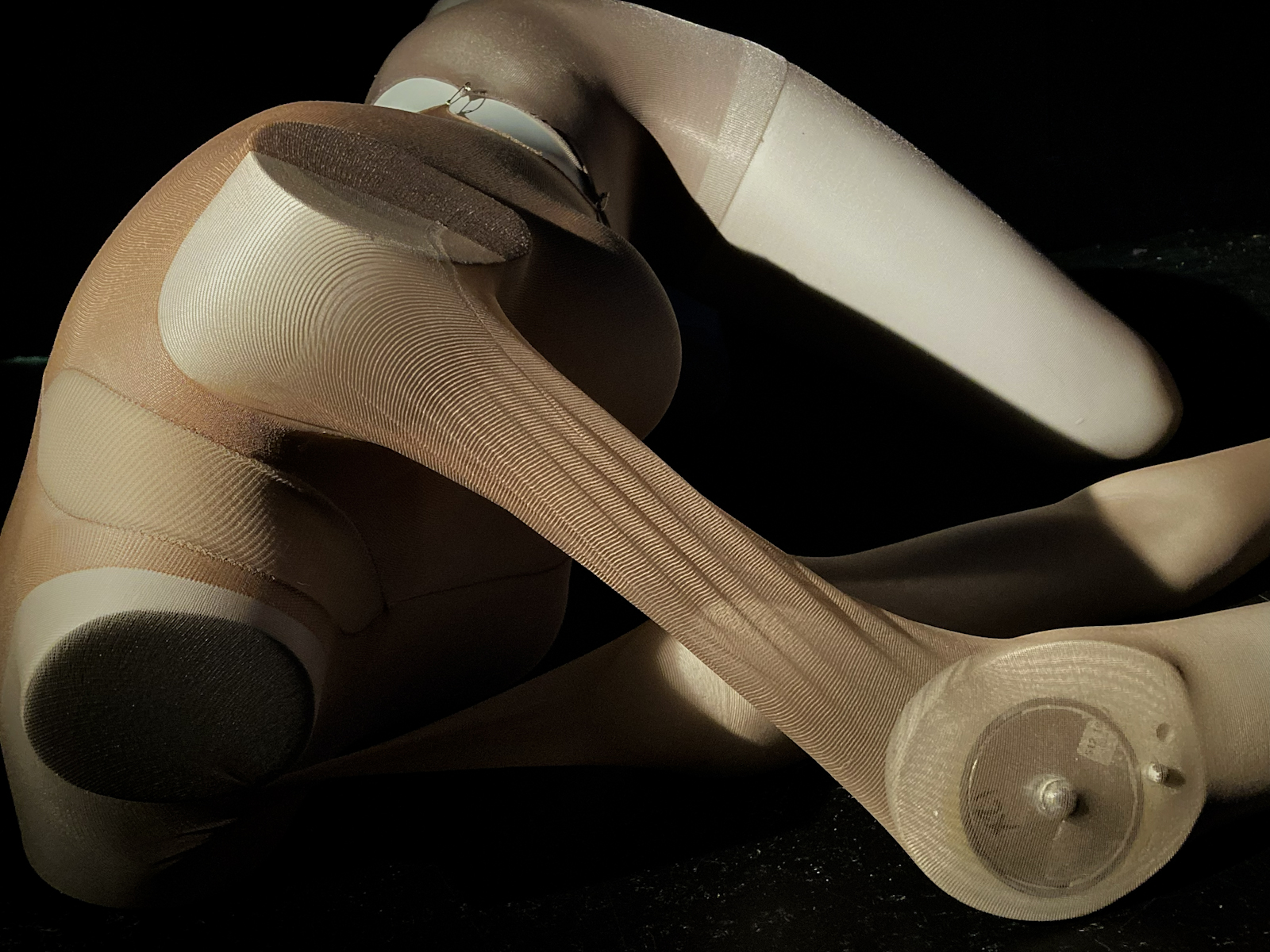
Photographs focused on hosiery conforming and stretching over a mannequin and its disconnected limbs
-
Photographs focused on hosiery conforming and stretching over a mannequin and its disconnected limbs
-
Photographs focused on hosiery conforming and stretching over a mannequin and its disconnected limbs
-
Photographs focused on hosiery conforming and stretching over a mannequin and its disconnected limbs
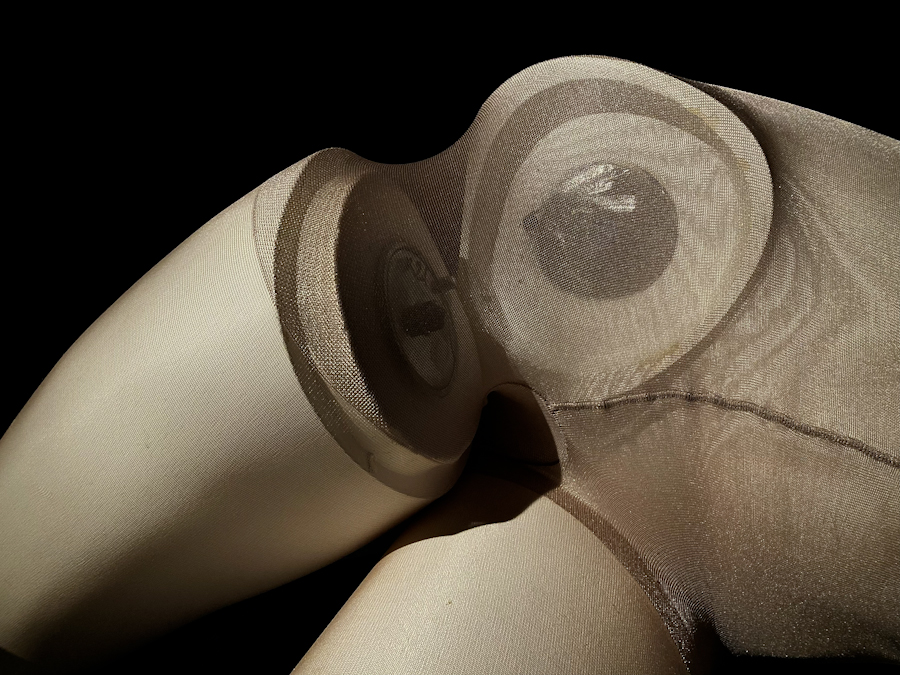
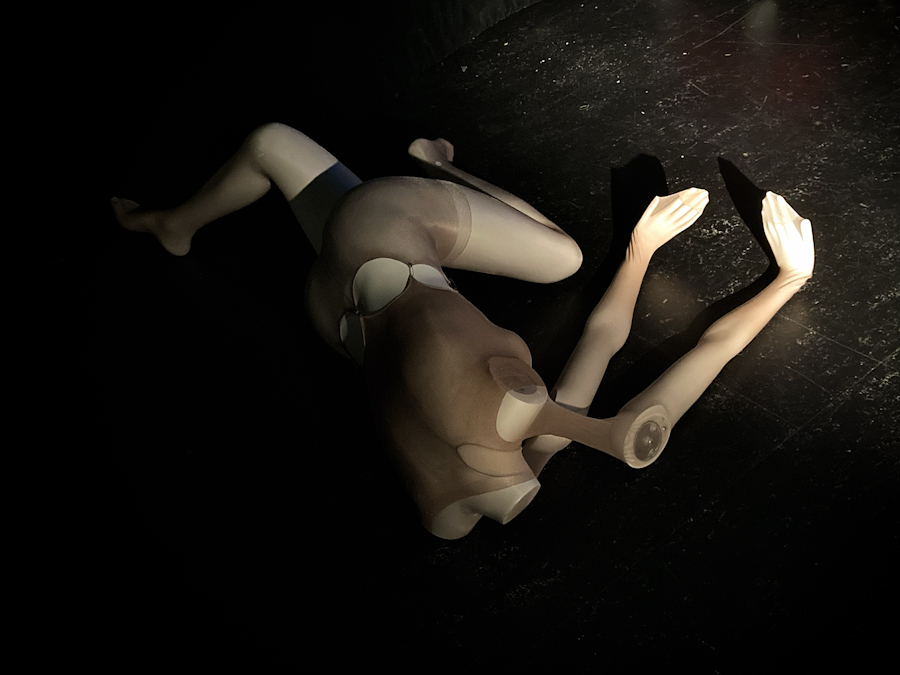
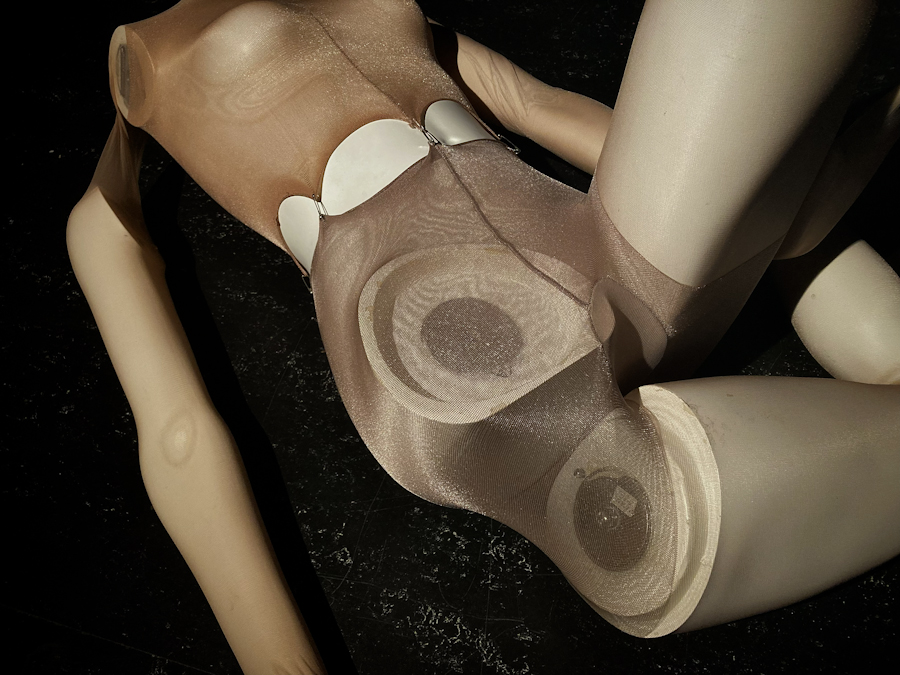
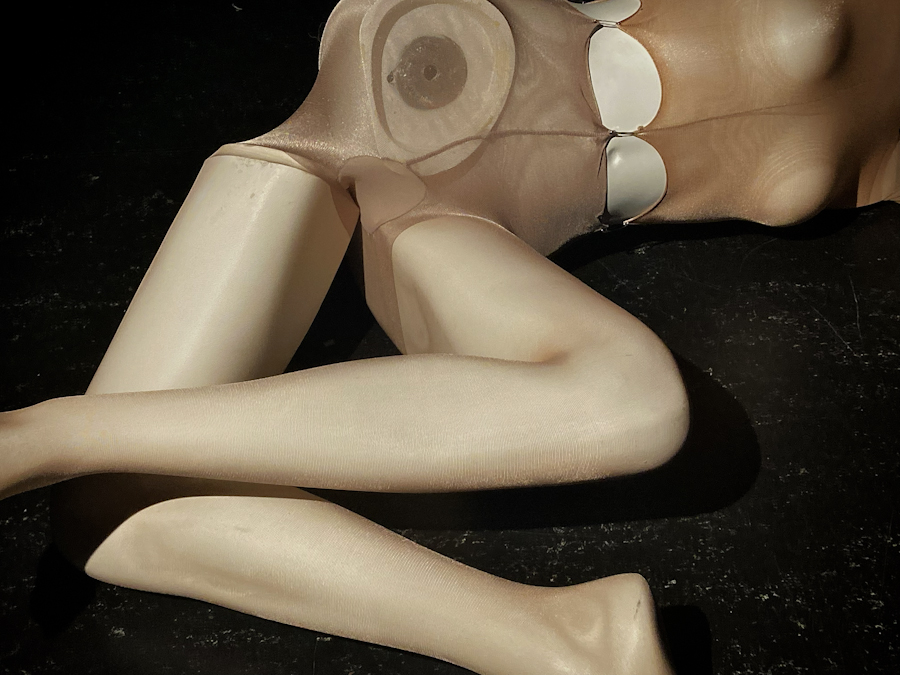
Nylon is a polymer that exists in many forms, and like other plastics, is derived from crude oil. During its synthesis, nylon can be heated, extruded into long fibres, and knit into fabrics used for hosiery. The type of nylon most commonly used in stockings, Nylon 6, is often blended with filaments of other synthetic fibres, such as Lycra (spandex), to enhance its physical properties. Compared with their natural counterparts, these blends are soft, silky, elastic, and exceptionally durable. As a knit fabric, stockings allow threads to glide past one another, containing, conforming to, and masking anything they’re slipped over with a sleek finish. The very properties that make nylon desirable for textiles offer rich possibilities for creating tactile, evocative artwork. Workshop assistant Ila Vanna explores these material qualities through photography and animation, using lighting, multiplane rigs, and stop-motion techniques.
many layers of hosiery built up on a frame, showing their textures and transparency
Hosiery’s transparency enabled dimensions of depth and texture to emerge when stacked together. In this test, Ila built on this potential by stretching layers of stockings over a frame, creating a dense network of overlapping textures. In paradox to its synthetic nature, hosiery behaves very organically through its ability to mask and conform to the skin. The result resembled a textural membrane, alive with depth and complexity. By keeping the structure heavily front-lit, the intricate qualities of the surface layer were captured, while a subtle backlight helped emphasise the patterns and details formed by the many layers of hosiery. Behind the layers, a hand introduces delicate movements, looking to see how the textures may shift or catch light when poked and prodded.
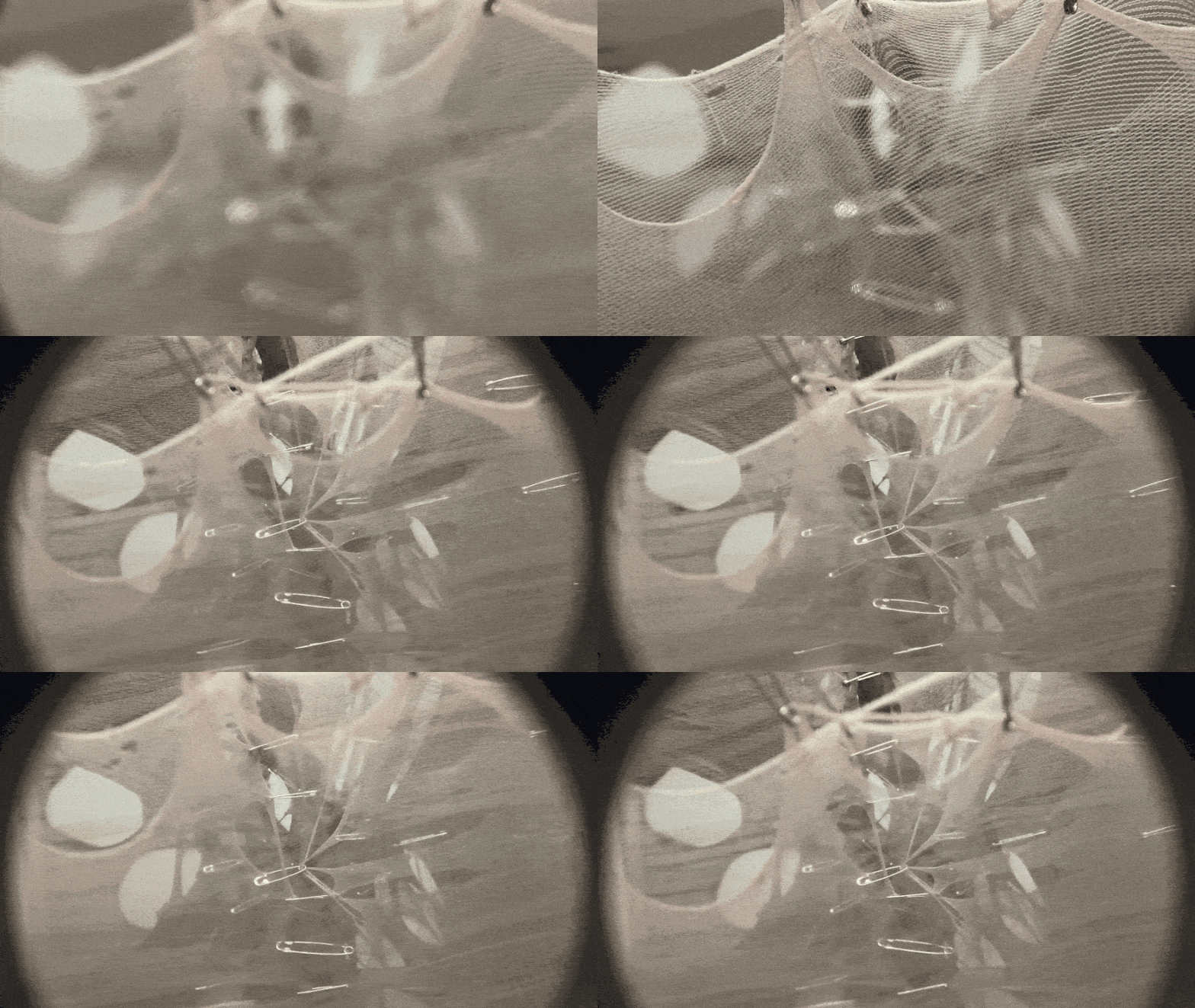
tattered layers of hosiery held by safety pins, stretching and breathing
Further developing the possibilities of layering, Ila’s next test uses the multiplane setup to achieve both greater depth and independent control of each layer. Distressed pieces of hosiery were stretched and secured in place with safety pins, creating distinct forms and silhouettes. Strings were then tied to the pins, allowing the fabric to be pulled and contorted. As the tension strained narrow weak points and expanded larger forms, the fabric moved in a way that almost evoked breathing, rendering yet again, a synthetic material into a biomorphic form.
The multiplane setup also enabled the camera to serve as an active device in filmmaking. Camera movement, depth of field, and lenses with different focal lengths can all contribute to a scene’s aesthetic and narrative. Inspired by these observations, Ila became interested in creating a rich nylon landscape for the camera to explore. While her tests ultimately led her in a different direction, they revealed possibilities for nylon as a material for environmental design that she remains eager to investigate.
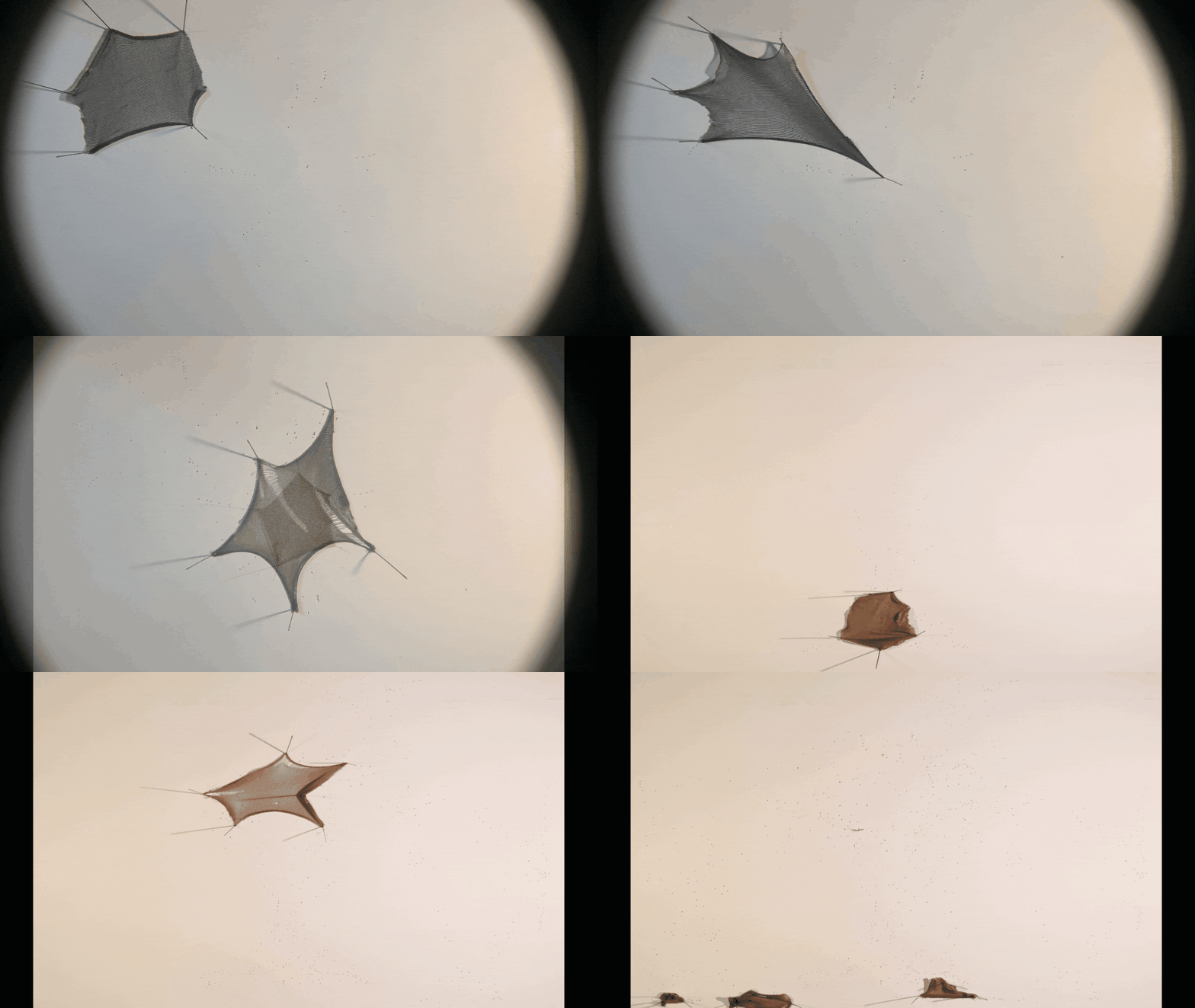
cut out nylon ‘blobs’ stretching and bouncing
In her next series of tests, Ila shifted her focus entirely to movement, evolving the recurring idea of a synthetic creature brought to life through nylon’s materiality. With the goal of animating hosiery as an independent subject, she cut small pieces of fabric and pinned them to foam board using sewing needles. By repositioning the needles frame by frame, she could manipulate the shape of each cutout and explore how a creature made of nylon might move.
The material’s elasticity naturally lent itself to the animation principle of squash and stretch. The first animation served primarily as a proof of concept, demonstrating how one of these creatures might crawl and stretch across a surface. Their movements often resembled those of a liquid, contorting into extreme shapes as they built up and released energy. Working straight ahead, Ila intuitively followed this energy through the animation, allowing the forms to squish, bounce, and even break apart due to the inertia. At times, the process recalled the animation of bouncing balls or effects like water and explosions.
-
images of the process and rigs behind the animated tests
-
images of the process and rigs behind the animated tests
-
images of the process and rigs behind the animated tests
-
images of the process and rigs behind the animated tests
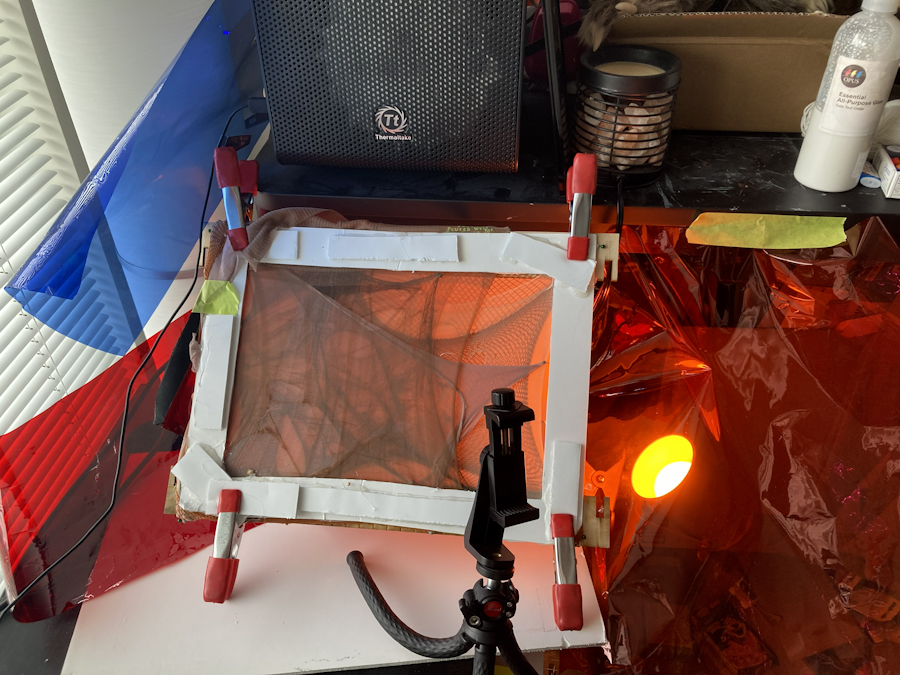
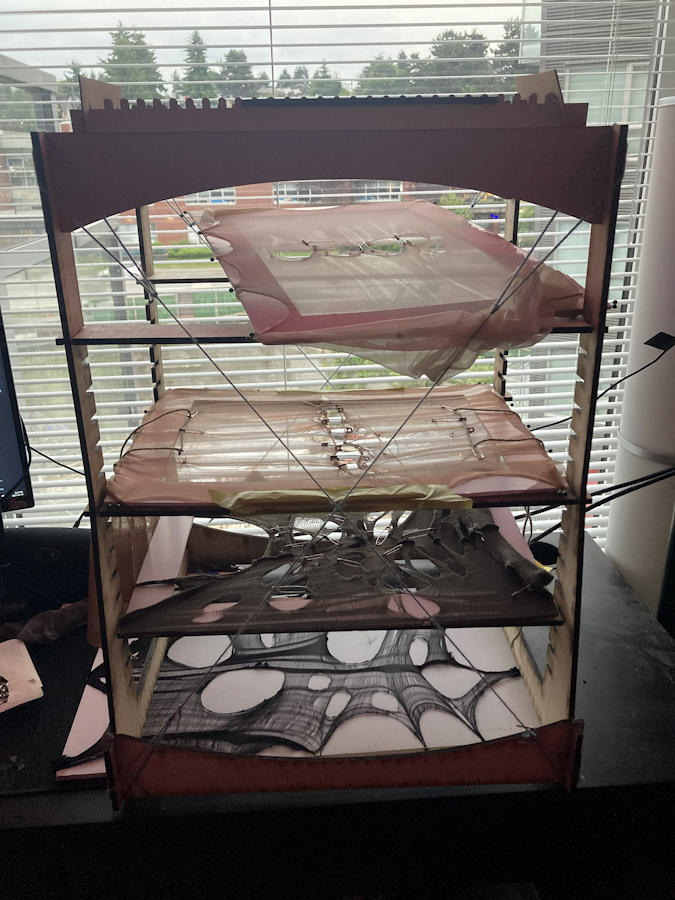
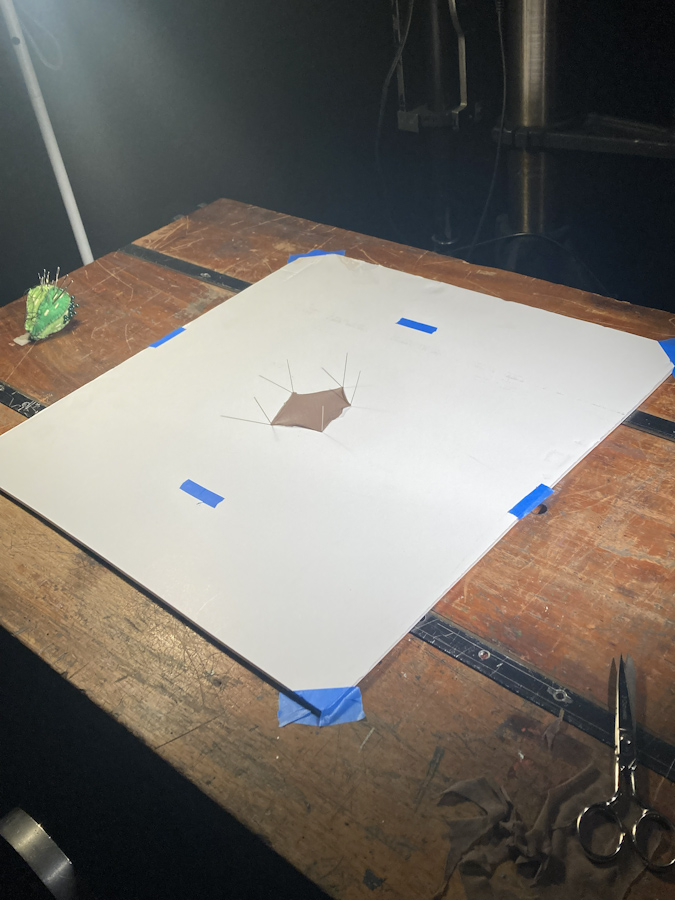
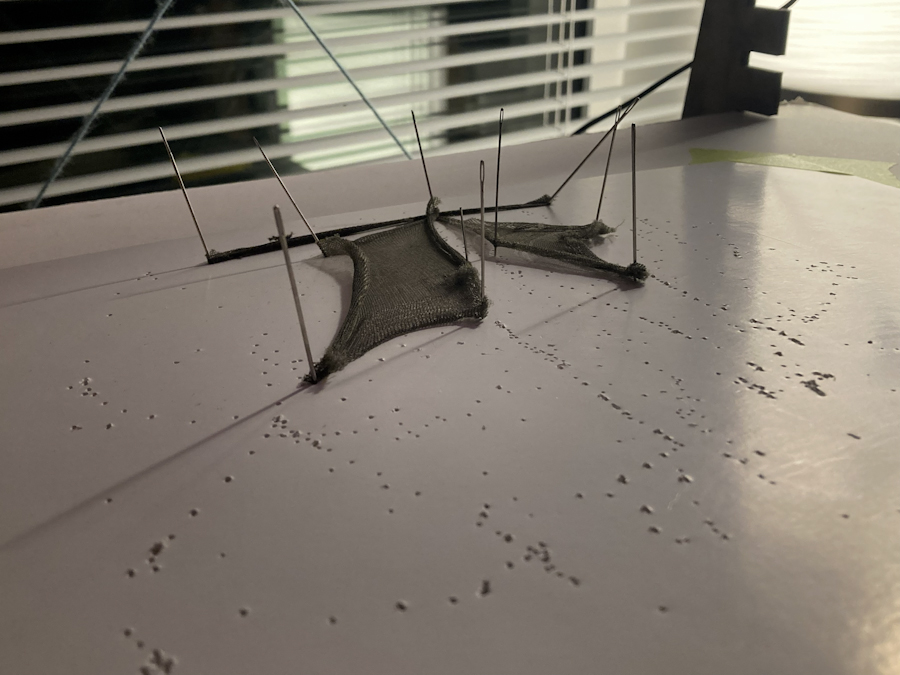
For her initial tests, Ila had relied on improvised setups, often using sunlight as her primary light source. While this method worked for shorter tests, it showed its limitations as the tests became more ambitious. The tests were shot on a phone, either held in a phone stand or mounted on a portable multiplane setup developed by the Animate Materials Workshop. Ila used the mobile application Stop Motion Studio and built frames out of foam board over which the hosiery could be stretched. Foam board proved advantageous for several reasons: it was lightweight, reasonably sturdy, easy to fabricate, and soft enough to insert pins directly into the surface to secure the hosiery. However, during her very first animation, which involved six to eight layers of hosiery, Ila discovered that excessive tension could cause the frame to crease. Once these weak points developed, they were nearly impossible to repair. With some reinforcement of the corners, she was able to restore its functionality, but only for the duration of the test. This experience prompted Ila to continue experimenting with different materials for the frame, building iterations of the design throughout her following tests, in search of a more durable solution.
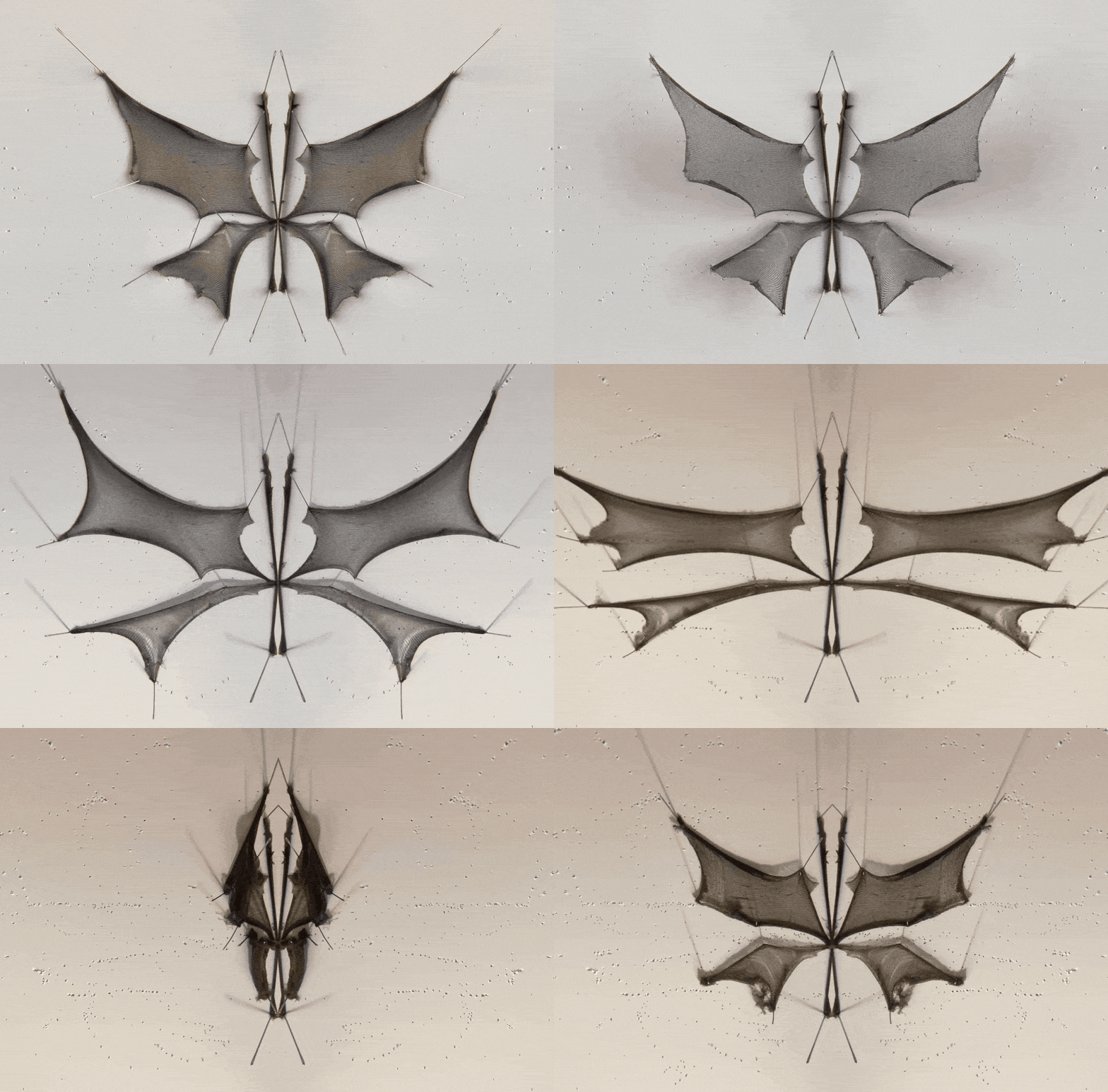
pinned nylon butterfly fluttering with steady and chaotic motion
Building on the technique of pinned cutouts, Ila’s next nylon creature took the form of a butterfly. To optimize the workflow, only one half was animated, with the completed footage mirrored digitally in post-production. The test explored a broader range of movement, developing ideas that emerged from the preceding experiments.
The first few movements were relatively steady, making them easier to track as the holes left in the foam board by the pins became markers of previous positions – an unexpected analogue to digital onion-skinning. Throughout the process, Ila became increasingly fascinated by the ways the hosiery transformed under repeated manipulation. Pushing the material to its limits, she experimented with extreme squash and stretch and irregular movement. The fabric frayed, unravelled, weakened, detached from its pins, and occasionally resisted the intended motion altogether. While hosiery cutouts may not be especially durable as standalone animated subjects, their disintegration introduces a reactive and unpredictable quality that invites further exploration.