Notes on the film
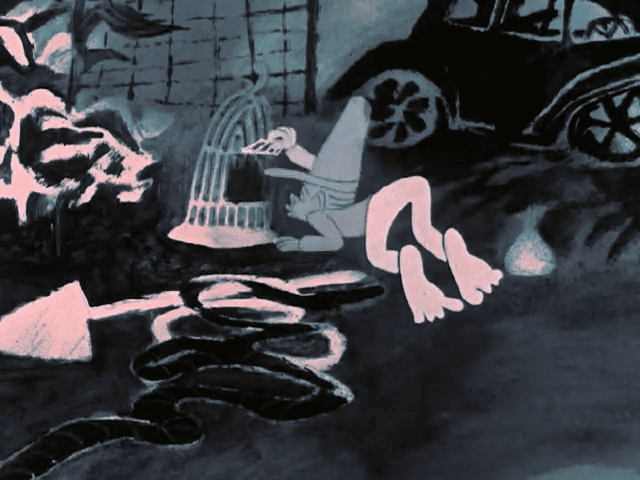
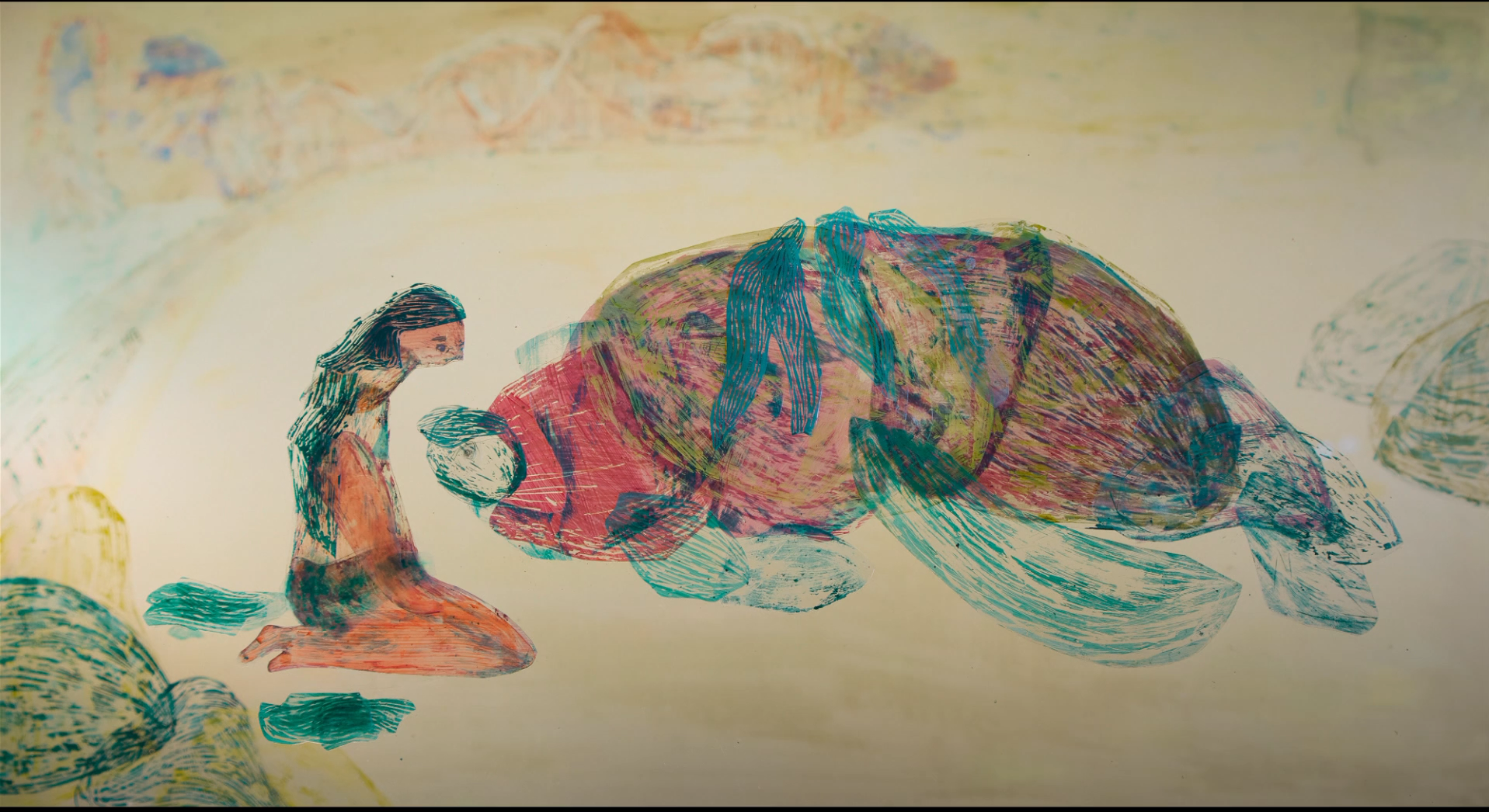
Criatura is a fictionalized animated documentary about an adolescent girl navigating her immigration journey, narrated and inspired by the story of Lola, who immigrated to London from Mexico. Using a multiplane under-the-camera setup, director Nitya Ramlogan engineers a distinctive visual language in which translucent layers of cutout puppets and backgrounds blend into a seamless environment. This translucency relies on acetate celluloid sheets painted with gouache and acrylic paint, as well as occasional additions of oil on glass animation. A vibrant colour palette reinforces the teenage protagonist’s point of view while echoing the aquatic milieu defining the world of her memory and imagination.
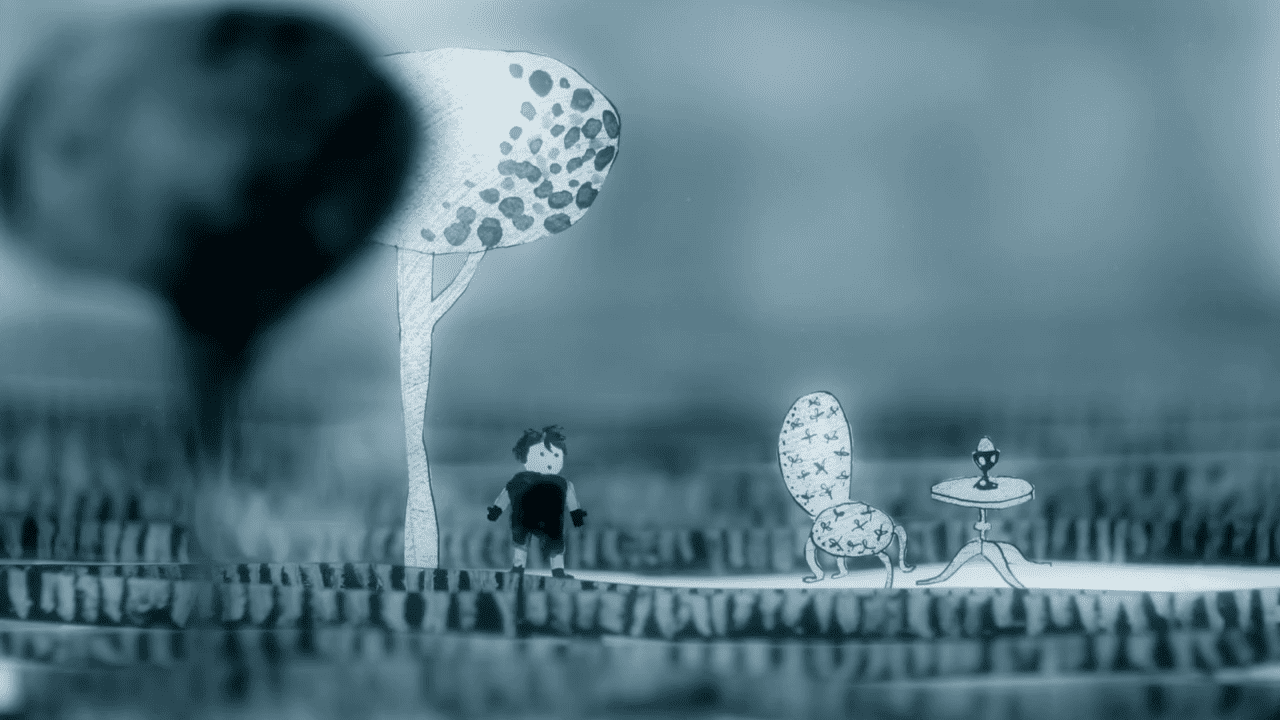
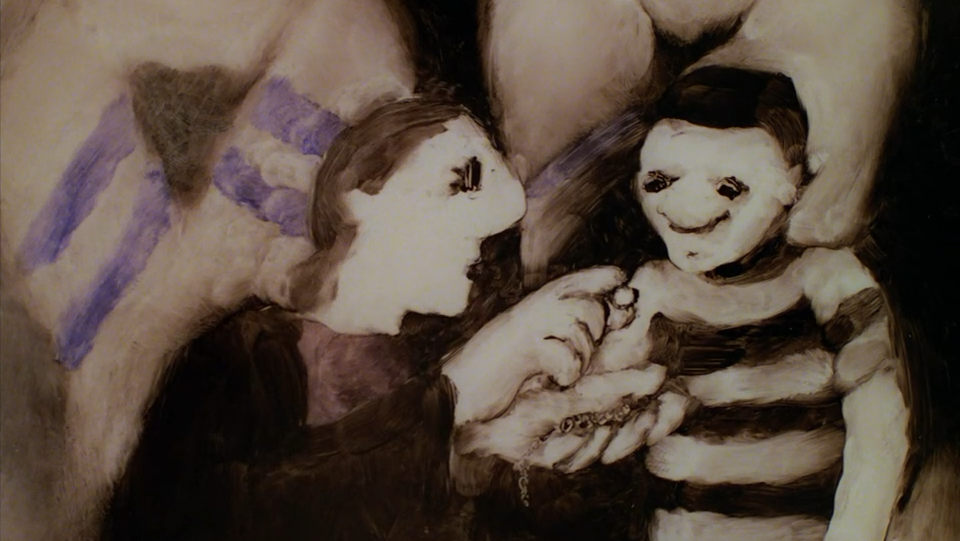
A combination of vibrant acetate puppets and oil paint-on-glass backdrops forms Criatura’s visual aesthetic.
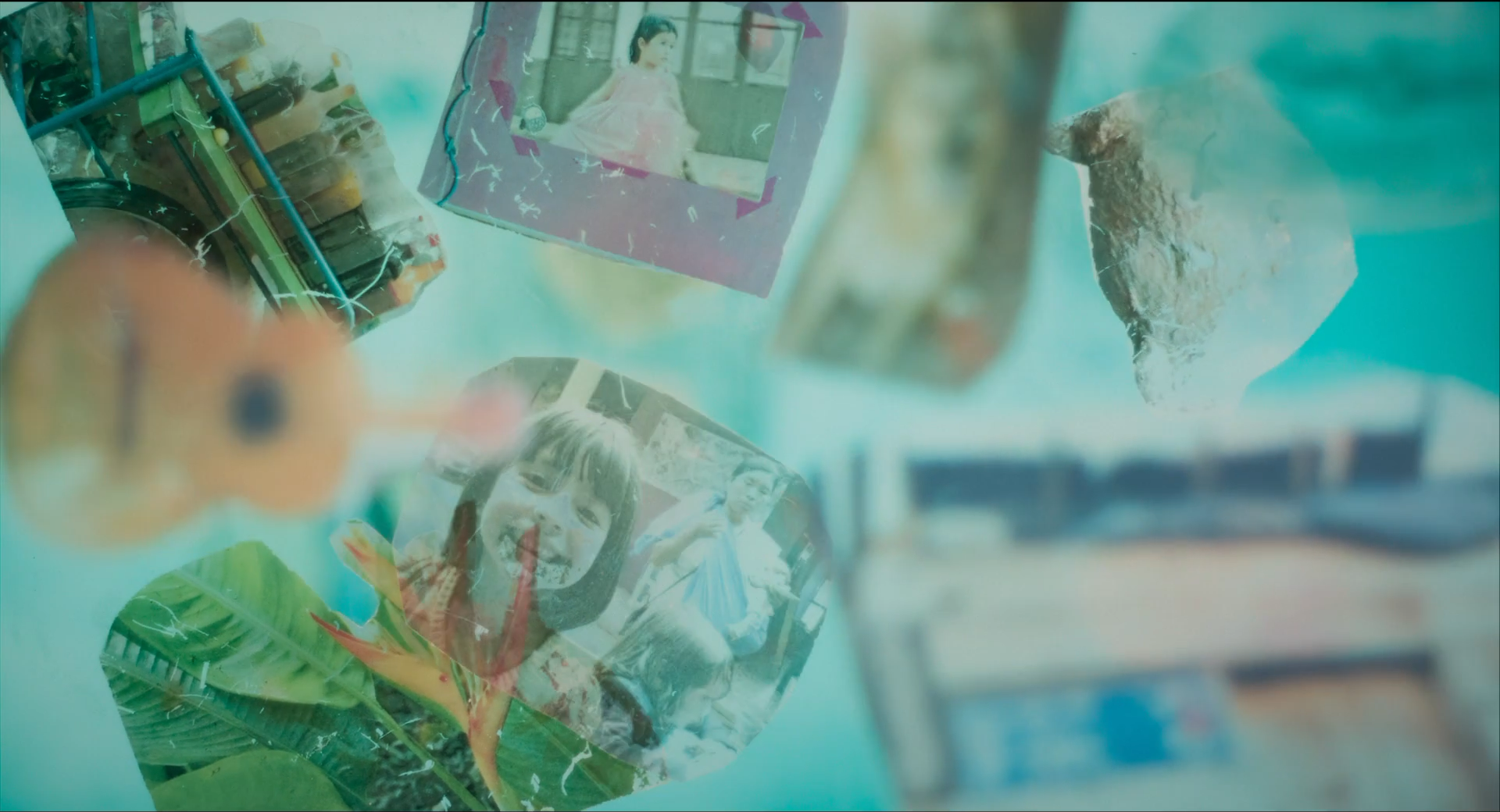
“Do I need to say it in English, or can I say it in Spanish?” asks Lola in the film’s opening, prefacing her subsequent contemplation of language, culture, and familial history. The film’s story is based on personal memories Lola shared in the co-design workshops that shaped Criatura, and Lola’s voice grounds the film’s complex themes in lived experiences of immigrant adolescents, who bring a level of innocence, curiosity, and playfulness to an otherwise challenging topic. Even as Lola navigates her shifting identity as a migrant and gradually drifts away from her father, the story unfolds through spaces like a beach, an amusement fairground, or a nightclub, where Lola develops her self-expression. Memories of her past surface through her internal dialogue, often taking fluid form in water, with real photographs floating across a nebulous space. These personal snapshots of Lola’s life additionally serve a documentary function that tethers the film’s magical realism to real events. More specifically, a mysterious creature whom Lola meets on the beach is occasionally linked to photographs of her father.
-
Water becomes symbolic of confronting past memories through different stages of the story.
-
Water becomes symbolic of confronting past memories through different stages of the story.
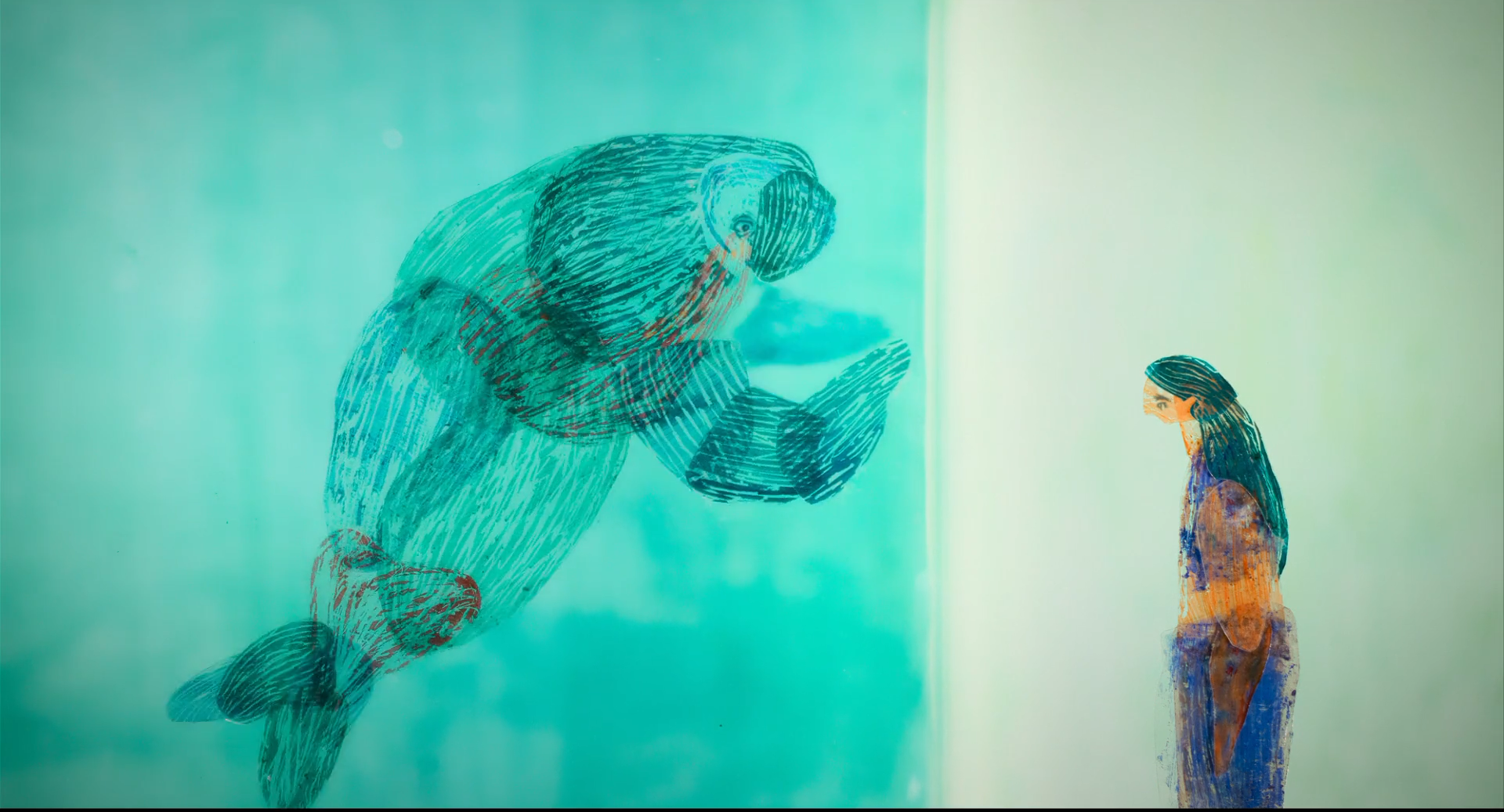
Water, in fact, becomes a recurring motif for Lola’s turbulent interiority, specifically her relationship to Mexico and memories of a home left behind. From her first encounter with the creature at the edge of a beach to her later separation from it by an aquarium tank, she constantly occupies spaces between land and water, in distance and proximity. In the final sequence, she finally dives into the charged medium of water, ruminating on holding onto her memories of Mexico while anticipating a future beyond. Her head bobs out, while her body remains submerged, at once being in and out of water, and analogously, the past and the future.
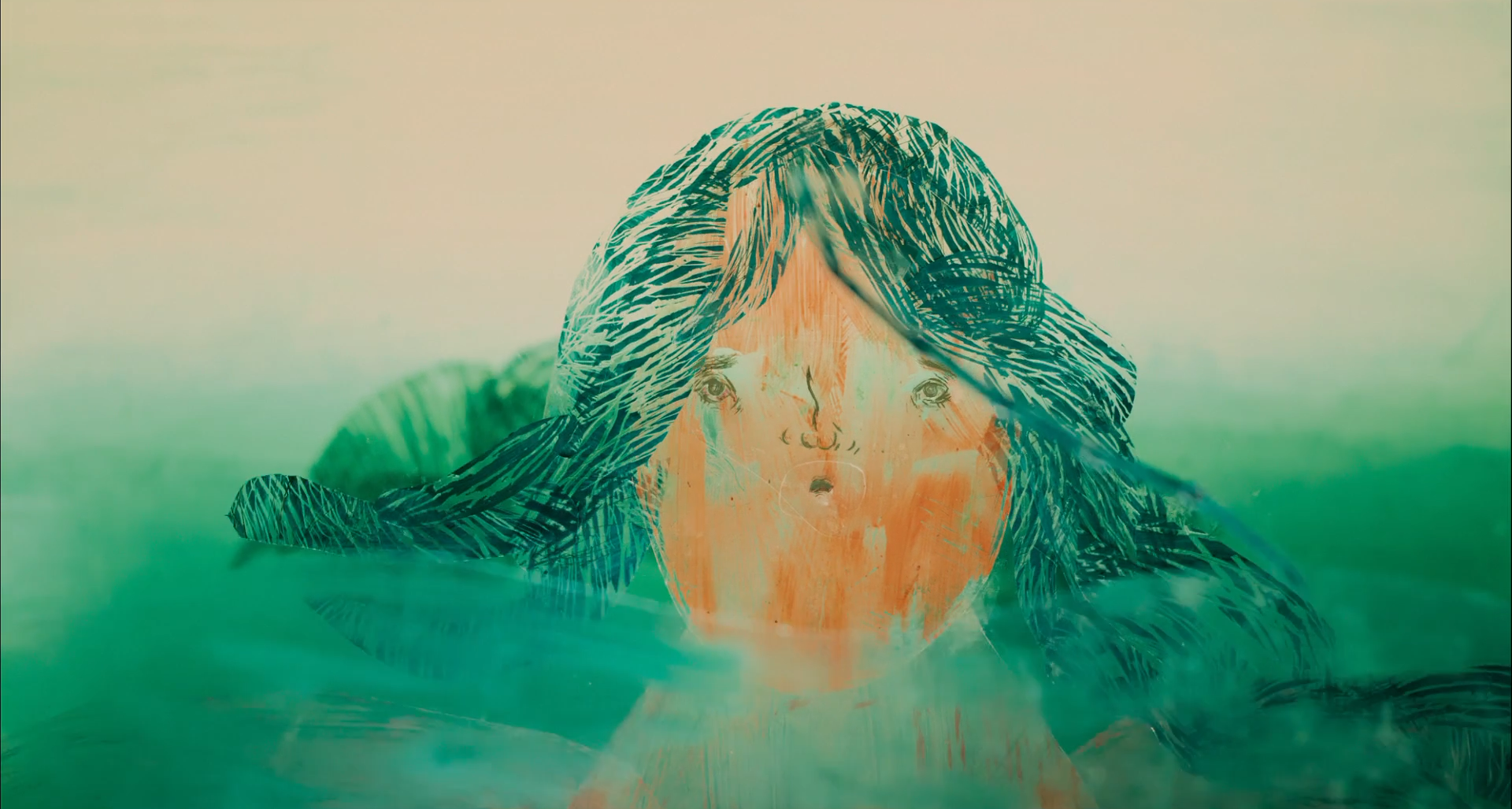
The final image lingers on Lola’s head emerging from the water while her body remains submerged.
To construct her puppets, Ramlogan cut fragments of clear acetate celluloid sheets, pigmented with gouache and acrylic paint, and fixed them at the joints with transparent tacky wax to enable movement. Gouache, she observes, provided greater light-filtering capacity and was therefore used predominantly on the puppets, while acrylic was used for elements that required deeper cyan hues. The surface paint was scraped away to create subtractive rough-edged textures, highlighting the tactility of the painted marks while allowing negative spaces to reveal the layers beneath. The translucency of her puppets, along with the glass and fluid oil paint, creates a penetrable, multi-layered collage of elements that mirrors overlapping memories recounted through the story. Additionally, the material choice of the celluloid sheet– glossy, crystalline, and reflective– visually mimics the qualities of water.
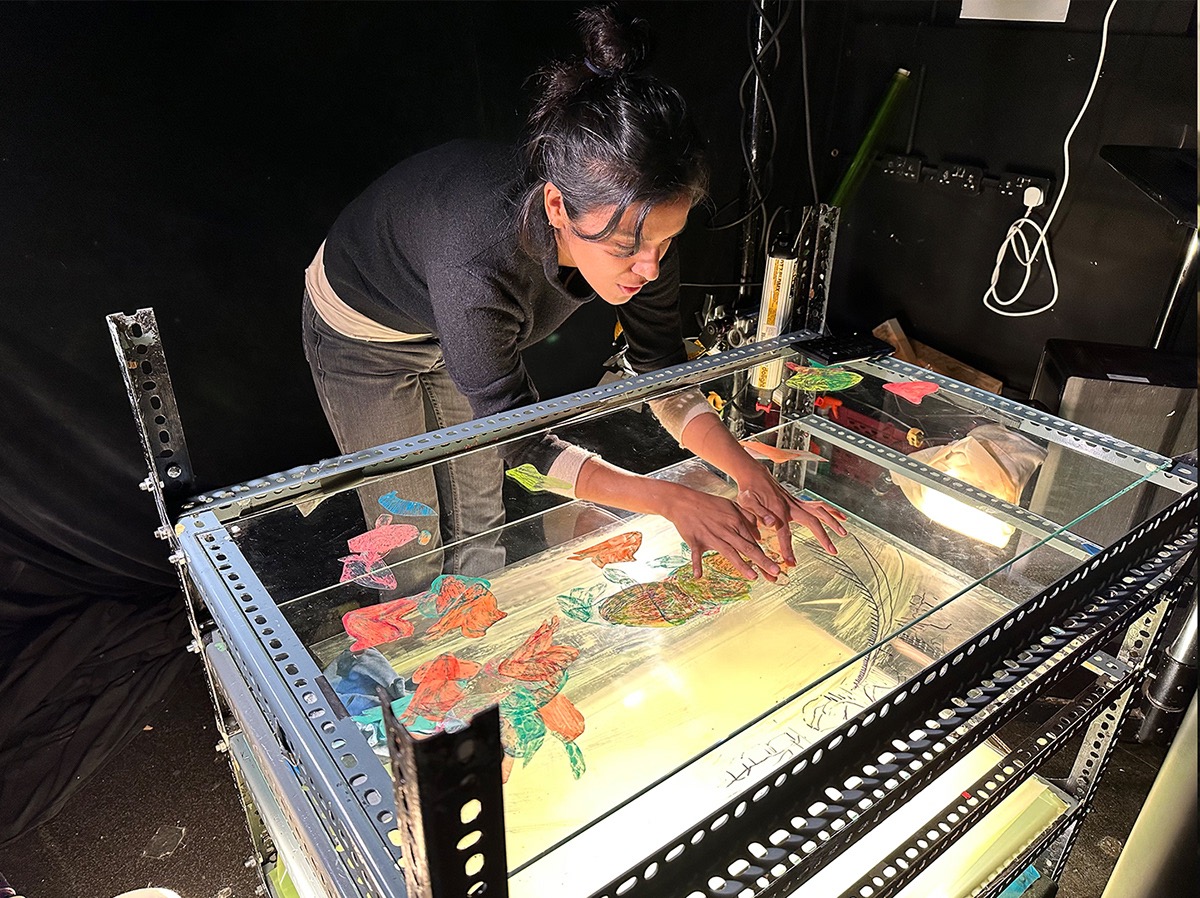
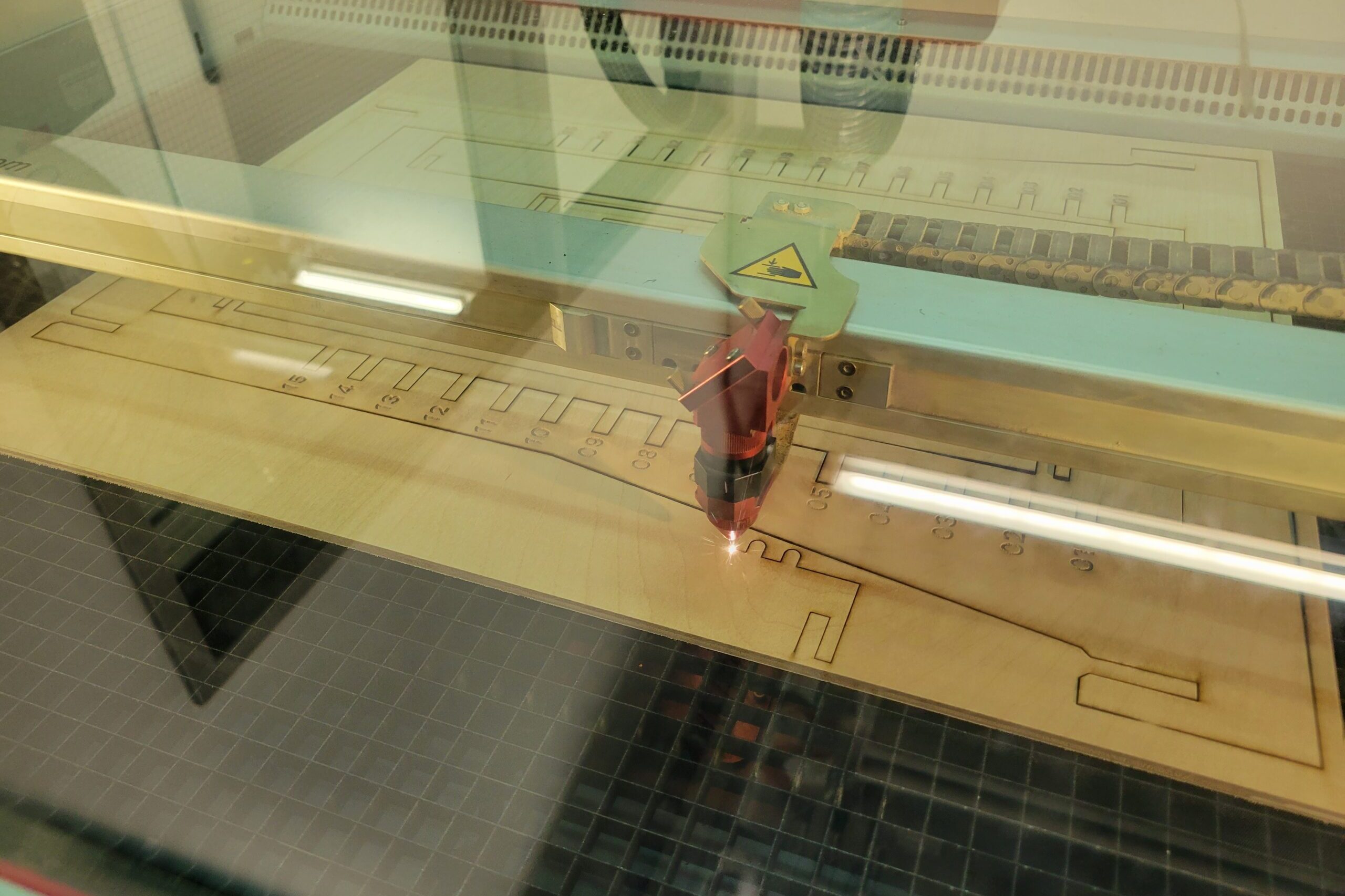
A behind-the-scenes still of Ramlogan working with the multiplane setup.
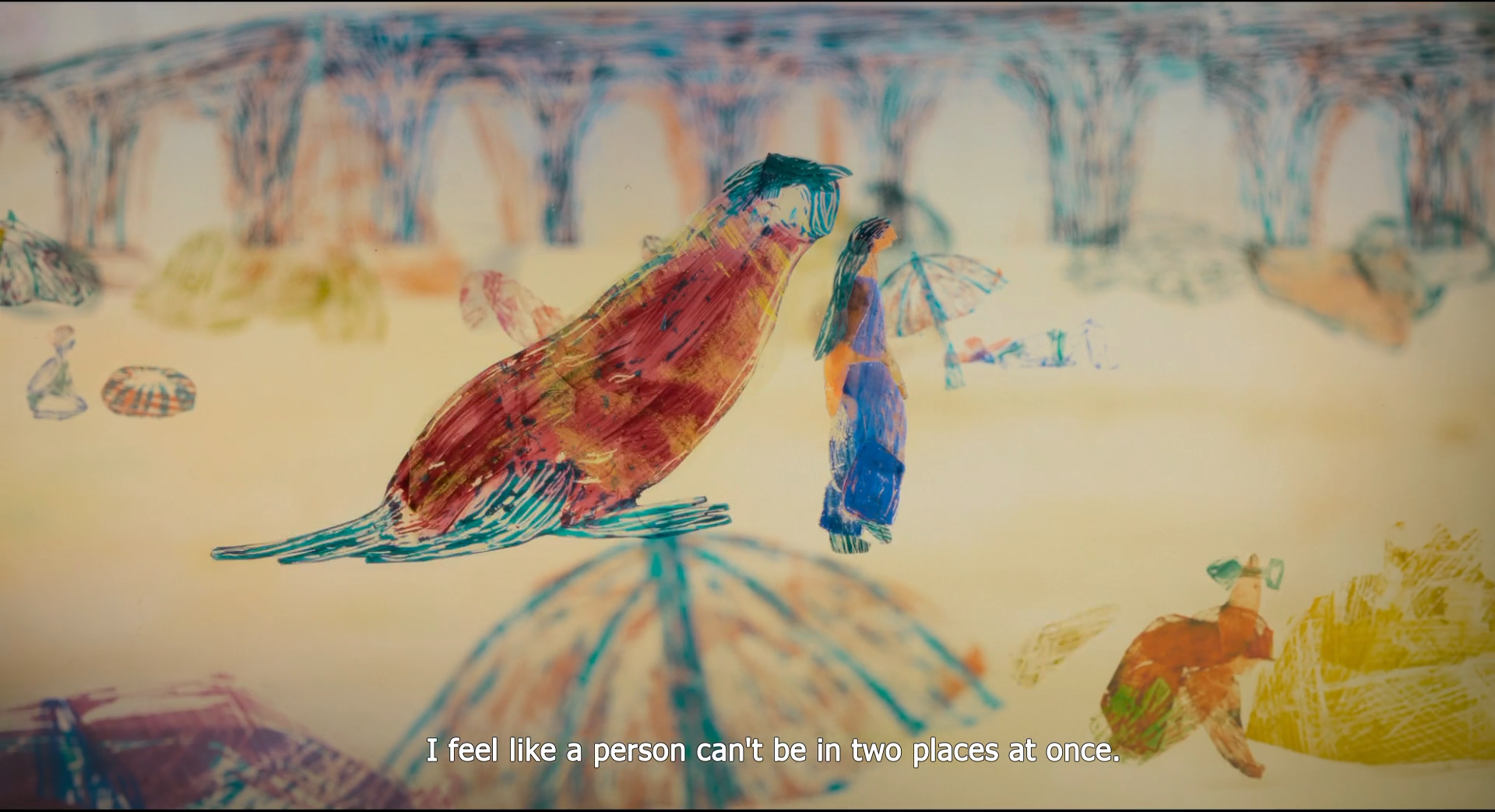
The camera becomes an active narrative device, with different layers peering in and out of focus. This pull-focus technique not only creates depth but also places the viewer directly in the protagonist’s perspective. Through this selective focus, rendering elements hazy and not fully clear, Ramlogan visualizes the process of recalling deep-seated memories that overlap, coalesce, and lose detail to privilege raw emotional intensity. Combined with real photographs and Lola’s voice narration, the film thus constructs an intimate space for a deeply personal story.
While most visual effects were created manually on the multiplane, the film used digital compositing for certain looping movements. In the electric club lighting sequence, the lights flash in rhythm with the music, changing hue as Ramlogan adjusted the colour temperature frame by frame in the Dragonframe software to create the flickering effect.
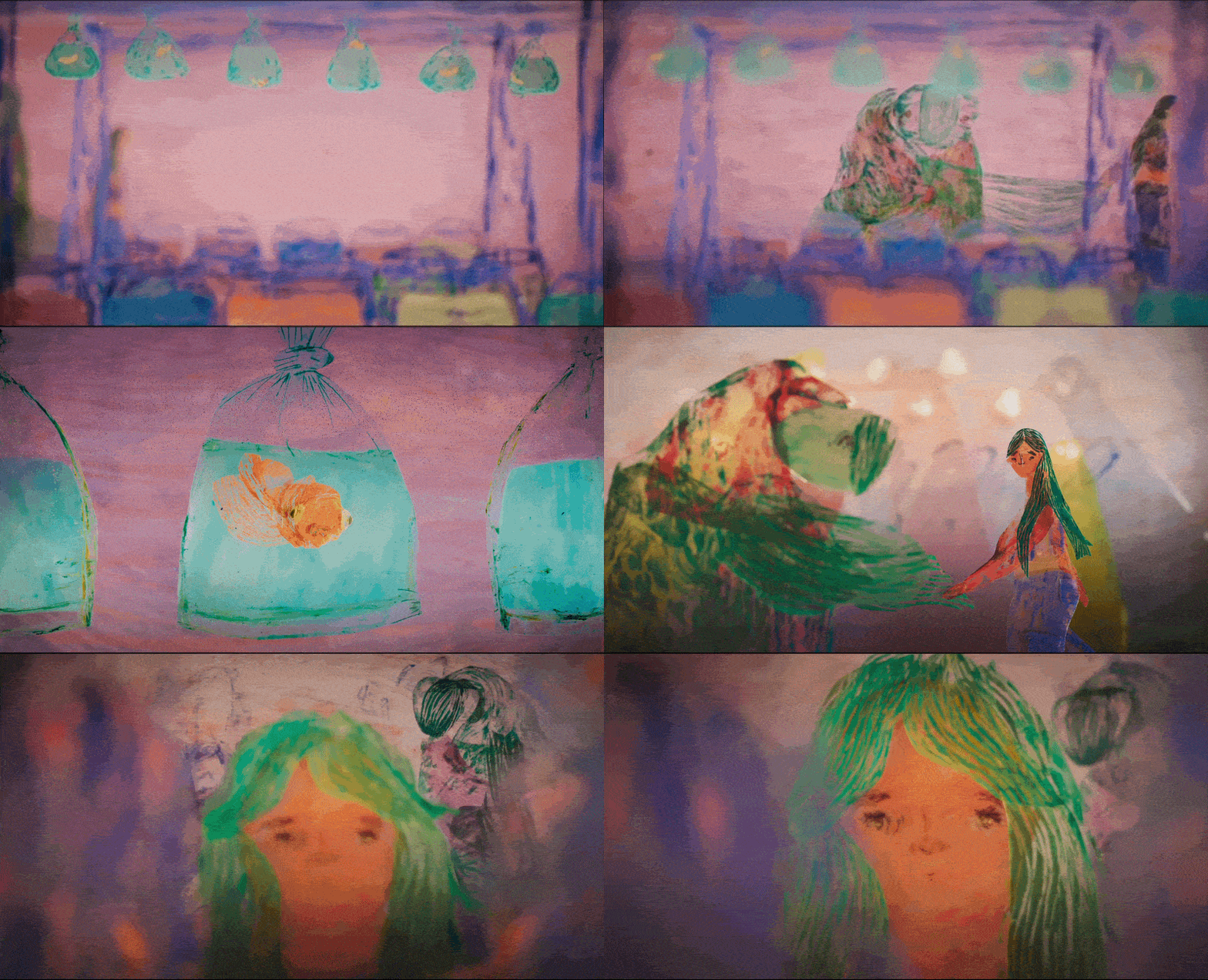
Adjustments to camera focus bring different layers in and out of focus
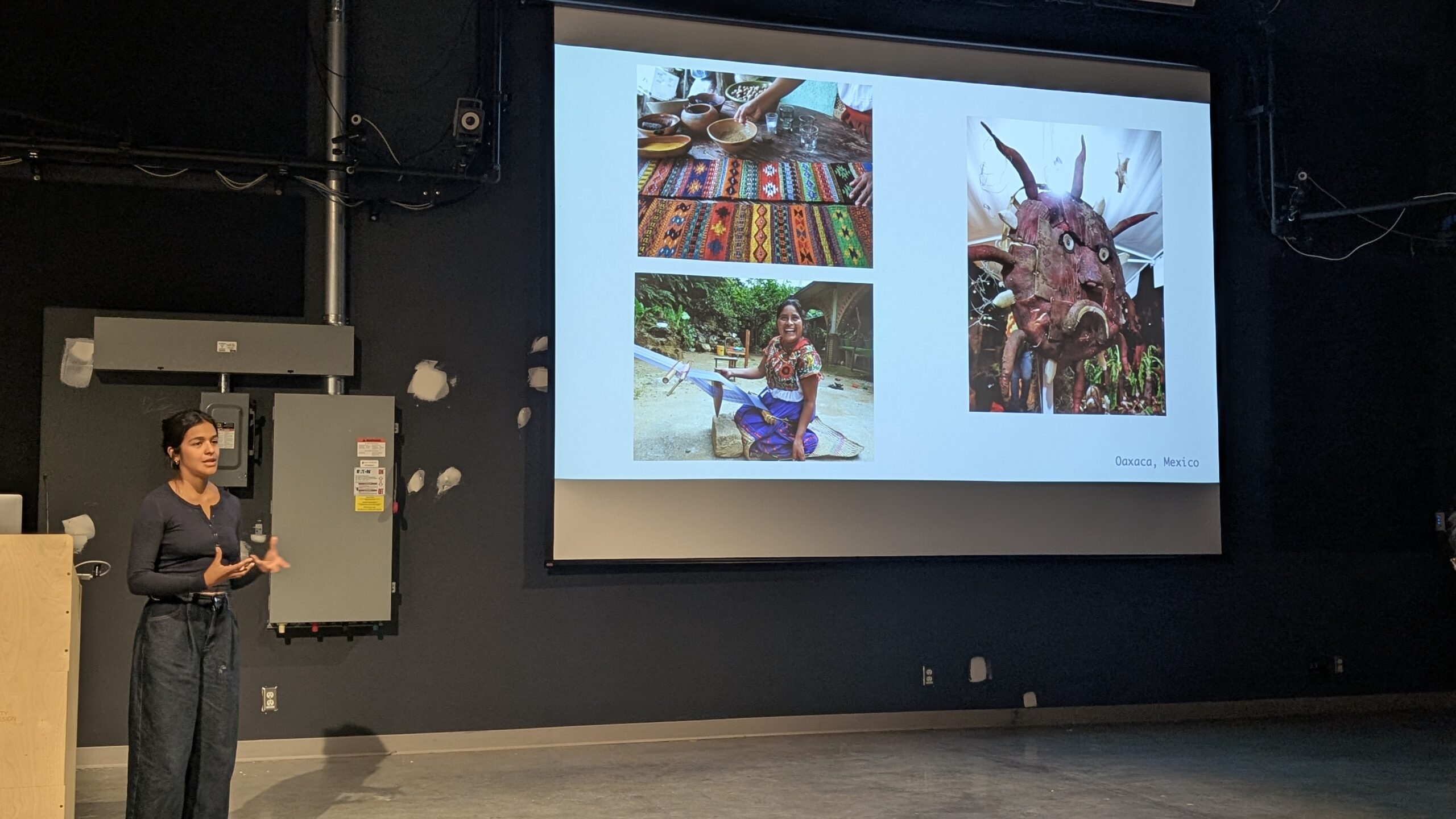
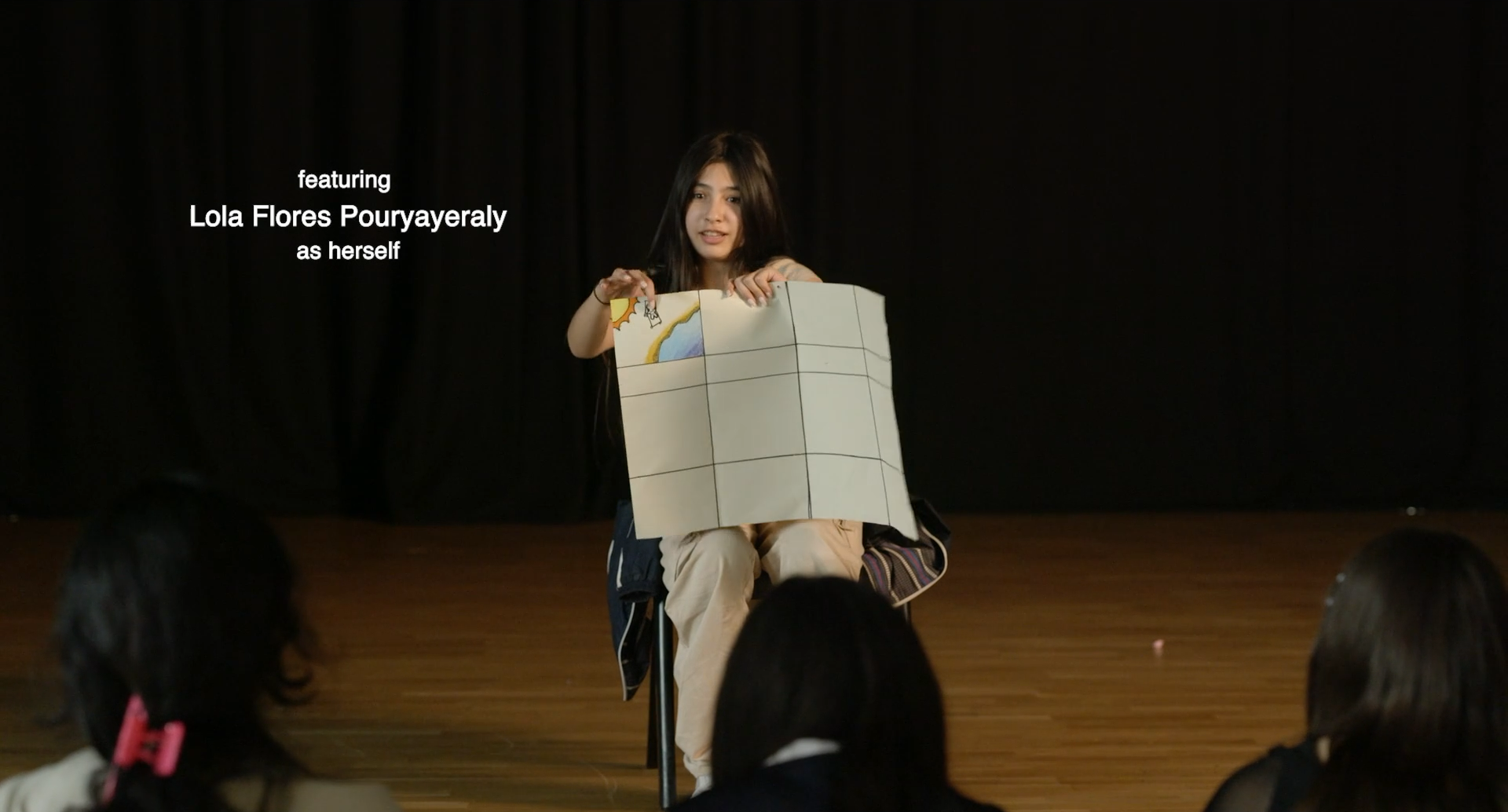
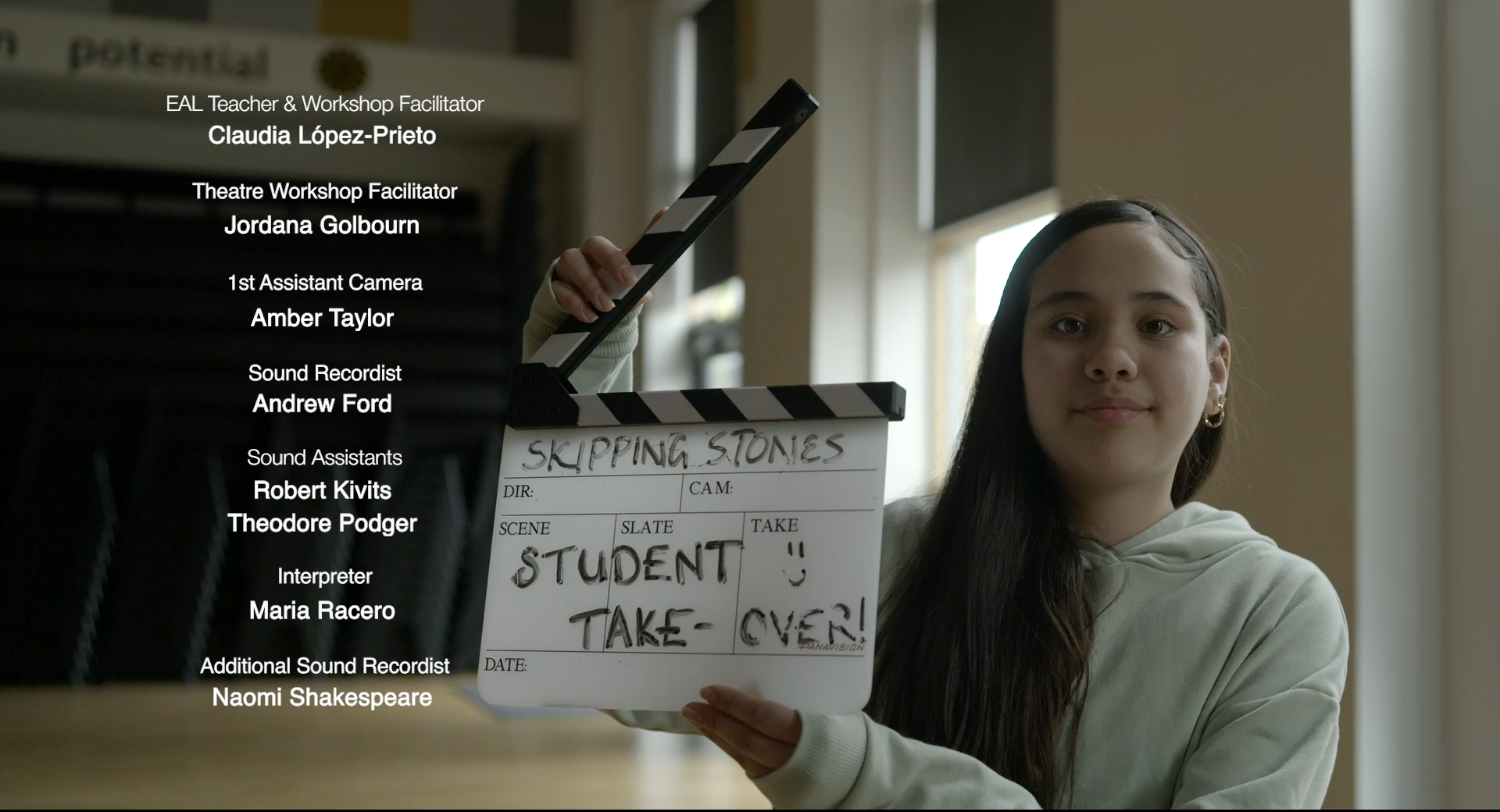
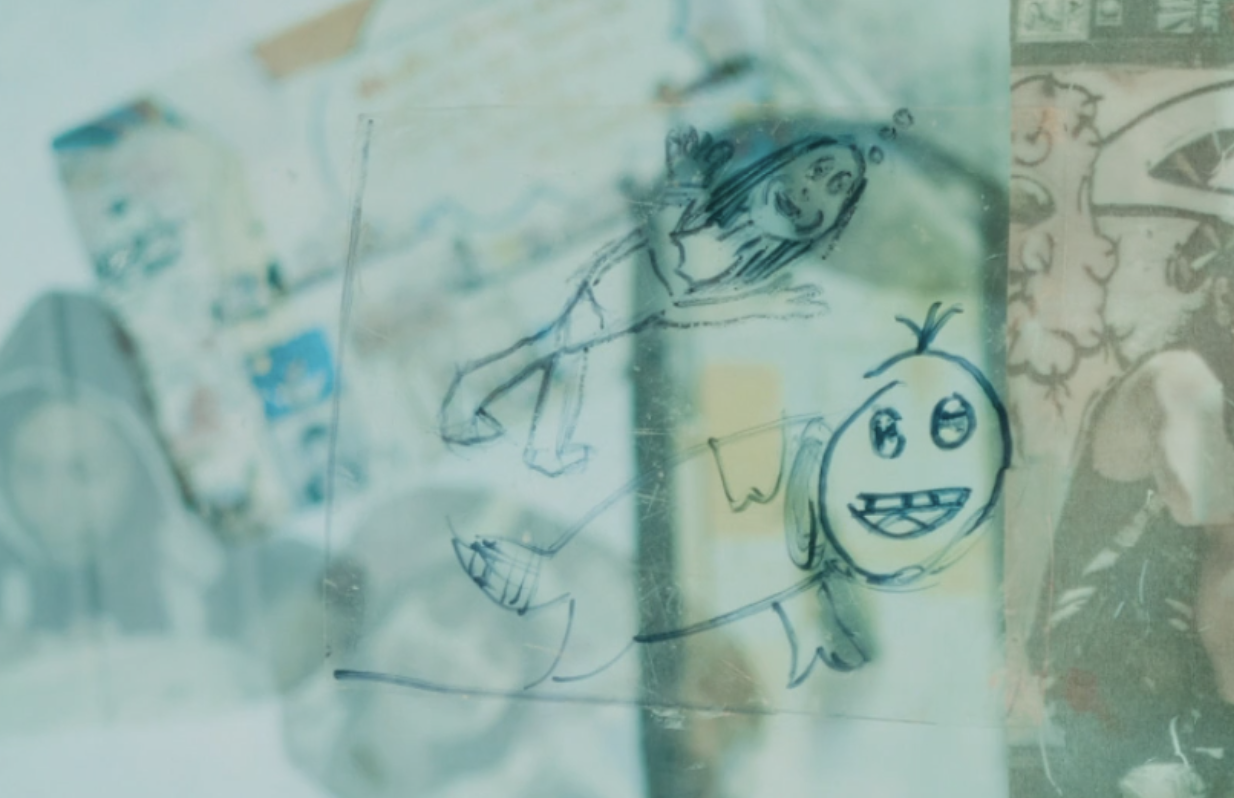
Ramlogan developed the concept of this film through a collaborative process with 12 students studying English as an Additional Language at St. Gabriel’s College in London, all of whom had moved from Latin America to the UK. Through workshops with improvised games, comic strip creation, and intimate circle discussions, she understood these young people’s lived experiences. This participatory development process is reflected in the film’s simple character designs, which make puppet-making accessible to newcomers to animation. Ultimately, Criatura’s story grew from the story shared by student Lola Flores Pouryayeraly. The audio recordings from her interviews and workshops were used to narrate the film, along with her sketches and photographs incorporated into the collage sequences. This added authenticity and a personal touch to the adaptation. In the credits, Ramlogan includes clips of workshops with the EAL students.
-
Stills from the film’s credits, where Ramlogan includes footage of the students who participated in her story development workshops.
-
Stills from the film’s credits, where Ramlogan includes footage of the students who participated in her story development workshops.
-
Workshop sketches embedded within the film’s collage sequences add a personal touch.

Nitya Ramlogan’s work
Explore more experimental works by Nitya Ramlogan engaging with various digital and analog materials.
Visit the website hereCamera technique of focus pulling
Learn more about the technique of adjusting the focal distance of the camera lens and its application in filmmaking.
Read the article here