Animating Oil Pastel under the camera
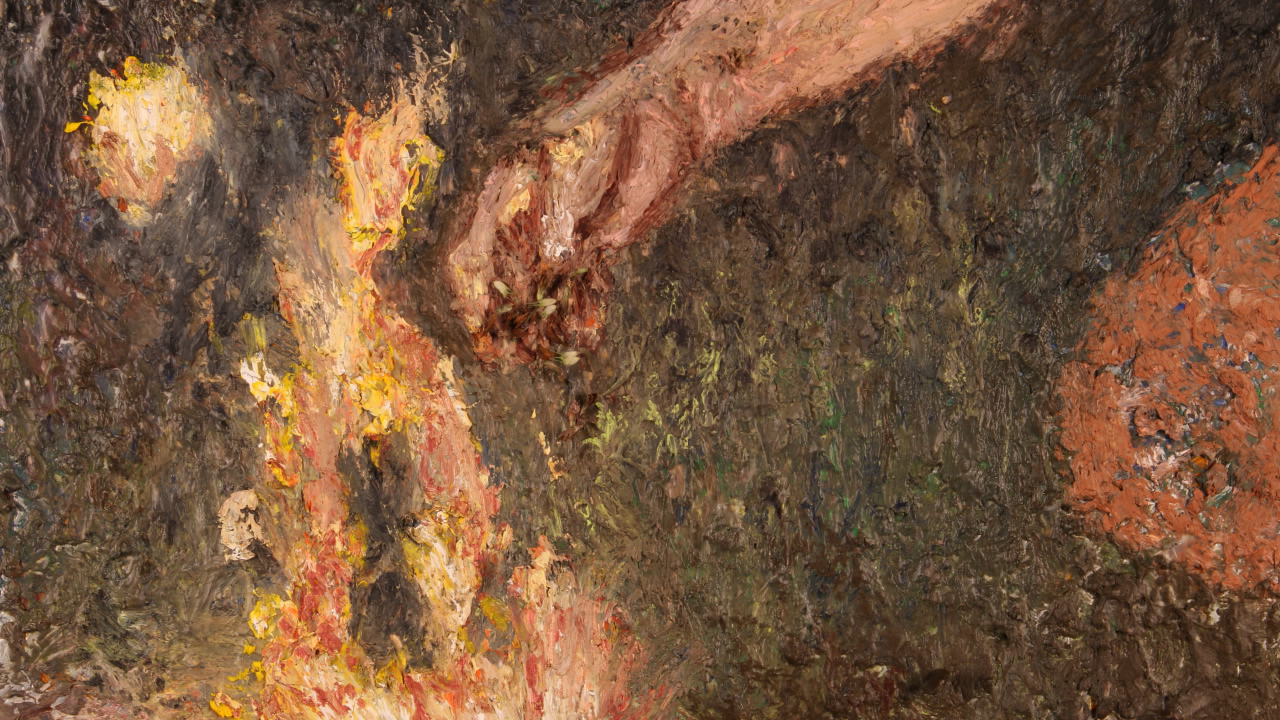
Drawing on Tim Ingold’s concept of “weather-worlds” and adopting acclaimed animator Alisi Telengut’s distinctive oil pastel animation technique, this post follows a discussion of Celine Chien’s oceanscape with a discussion of the work of research assistant Agrani Rasgotra. Tim Ingold describes the sky as a dense “medium” rather than a flat “apparent surface,” as defined by conventional dictionaries. It is a medium inhabited by beings like the sun, winds, and thunder, which, he notes, “lay their own trails through the sky, just as terrestrial beings lay their trails through the earth.” Rasgotra connects this concept to the Hindu ceremonial practice of havan, in which offerings are cast into a consecrated fire and carried upward through plumes of smoke, with the fire serving as a medium between earth and sky.
-
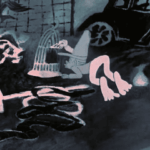
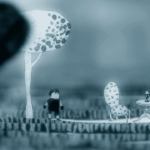
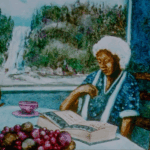
Concept thumbnails for Rasgotra’s composition.
-
Concept thumbnails for Rasgotra’s composition.
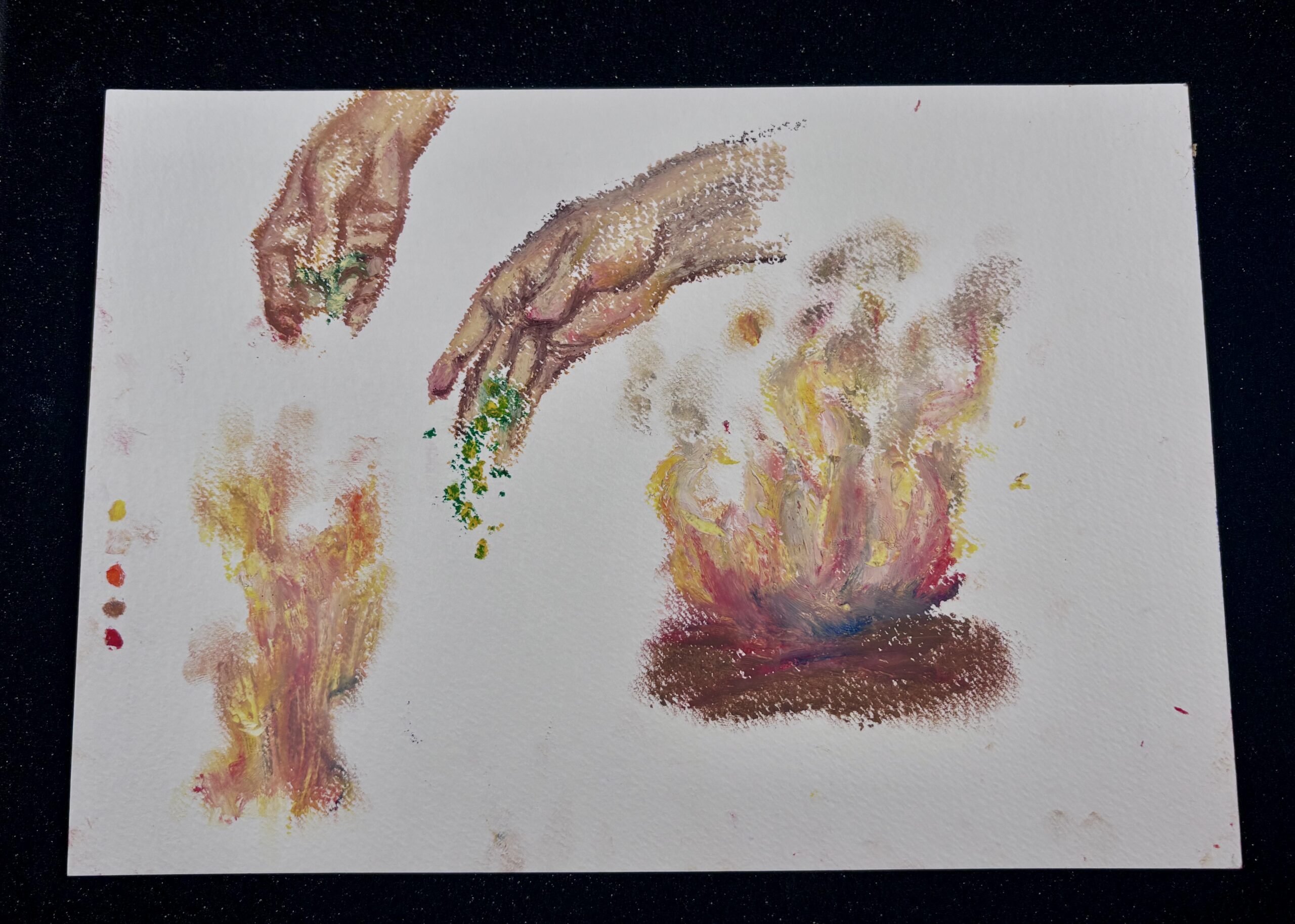
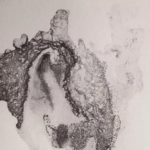
Rasgotra’s preliminary study of oil pastels through concept thumbnails revealed subtle differences in blending capacity, hardness, and layering potential across brands. To further refine her palette and technique, she produced a test animation isolating the fire, the central element of her scene. For this test, she applied a thin layer of clear acrylic gel medium to prime a metal photolithography plate recycled from a printmaking studio, aiming to preserve the readability of the fire by minimizing texture. However, this approach diminished the surface relief that characterizes Telengut’s method. The absence of organic materials in the base coat also reduced the dimensionality of the resulting animation. This experiment underscored the importance of textural treatment and informed Rasgotra’s approach to working with pastels for her next composition.
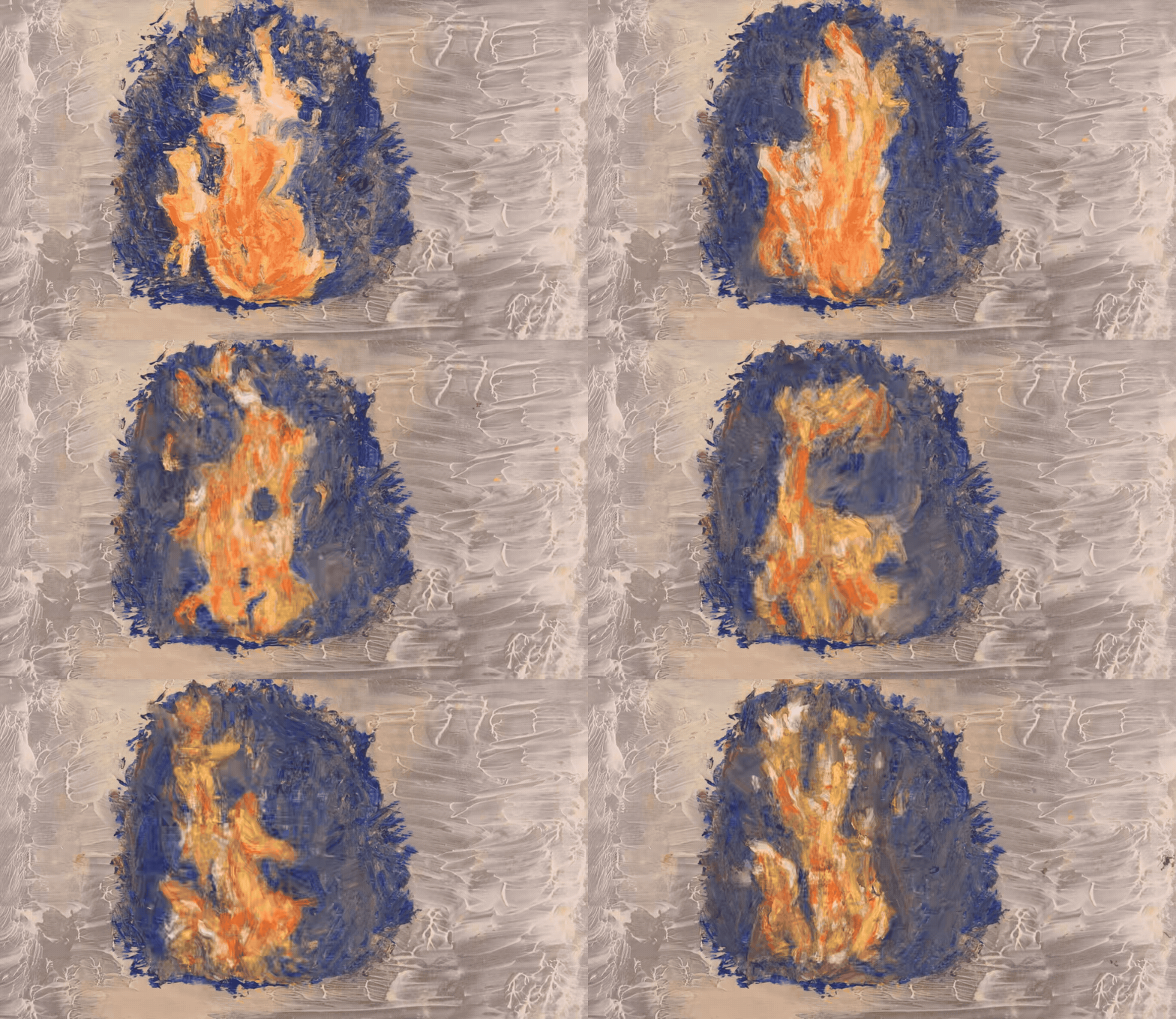
Preliminary experiment charting the movement of the fire.
To prepare the surface, Rasgotra applied a thick coat of acrylic gel mixed with soil, shredded dried flowers, and leaves. She used the same materials physically across the canvas to represent the ceremonial offering, which traditionally consists of organic matter such as dried herbs, leaves, and grains. Manipulating the plant fragments over the oil pastel coated them with an oily residue, necessitating their frequent replacement. Over time, these fragments naturally embedded within the layers of oil pastel and integrated into the canvas. This process echoed the ritual depicted, as the offering is both symbolically and physically transformed through the animation.
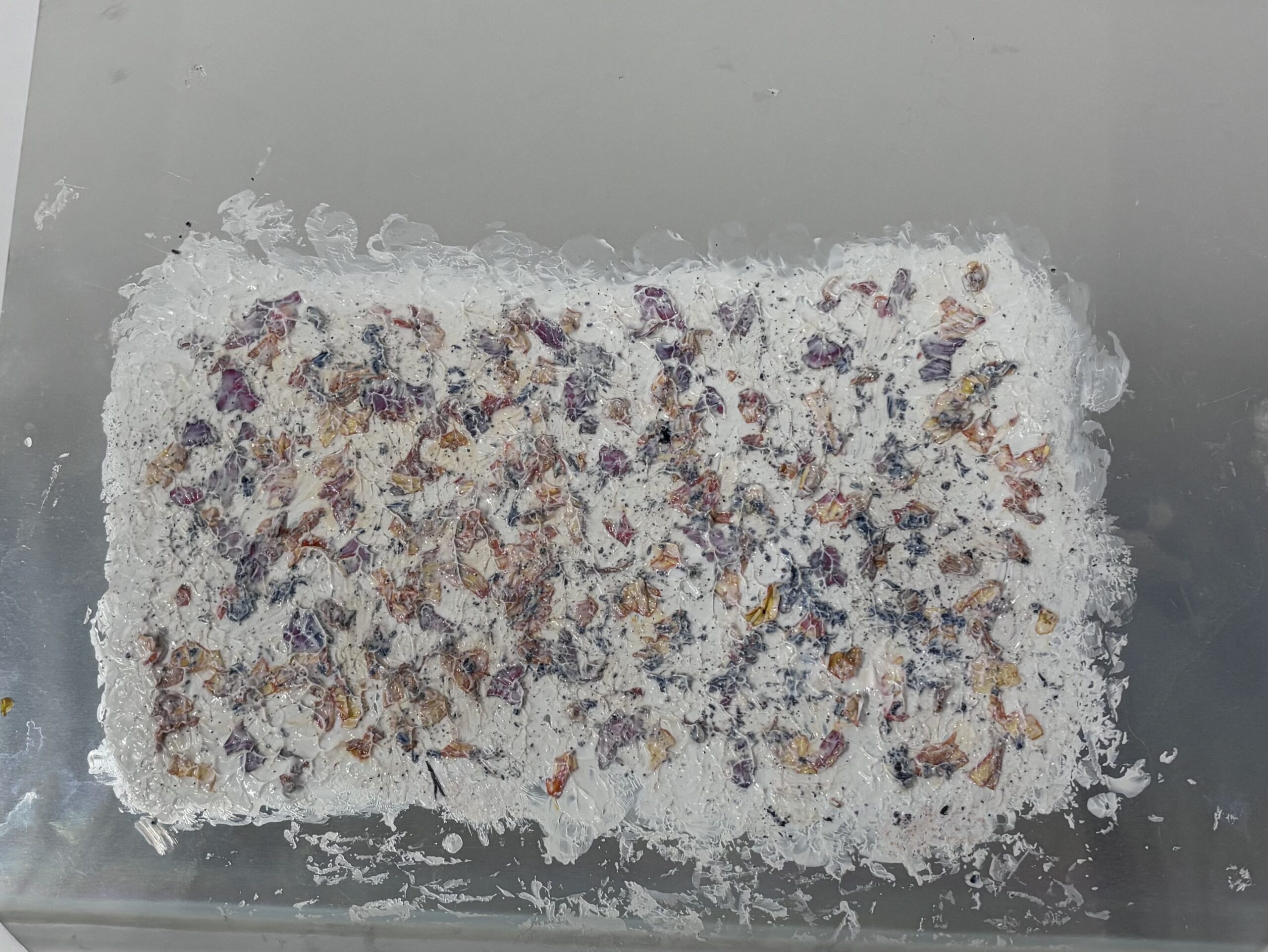
Flowers, leaves, and soil were layered with acrylic gel medium to prepare the surface.
Telengut’s technique prevents pastel strokes from blending or smudging by using both the canvas’s heavy texture and the regular application of clear gel medium. However, Rasgotra observed that intentionally smudging certain areas around the fire produced smoke-like effects. When used strategically, retaining areas where light and dark pigments smeared into each other reinforced the fire’s smokiness.
Rasgotra’s completed composition of a consecrated fire cast with offerings transitioning into a blazing sunset.
As the offerings are set to the fire, the composition dynamically zooms in, centering the blazing fire in the frame. To enhance the vibrancy of the fire’s warm hues, Rasgotra added contrasting strokes of violet and midnight blue adjacent to it. This technique was inspired by Impressionist oil pastellists who often layered complementary colored strokes close to each other to achieve greater color brilliance. Progressively adding metallic pastels to the rendering of the fire further imparted a soft glow to these warm colors.
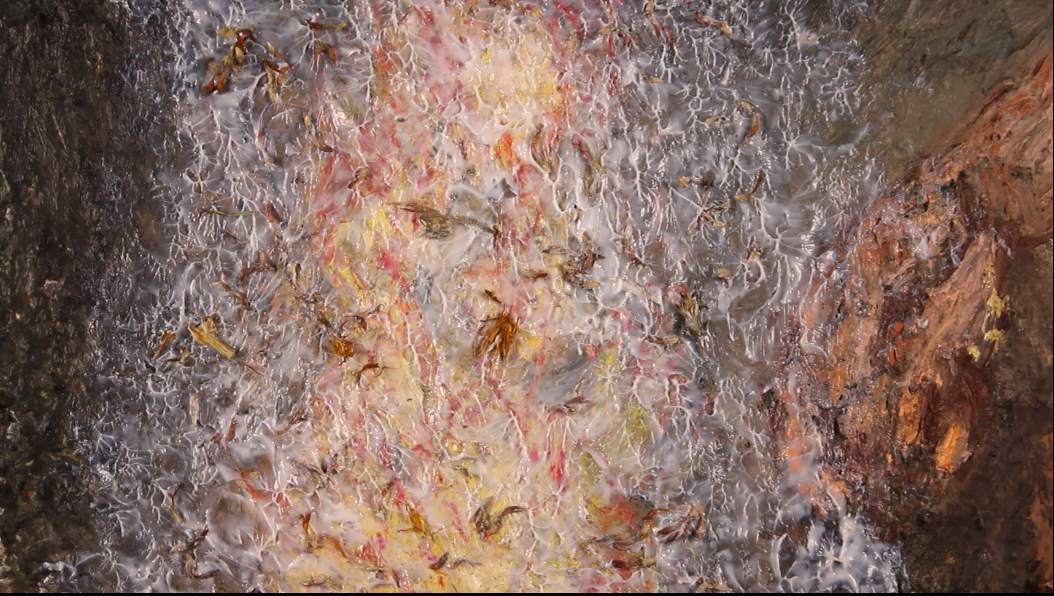
Reintroducing texture to the canvas by periodically adding more organic matter and acrylic gel.
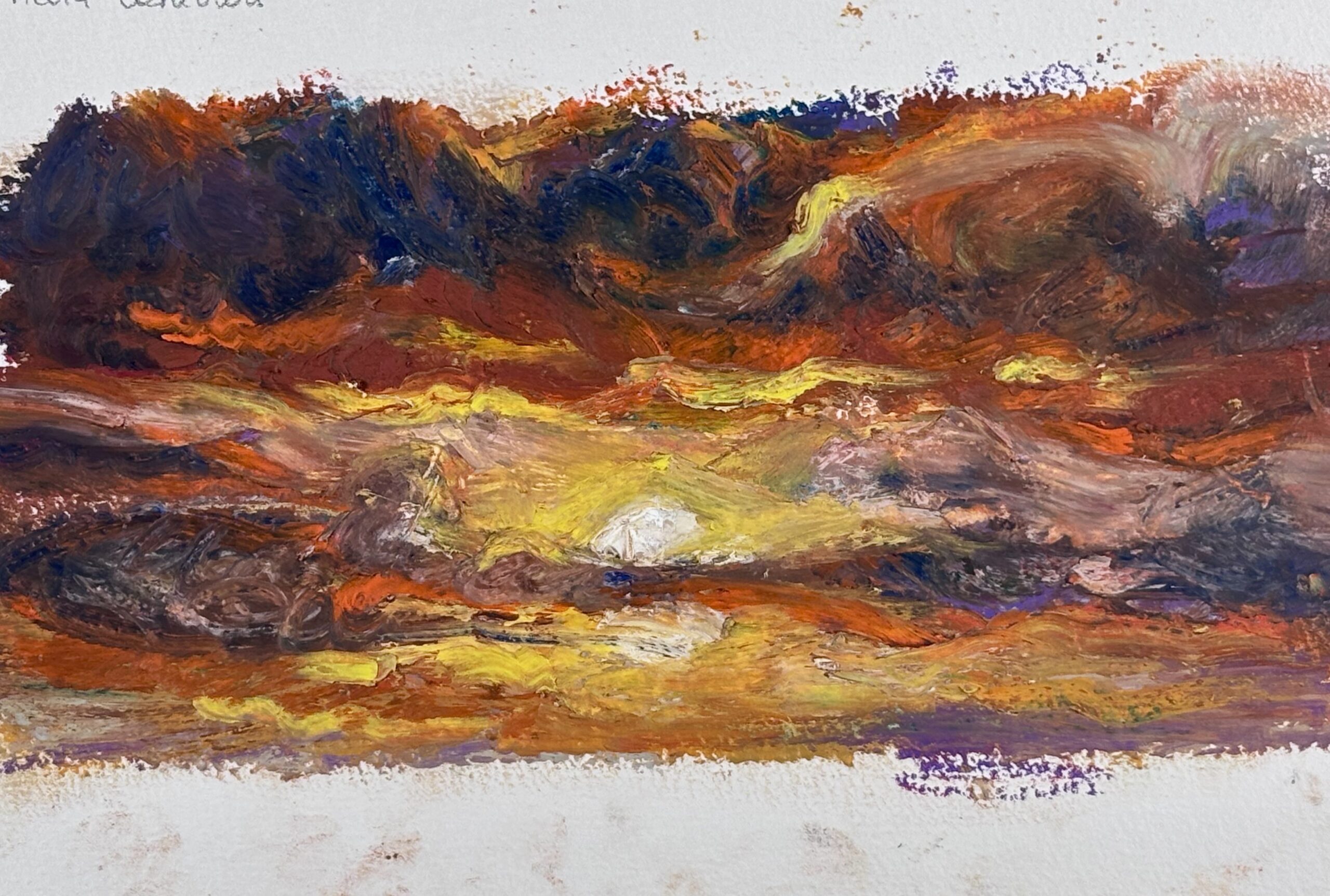
The transition from fire to sky was challenging, as it required a complete shift in axis from vertical to lateral motion. Rasgotra used mica powder to create a shimmering effect, first introducing the sun and highlights in the sky, similar to how Telengut started by establishing broader shapes of the second image before morphing the entire composition towards it. By extending the fire’s upward movement through the rising sun, Rasgotra executed the transformation between the two images, maintaining continuity in the animation’s flow.
-
Selected frames of transition from fire to sky.
-
Selected frames of transition from fire to sky
-
Selected frames of transition from fire to sky
-
Selected frames of transition from fire to sky
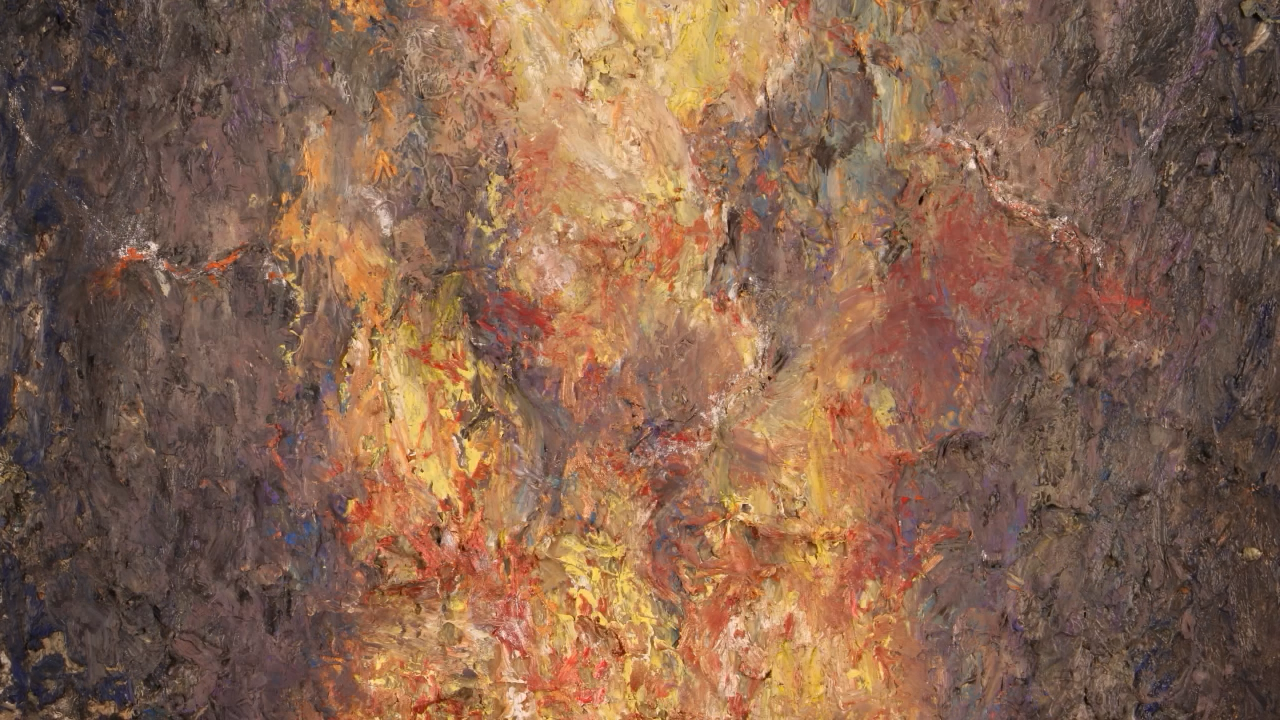
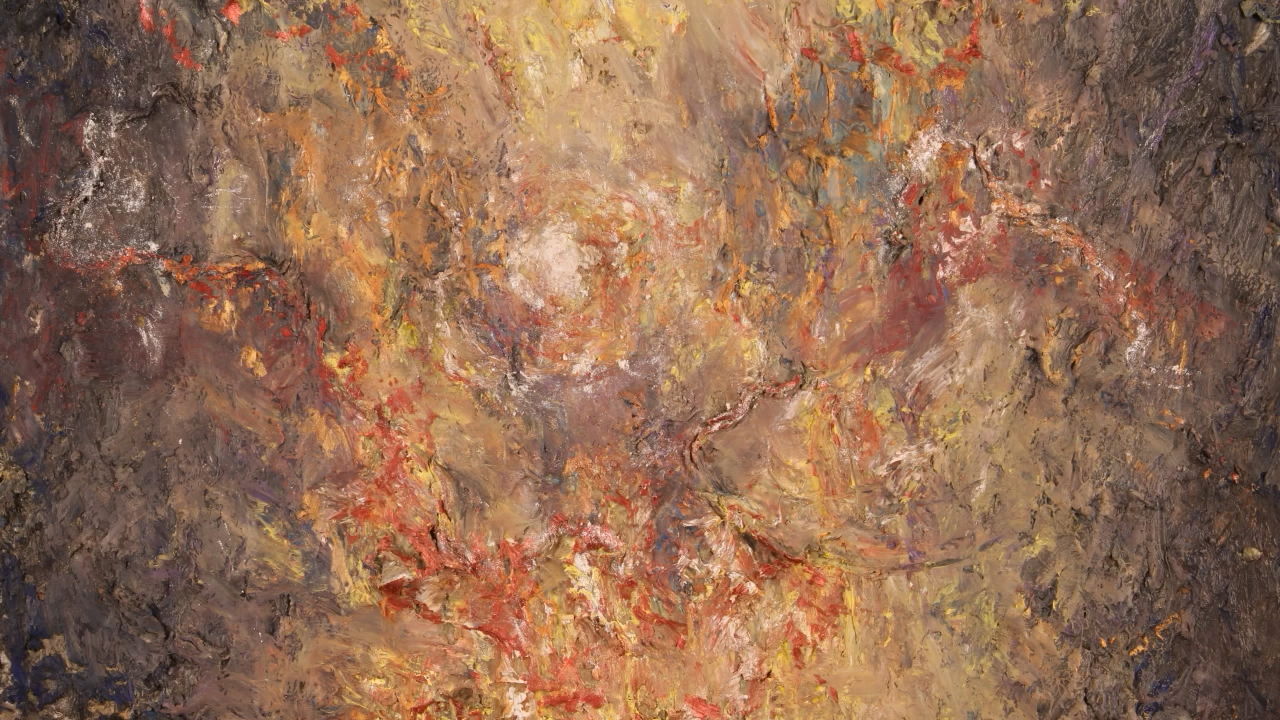
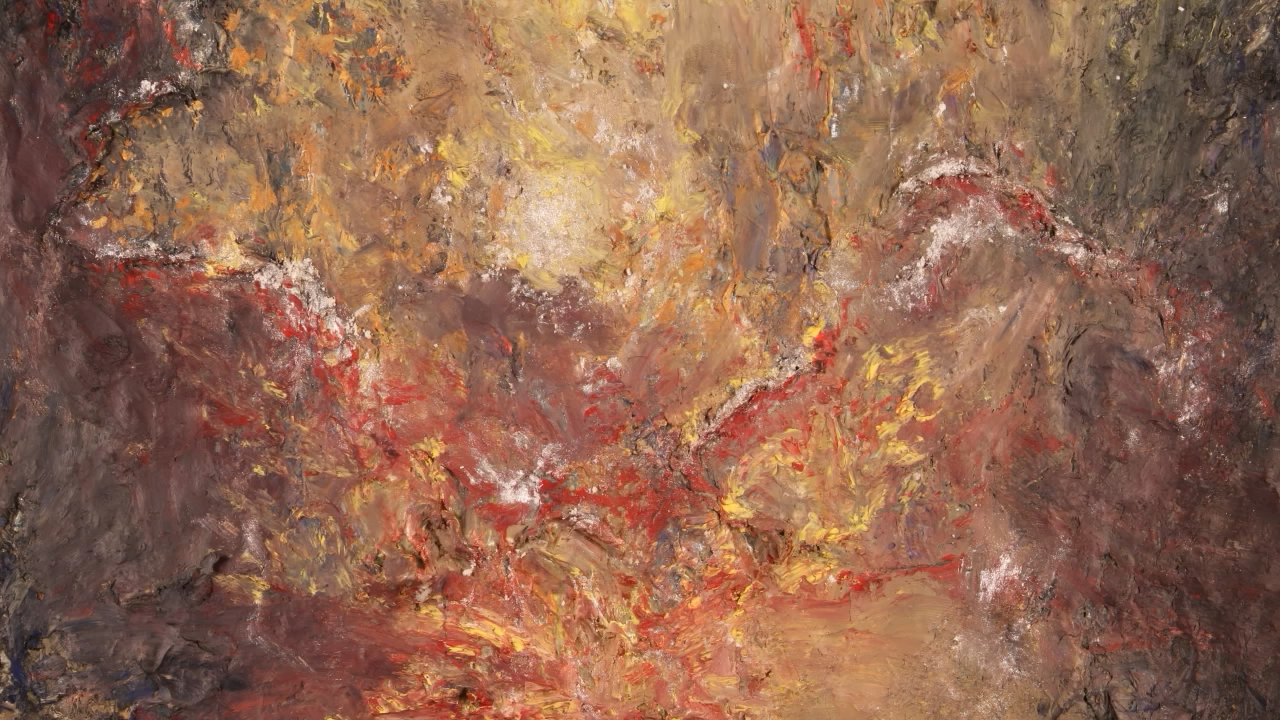
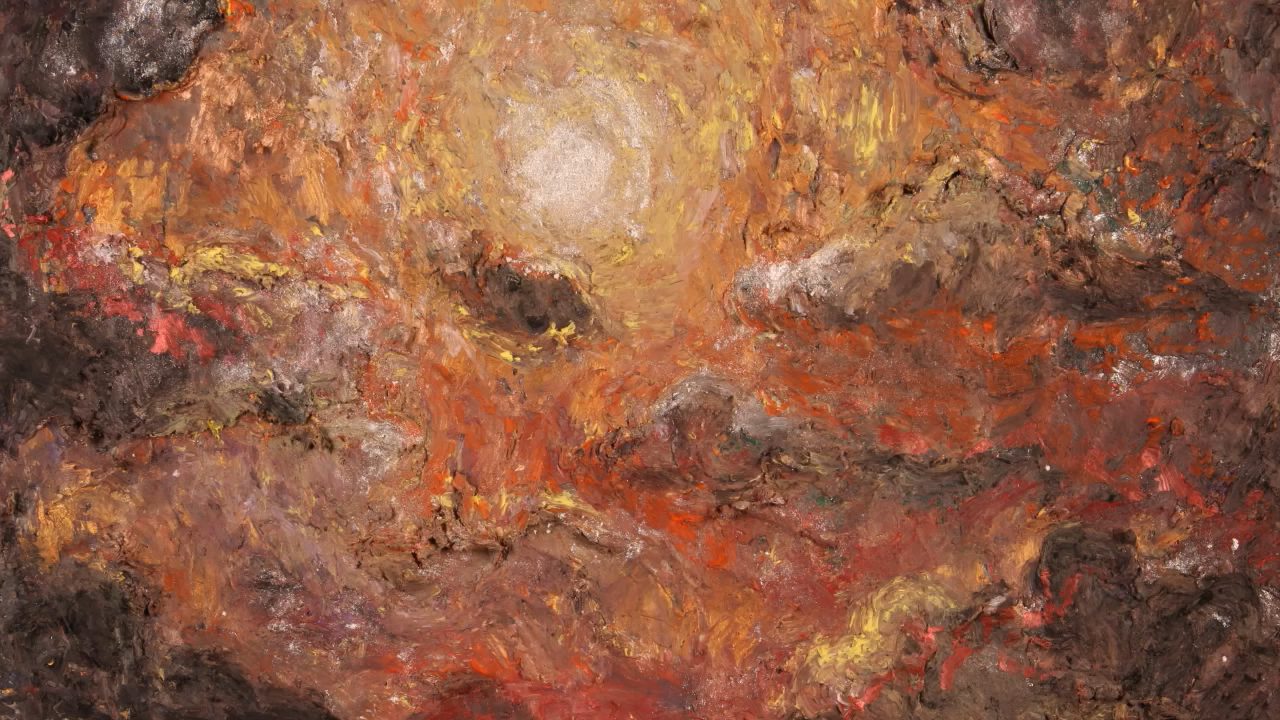
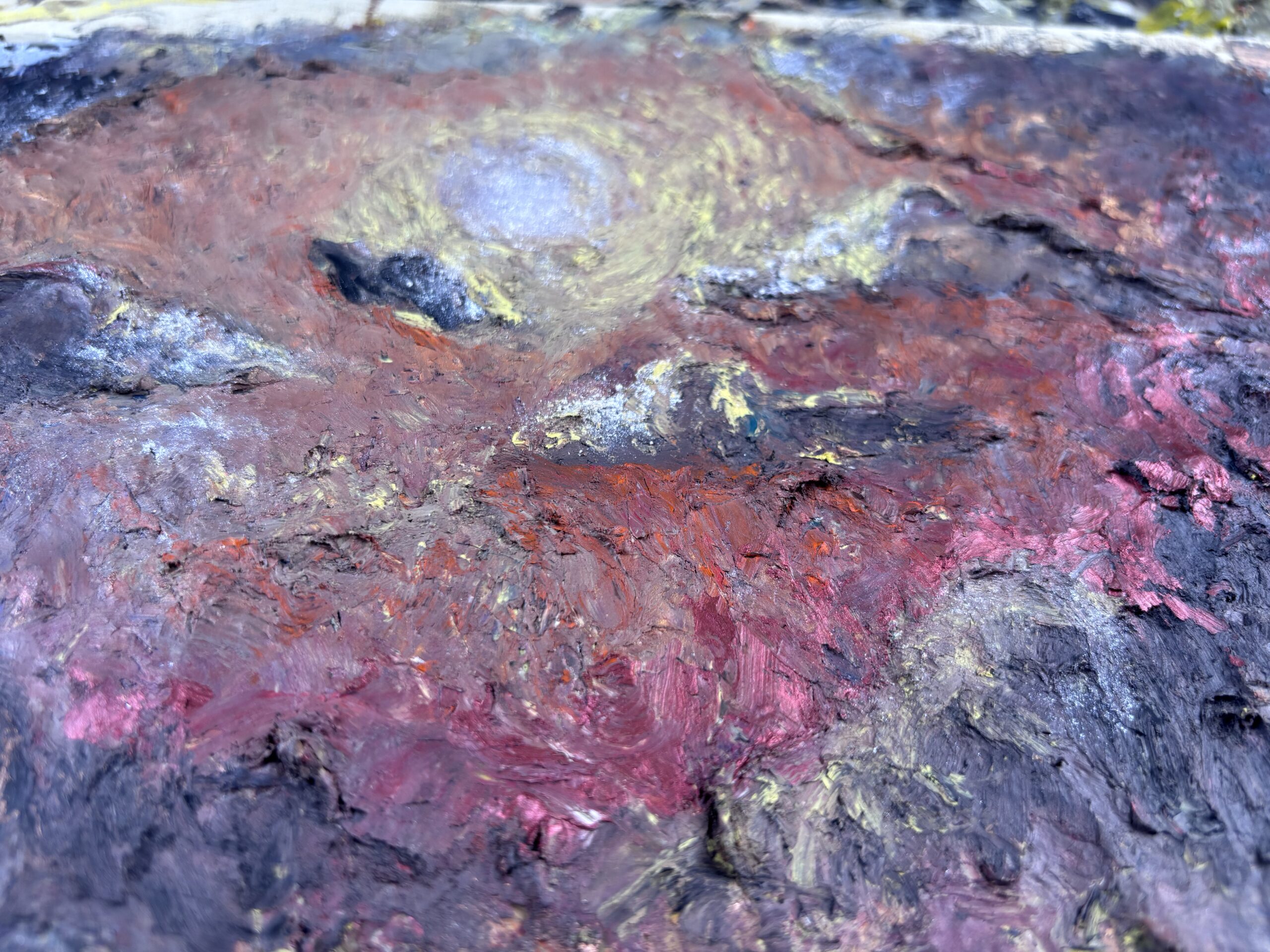
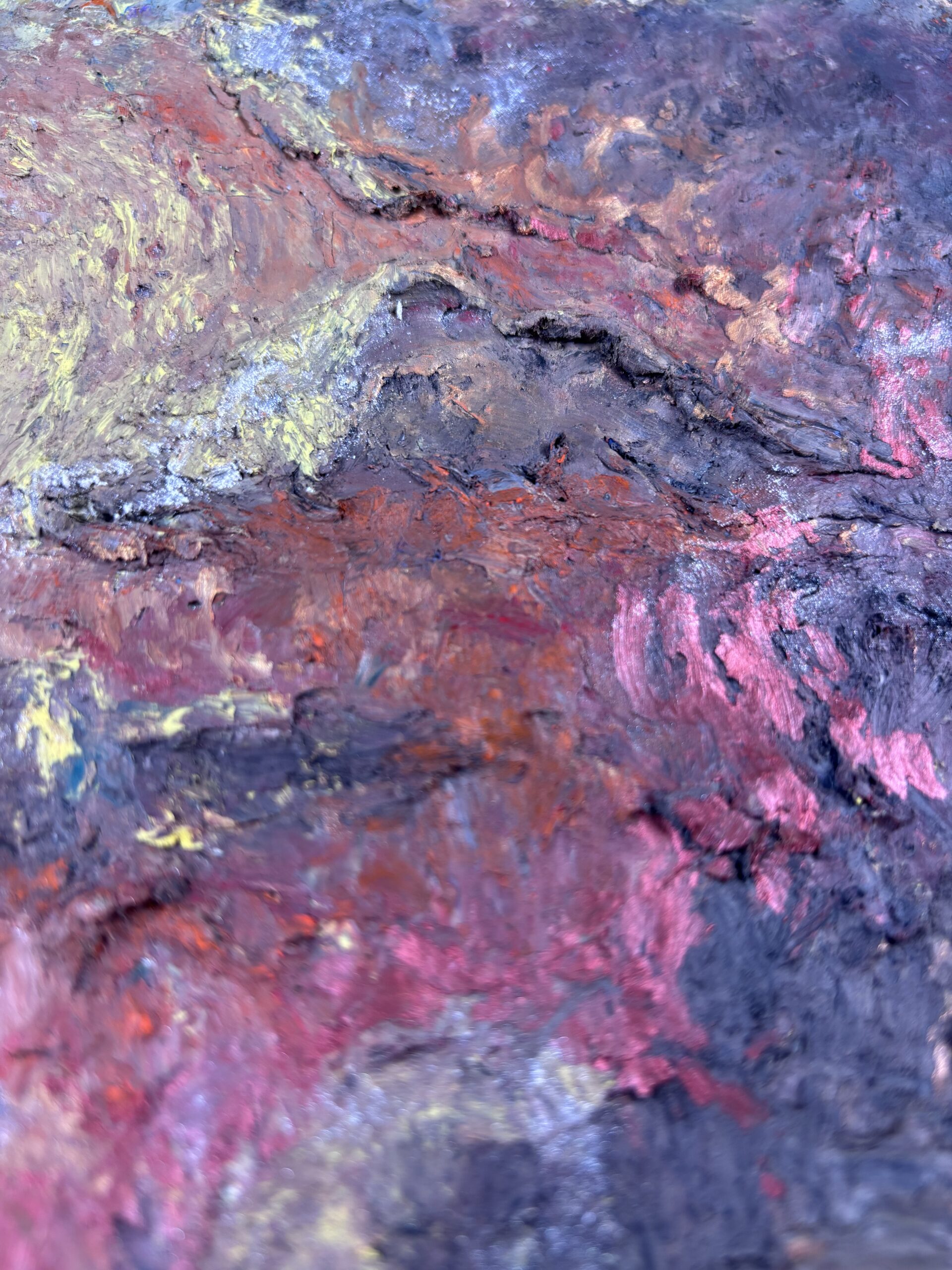
The layering of acrylic gel and oil pastel resulted in a thick substrate whose physical properties evolved throughout the animation process. During the transition, Rasgotra recognized the potential to manipulate the surface relief, shaping intentional peaks to match the contours of the clouds. This technique enabled incremental movement of the clouds across the sky. She instinctively worked directly with her hands to feel the surface as she contorted it, incorporating the tactile impressions of her fingers into the cloud textures.
-
Manipulating the surface by shaping intentional peaks for cloud contours.
-
Manipulating the surface by shaping intentional peaks for cloud contours.
In her writing, Alisi Telengut observes that an under-the-camera workflow is akin to a ritualistic practice; the artist follows a consistent routine by returning to the same space and materials daily with intentional and focused action. Through this engagement, the materials are imbued with significance and meaning beyond just representative devices. This resonated with Rasgotra, who incidentally enacted a ritual in both the theme and the production of the animation.
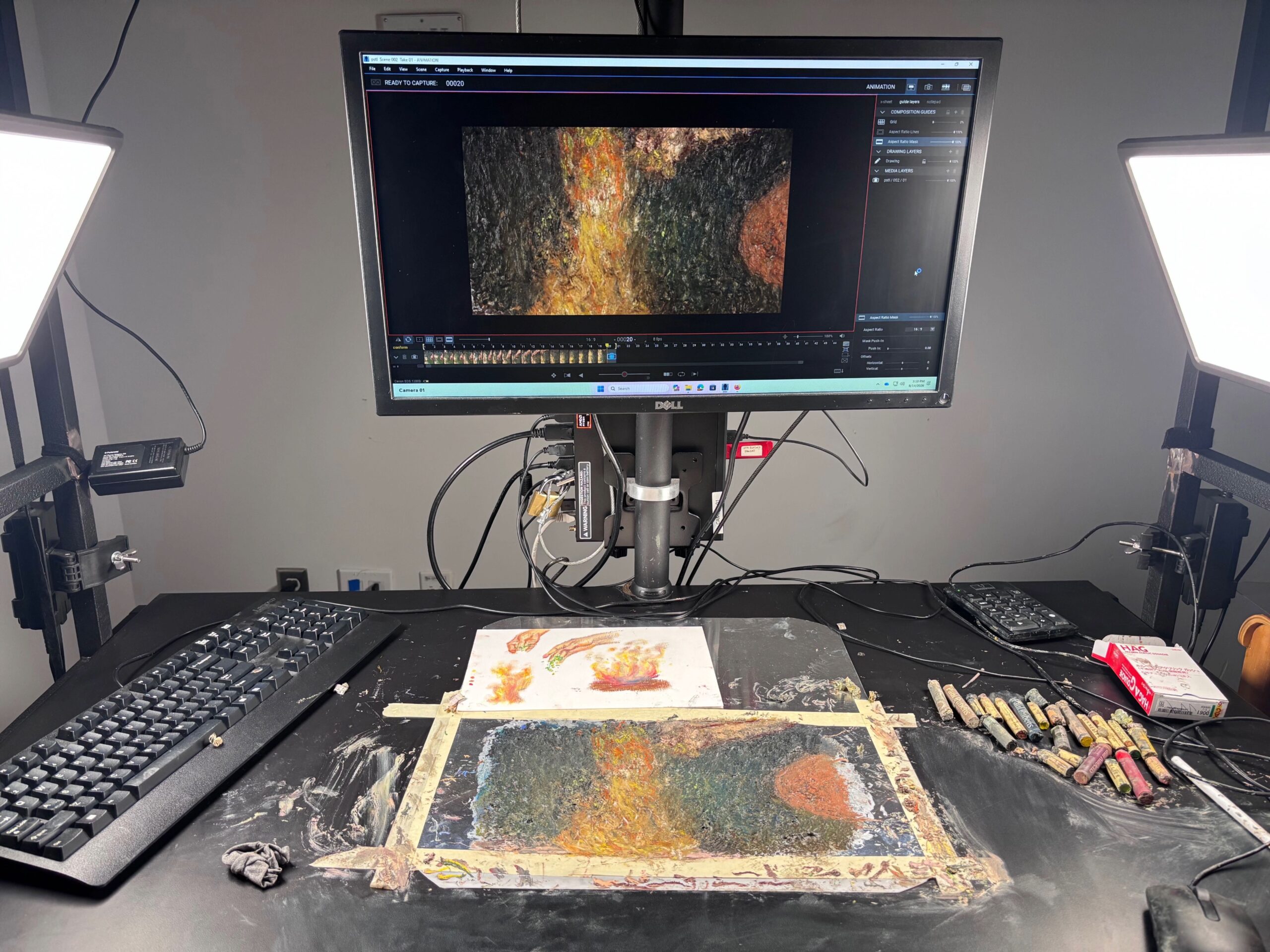
Under-the-camera setup and materials that Rasgotra used for her composition.
Over the course of several weeks, Rasgotra felt increasingly connected to the pastels. This intimacy also incited moments of frustration, with the pastel slipping between her fingers or clinging stubbornly to the surface, thus resisting control. The frustration became evident in the swift strokes she used in the fire. Yet, it made her more receptive to the canvas, using constant feedback from the surface as a vital part of her creative process, which resulted in indentations of fingers serving as texture or physically deforming the surface.

Animating Pastel: Material Transformation and Animism
Rasgotra’s reflective text delves further into her collaborative adaptation of Telengut’s technique as a means to engage with animist thought, and explores pastel as an animation medium.
Read the article hereThe Song of the Sky and the Breath of Stones in Baigal Nuur – Lake Baikal
Telengut examines how hands-on material practices in animation can articulate relational modes of thinking, with the material, artist, and environment engaged in a shared field of agency.
Read the article hereSignificance of Havan
A research article exploring the scientific and spiritual significance of Havan, the sacred fire ritual.
Read the article here