Notes on the film
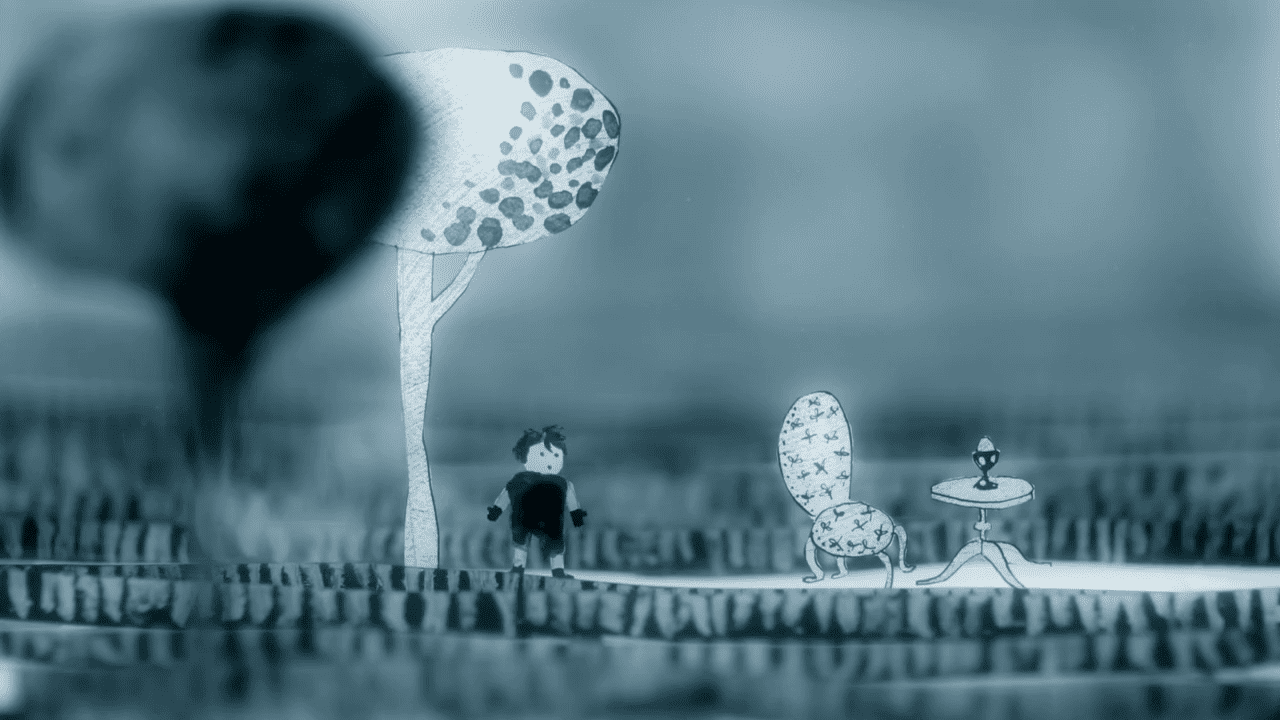
Inspired by the optical distortions and blurs associated with ocular astigmatism, this film inventively plays with focal range to evoke the pleasurable sensation of getting lost. A loose narrative without dialogue follows a child who loses their glasses and steps into a blurred world of unexpected discoveries, visually achieved by constantly shifting focus across five layers of a custom multiplane stand. As select figures and events drift into and out of focus across a narrow depth of field, the film establishes with a pulsing optical and sonic rhythm. The disorienting experience of losing visual clarity and focus is channeled into the hypnotic pull of curiosity and free association.
Focus fluctuates between different layers in spatial dimension
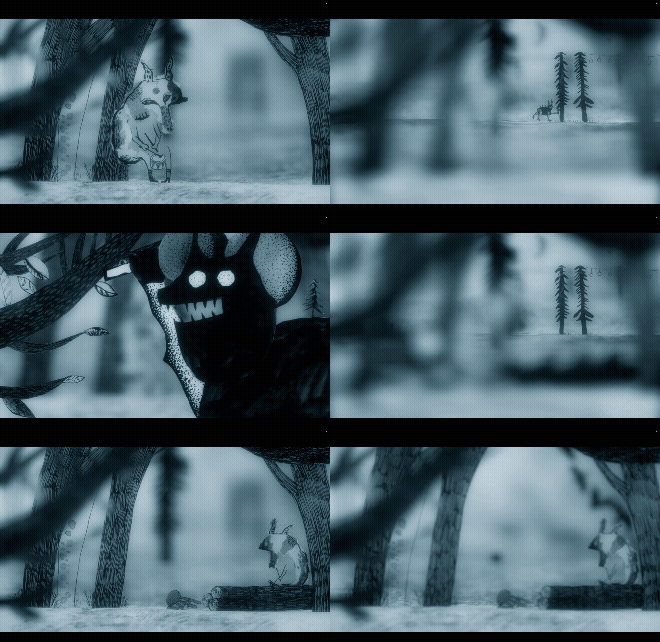
The film’s momentum is carried by the playful chase between two protagonists, one of whom has snatched away the other’s glasses. The narrative motif of losing one’s glasses – and the ambivalent pleasures of destabilized vision – connects to a coming-of-age theme of getting lost in the emotional swells of adolescent romance. The restricted monochrome palette draws attention to linework and textures of a wondrous landscape teeming with eccentric creatures and visual intrigue. Desaturated misty blues and grays evoke a hauntedness, serving as a foil to the playful chase. As the imagery drifts in and out of clarity, a textured soundscape becomes the anchoring force. Together, these elements create a sensory experience that is both unsettling and charming, reflecting the appeal and discomfort of uncertainty.
-
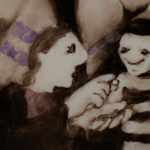
The playful chase drives the momentum of the film, capturing both: the sensation of being lost and the disorient of a blurry world.
-
The playful chase drives the momentum of the film, capturing both: the sensation of being lost and the disorient of a blurry world.
-
The playful chase drives the momentum of the film, capturing both: the sensation of being lost and the disorient of a blurry world.
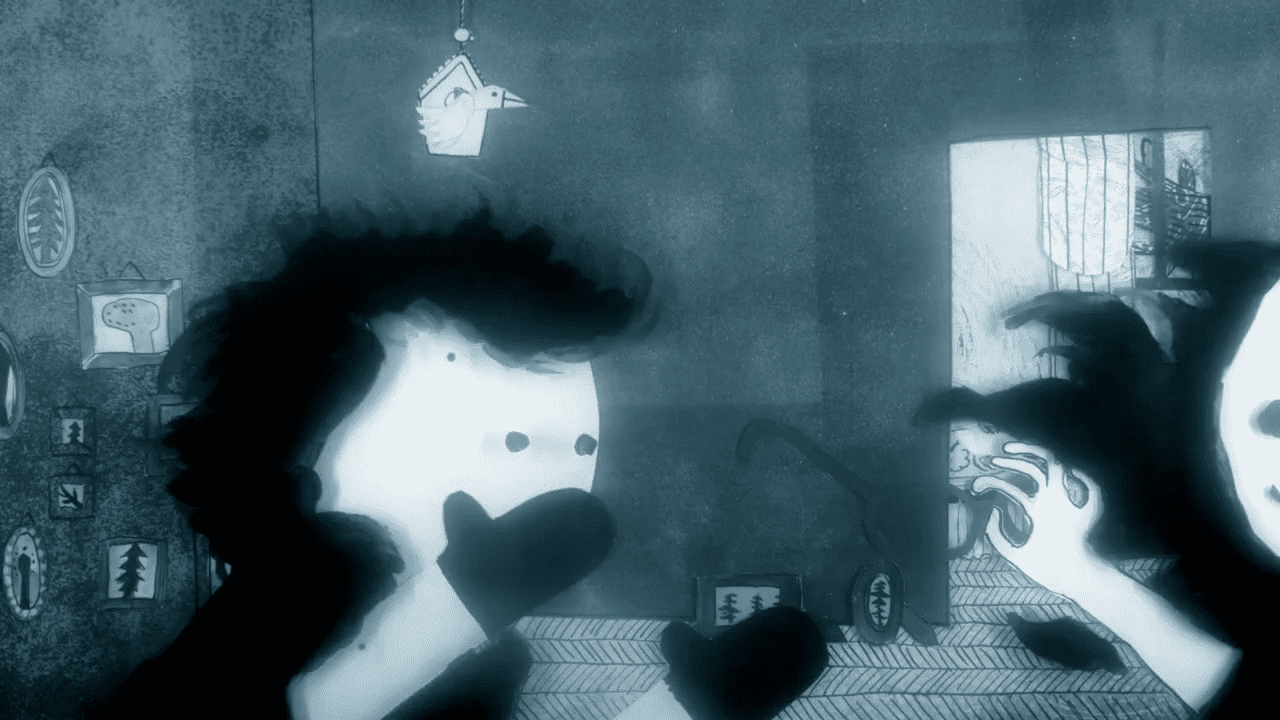
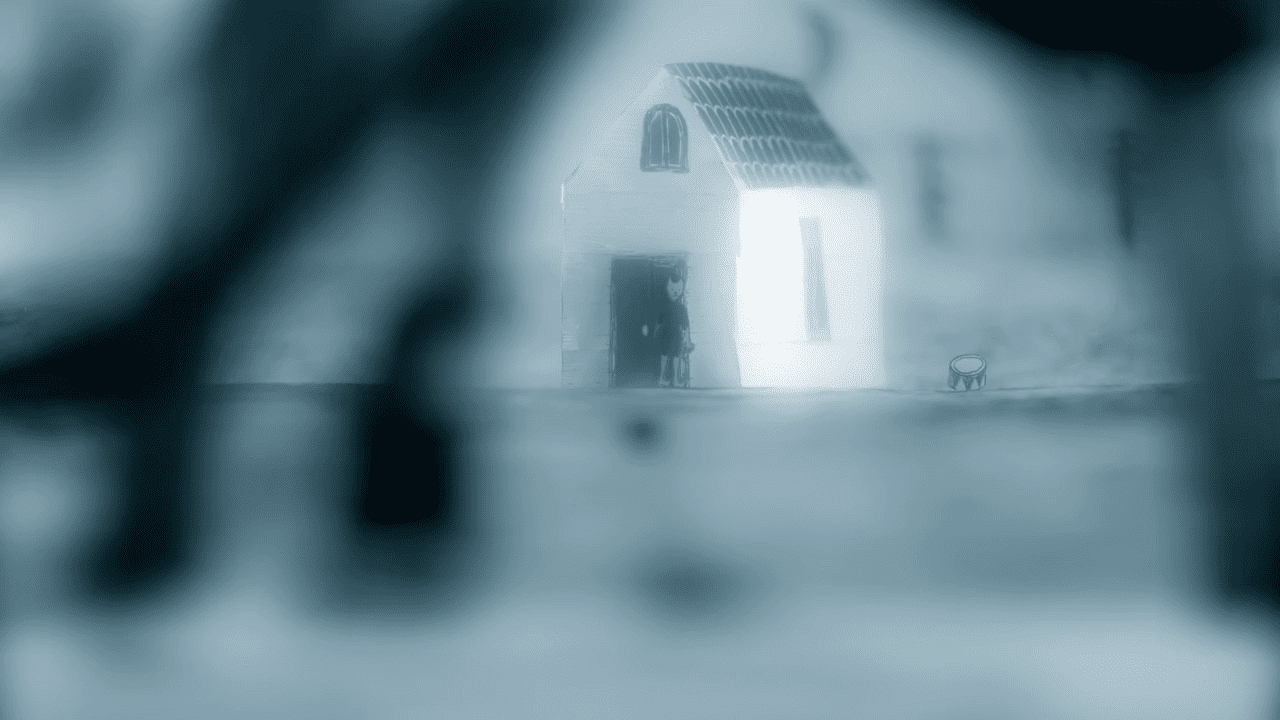
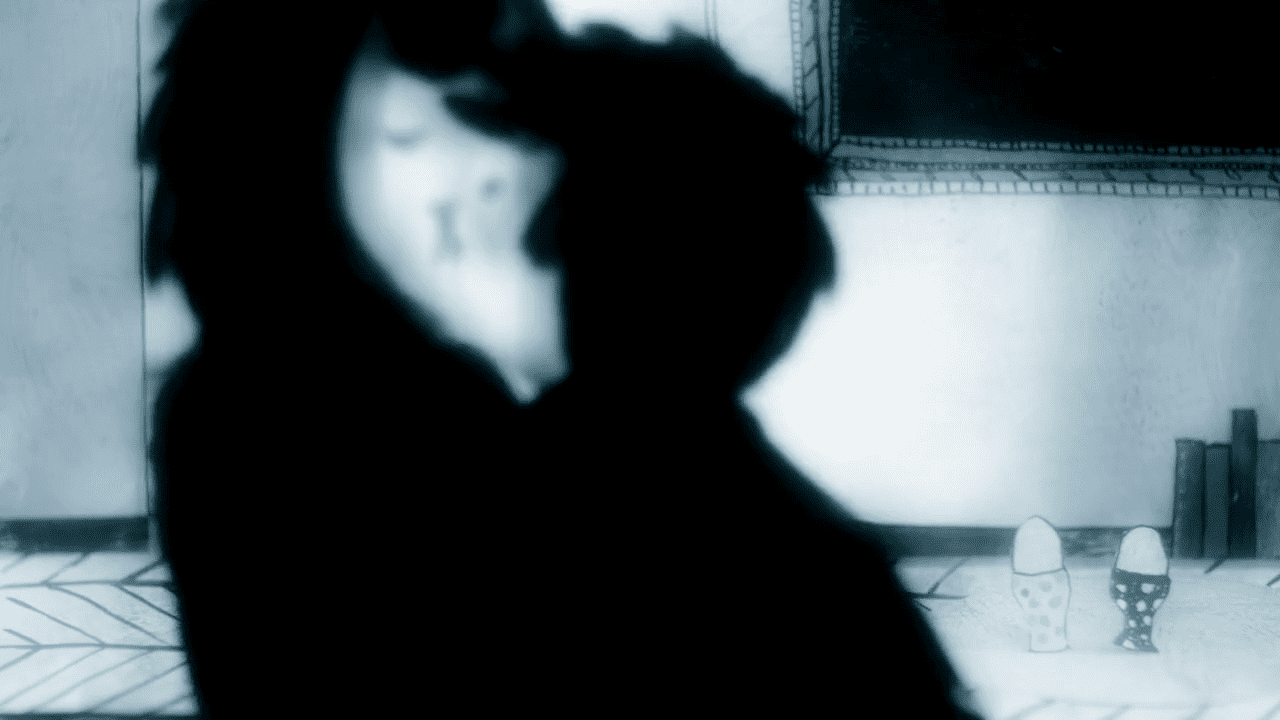
Using a hybrid technique of cutout stop motion and paint on glass, Astigmatismo juxtaposes the rigid articulation of paper limbs with the fluid expressiveness of painted bodies, especially in smears. The limbs were built as separate pieces, while finer details such as the hair were drawn over transparent acetate sheets, making them movable and thus consistent across frames. These isolated parts were then unified through gouache, which formed the body and softened the seams between cutouts. To avoid any reflections, Troshinsky painted the back surface of every puppet in matte black. The result is a unique material interplay, where paper, acetate and paint come together in a seamless collage to define the film’s distinct visual aesthetic.
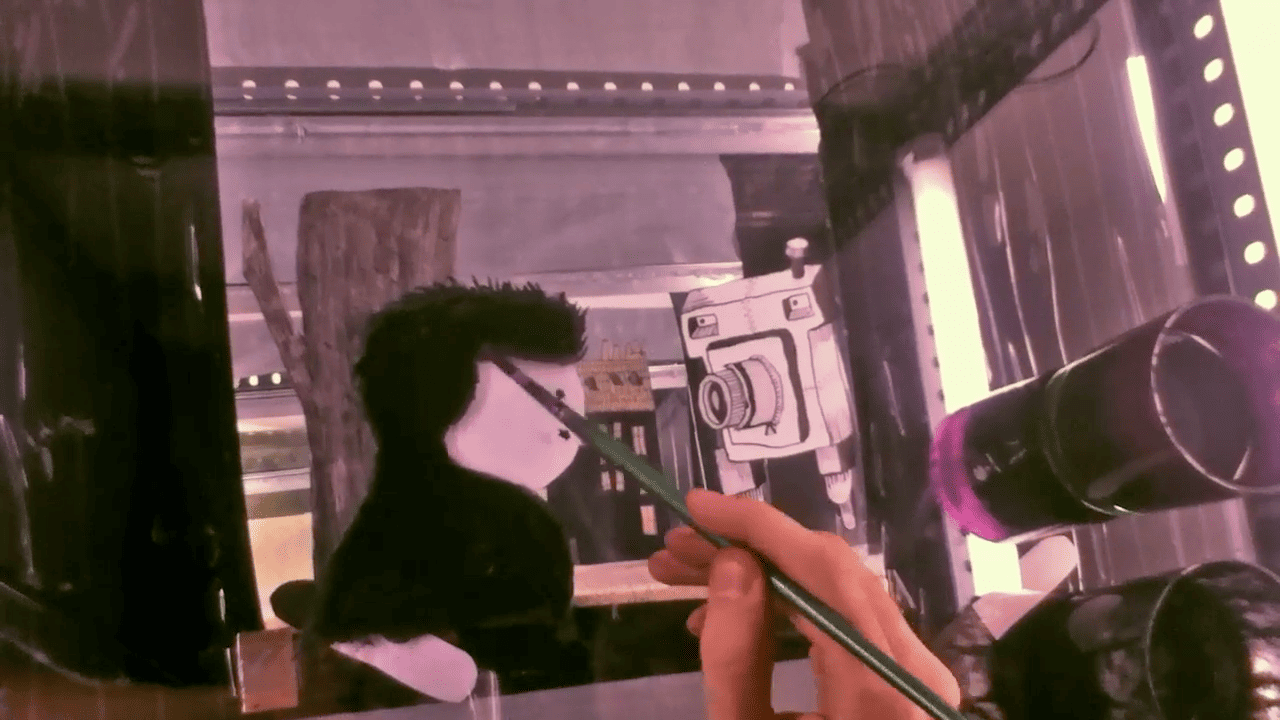
Glass itself asserts its centrality in the film, functioning as a motif tied simultaneously to clarity and distortion of vision. The boy’s lost glasses are embodied in the glass lens of the camera and the transparent multiplane layers, where calibrated focal shifts shape the very act of seeing. To achieve these effects, Troshinsky built a custom multiplane stand with double glass panes to hold paper cutouts and permit paint on glass overlays. Yet the spatial displacement of layers presented a complication: how to establish a continuous ground for the three-dimensional world of the film. Troshinsky’s solution was to devise wire and paper floors that were magnetically held together between consecutive layers, creating a continuous vertical surface that grounded his landscapes. A digital animatic was used to test and calculate the film’s optical rhythms, guiding the precise focus shifts on a DSLR camera lens during production.
-
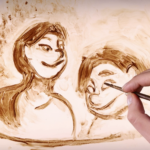
A behind-the-scenes still of painting the character’s body on cel placed over 5 layers of the multiplane
-
A behind-the-scenes still of painting the character’s body on cel placed over 5 layers of the multiplane
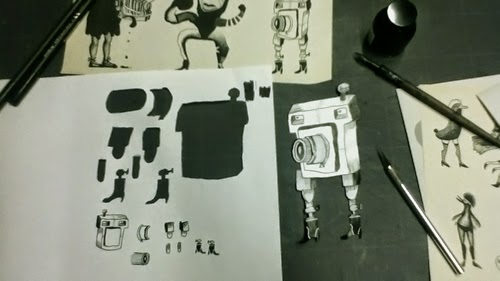
He held the intention of feeling lost close to heart at every stage of production. Troshinsky worked with artists in isolation, each unaware of the complete shot and disconnected from the other departments. Sound was one of the first elements to be produced, preceding the animation itself. The composition, designed by Pierre Sauze, set the rhythm and pace that the visuals followed. Similarly, the work of other contributors guided his directorial decisions. Background designer Cecilia Ramieri’s engravings inspired Troshinsky to experiment with monotype printing over a soft gum base, capturing the rich texture of her etchings and drypoint in the film’s landscapes. From these collaborations, he was left with independent fragments that he assembled in a cyclical process of being lost and finding the film’s form, integrating the narrative theme directly within the production process.

Making of Astigmatismo
A behind-the-scenes feature with director Nikolai Troshinsky, exploring the stages of production and the inventive technical choices that shaped the film’s distinctive aesthetic.
Watch the clip here