Notes on the film
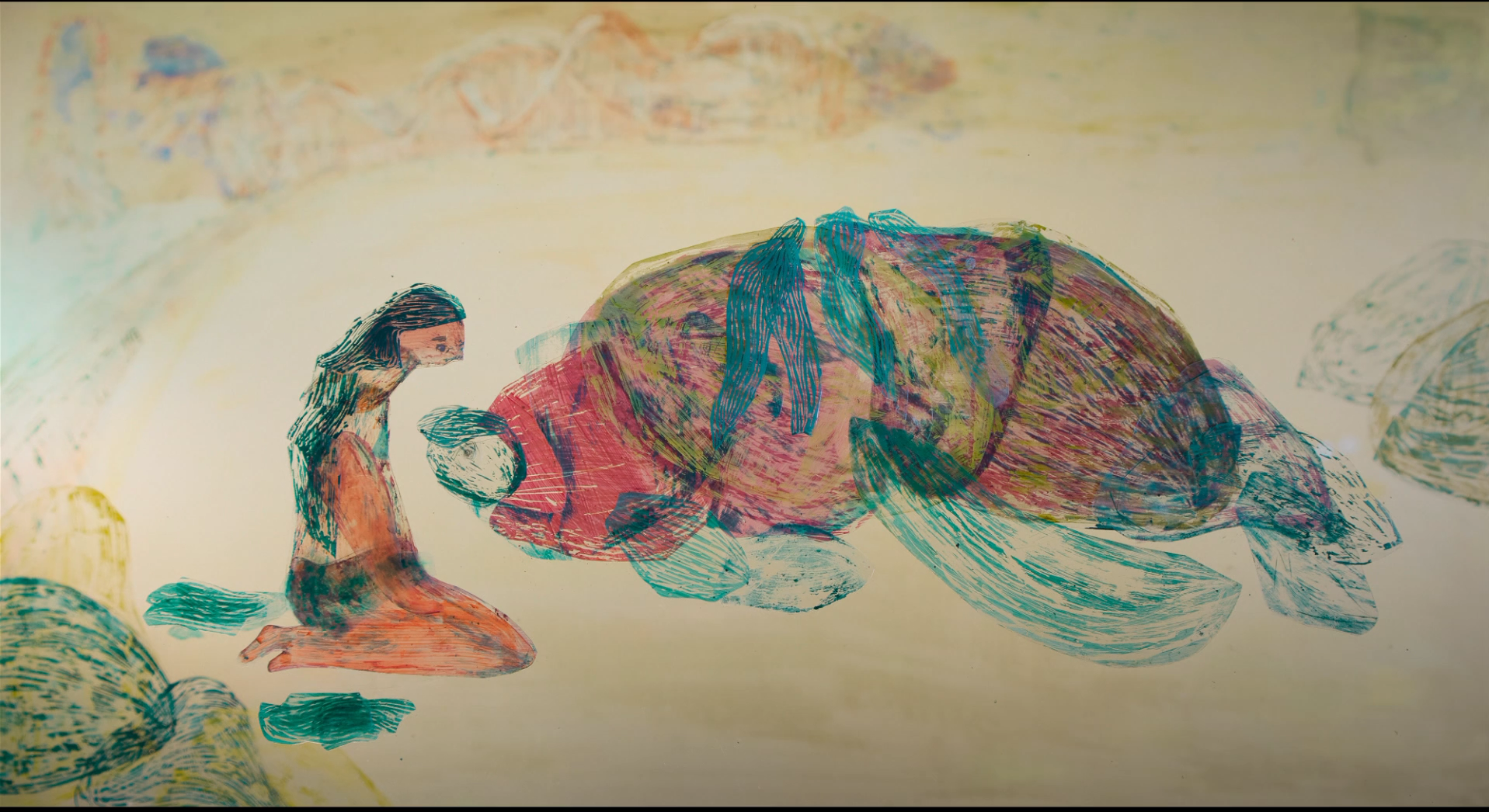
An animated documentary rendered in beautiful painterly strokes of watercolour, Percebes traces the impact of overtourism in the Algarve region of Portugal and the complex, often conflicted, relationship that the locals have developed to the seasonal influx of consumers. Percebes, roughly translating to goose barnacles, refers to a species of shellfish native to the area, visually disconcerting to a foreign gaze that is unable, or perhaps unequipped, to appreciate the deep cultural connection it holds for the Algarvians. Centering the barnacle as its object of study, the film’s narrative–supported by voice recordings of local interview subjects– follows percebes’ journey from sea to plate, simultaneously tracking the lives of the people involved at each stage. The visual treatment of the film is as intriguing as its theme, with a unique interpolation of digital and traditional techniques. Watercolour’s potential to bleed, feather and stain is fully embraced to create rich textural surfaces of an oceanside milieu.
-
Rich texture of hand-painted watercolour displayed throughout the film in contrasting red and blue hues.
-
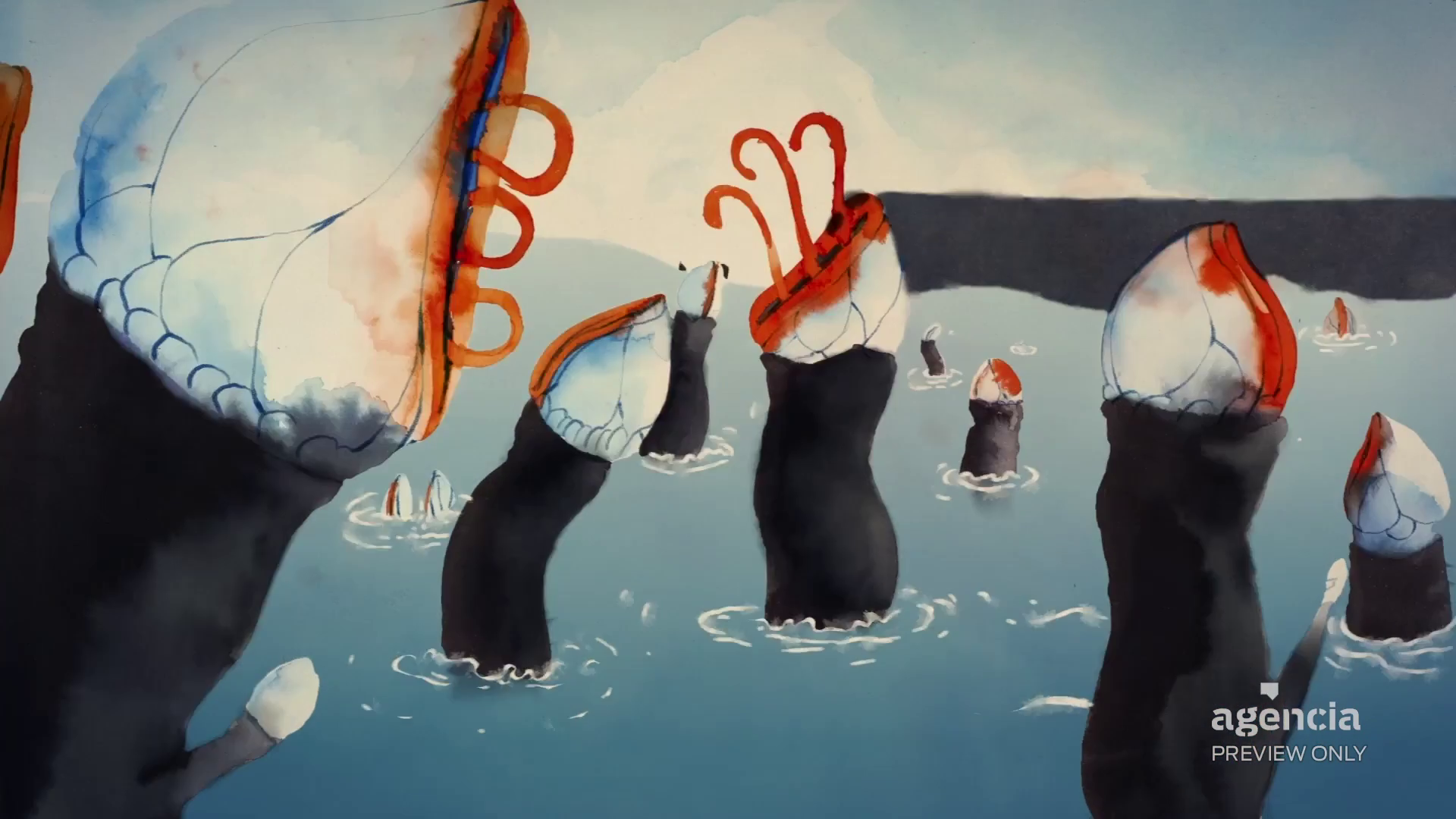
Rich texture of hand-painted watercolour displayed throughout the film in contrasting red and blue hues.
-
Rich texture of hand-painted watercolour displayed throughout the film in contrasting red and blue hues.
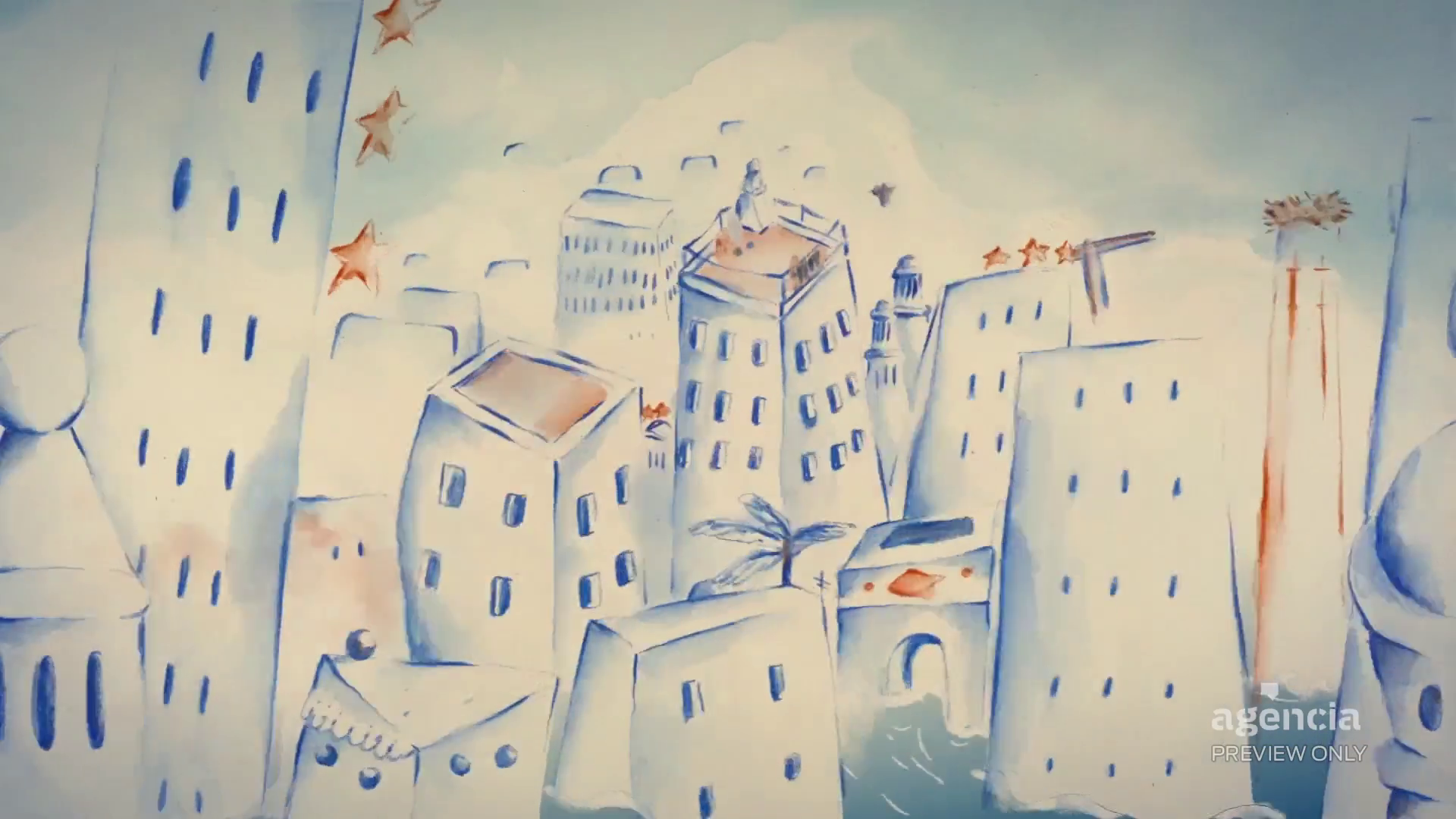
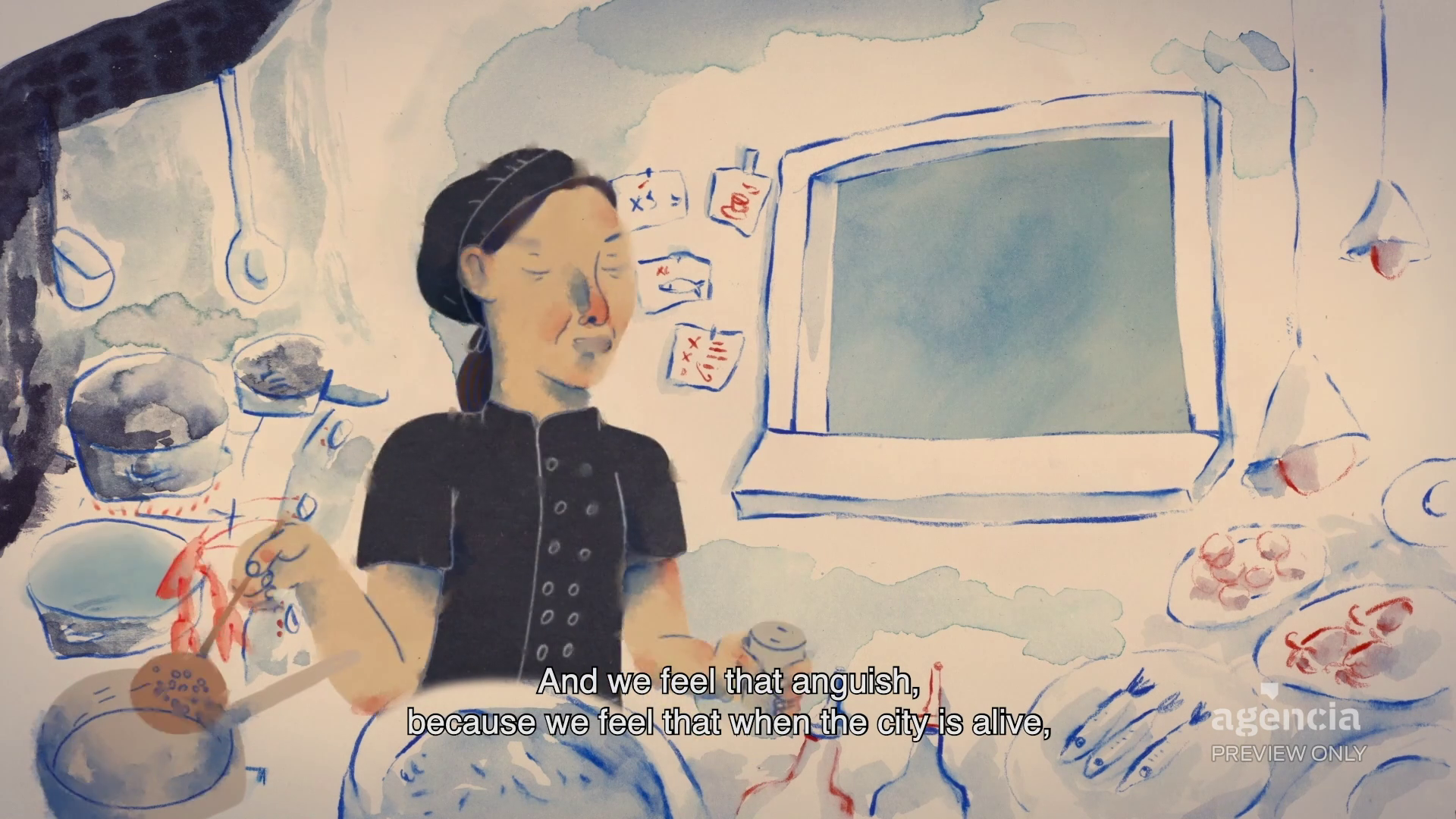
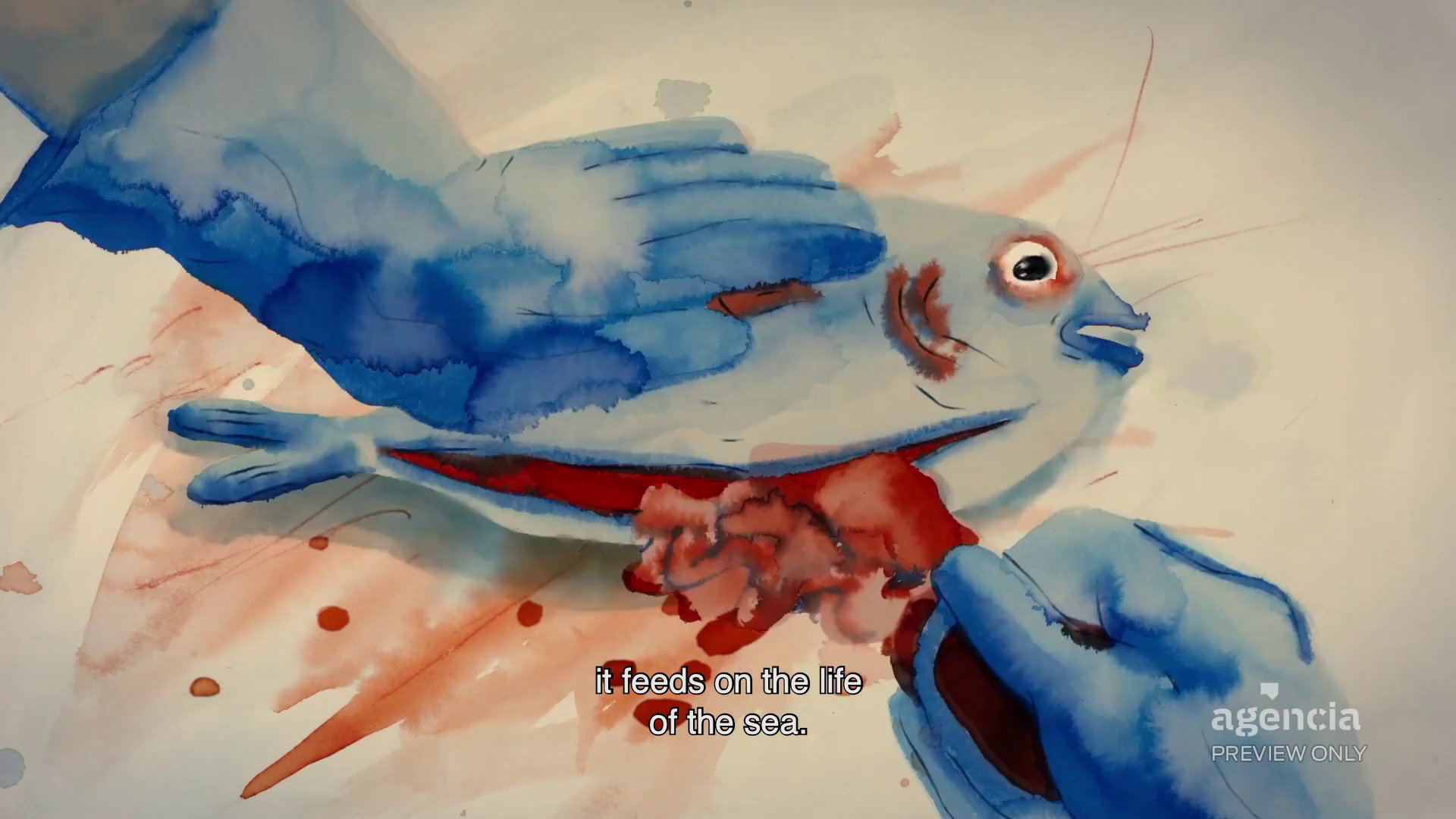
The percebes’ symbiotic reliance on tidal cycles echoes the sentiments of Algarvian locals about their increasing reliance on cycles of beach tourists. As their commentary notes, they rely on tourism for their economy, yet feel a growing resentment at the loss of ownership and access to their space. The film’s aesthetic interprets this tension, with tourists rendered as invasive, destructive forces, primal in their instinct to consume. These depictions are as subtle as images of children intrusively tapping on the glass of a fish tank, and as overt as faces abstracting into nothing but devouring mouths. The very appearance of their figures – simplistic designs, blue tones and broad shapes – visually demarcate them from the Algarvians, who are illustrated with care in cheery warm hues.
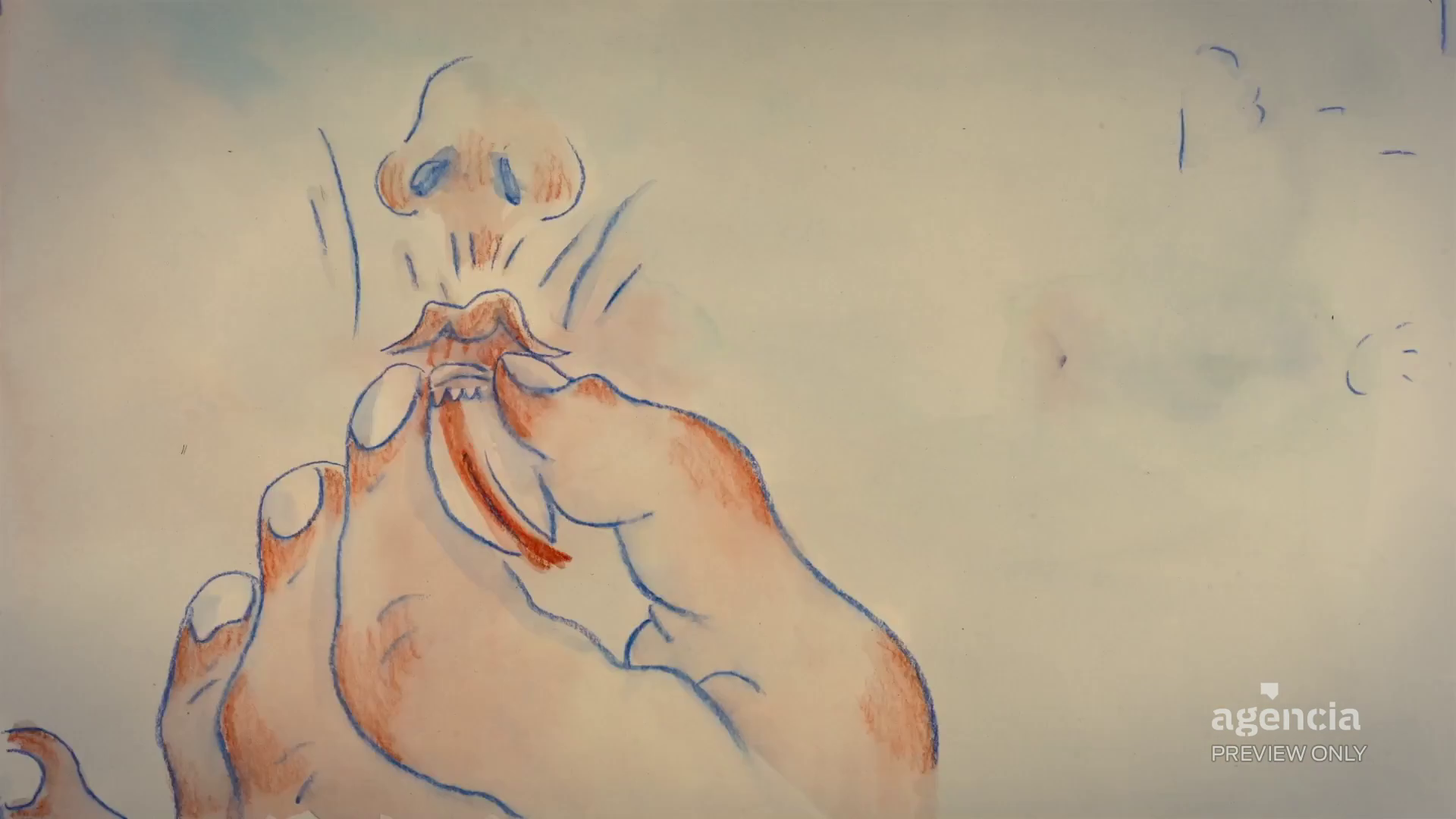
Tourists are abstracted into floating, obsessively consumptive mouths.
Algarve is defined by its relationship to the sea, and the directorial duo Laura Gonçalves and Alexandra Ramires integrate this connection directly into their material choice of watercolour. Watercolour as a medium sits between land and water (pigment combined with water), much like the coastal district. In the production of certain shots, salt is sprinkled directly over the paint to add mottled organic textures, binding the medium directly to the saltwater it represents. Even the camera movements, particularly tracking shots, simulate a waviness like walking on a boat, in their swaying, buoyant rises and falls. The use of watercolour to hand-paint each element in looping cycles creates energetically boiling splotches that visually break the background’s stillness with continuous movement.
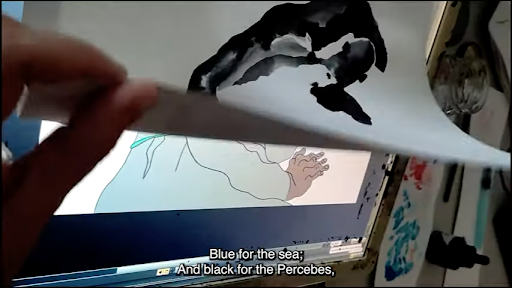
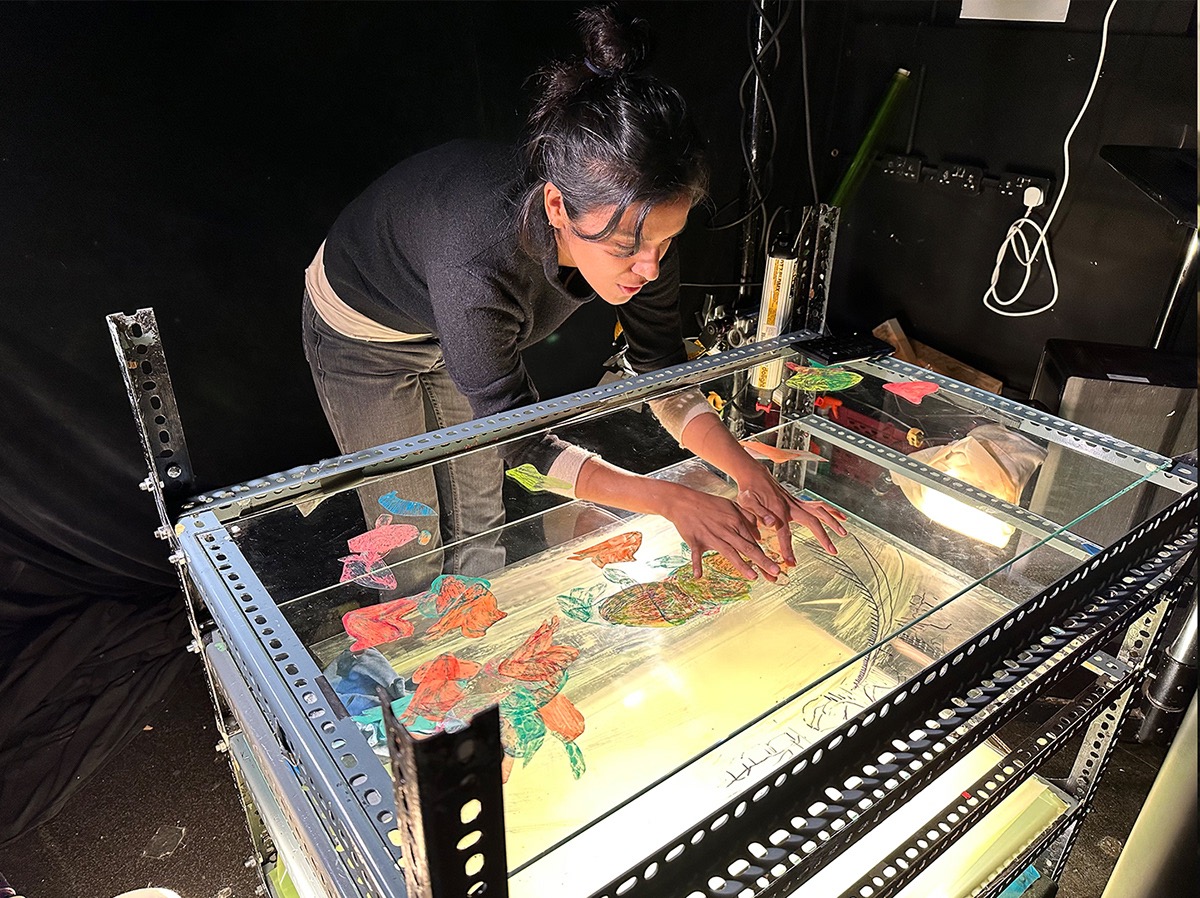
Blending traditional and digital techniques to develop a hybrid visual style.
The unique visual design of Percebes stems from its innovative hybrid technique. Each sequence is first animated digitally, then hand-painted frame by frame on paper affixed to the screen. This process allows for imprinting the ripple of the pigment flickering through each frame. The material authenticity of the medium complements the voiced narrations, which present intimate and personal stories. This sincere attentiveness to cultural representation extends beyond the image. A distinctive musical score by Nico Tricot guides the transitions and features Arabic tones, offering a subtle nod to Portugal’s historical Arab influences. The limited blue-and-white colour palette also appears to reference the hues of glazed ceramic tilework, known locally as Azulejo, which is an integral feature of Portuguese architecture.

Making of Percebes
A behind-the-scenes look at the production process, inspirations, and ideation of the film with the co-directors.
Watch the clip hereAn Anthropological history of Percebes
To learn more about the Portuguese delicacy, read this article by Bianca Chu, unpacking the culinary, cultural and mythical significance of Percebes.
Read the article here