Visiting the Beaty Biodiversity Museum
The natural history museum is where the public is often invited to study and understand living organisms. These museums are frequently connected with botanical and zoological collections that preserve and classify specimens. The Beauty Biodiversity Museum aims to reform the role and function of natural history museums and collections, opening them up to diverse publics and stories. In summer 2026, the Animate Materials Workshop research team visited the museum to study specific organisms and to see how it curates its collections.
-
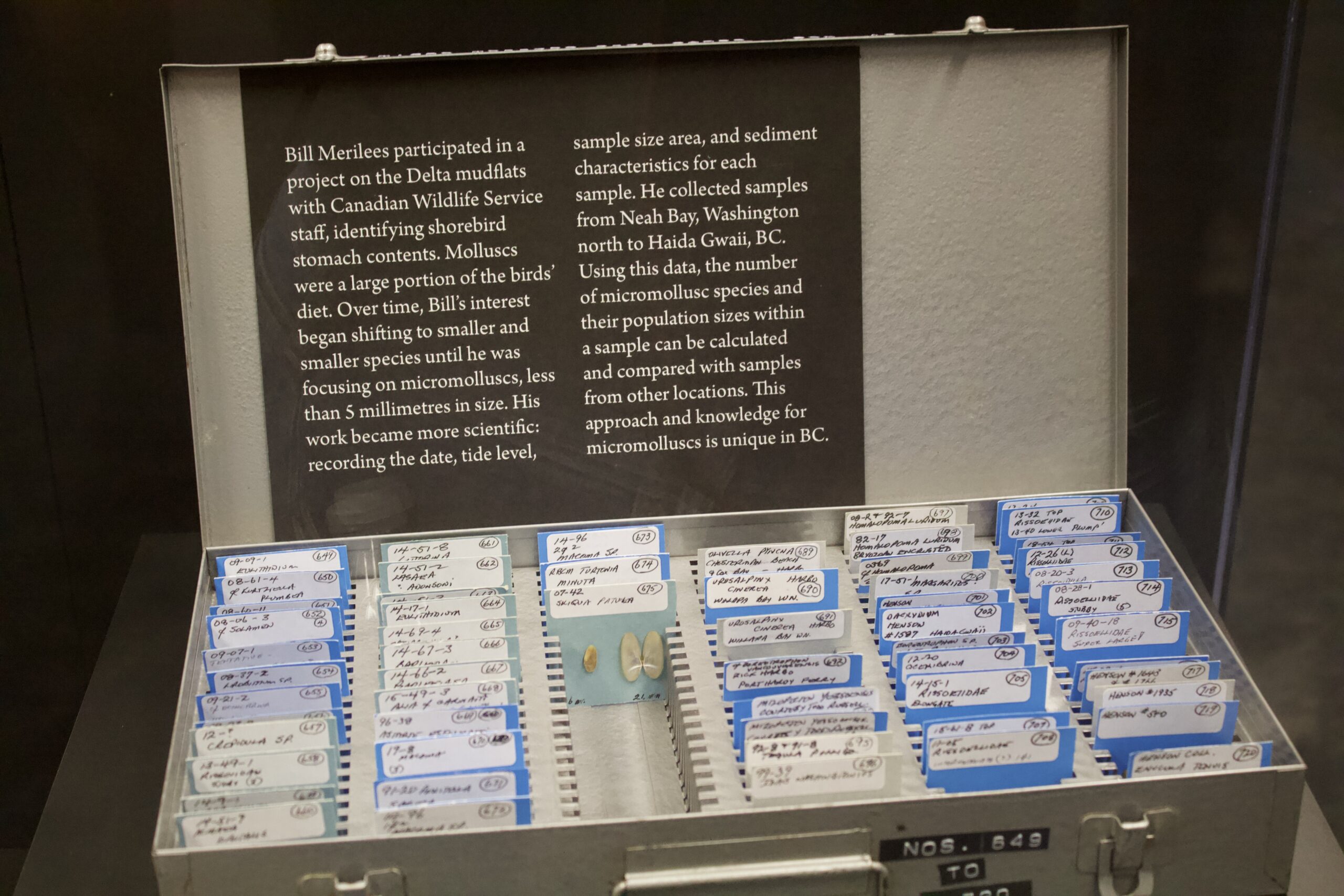
Displays at the museum range from specimen studies to special collections from individual researchers.
-
Displays at the museum range from specimen studies to special collections from individual researchers.
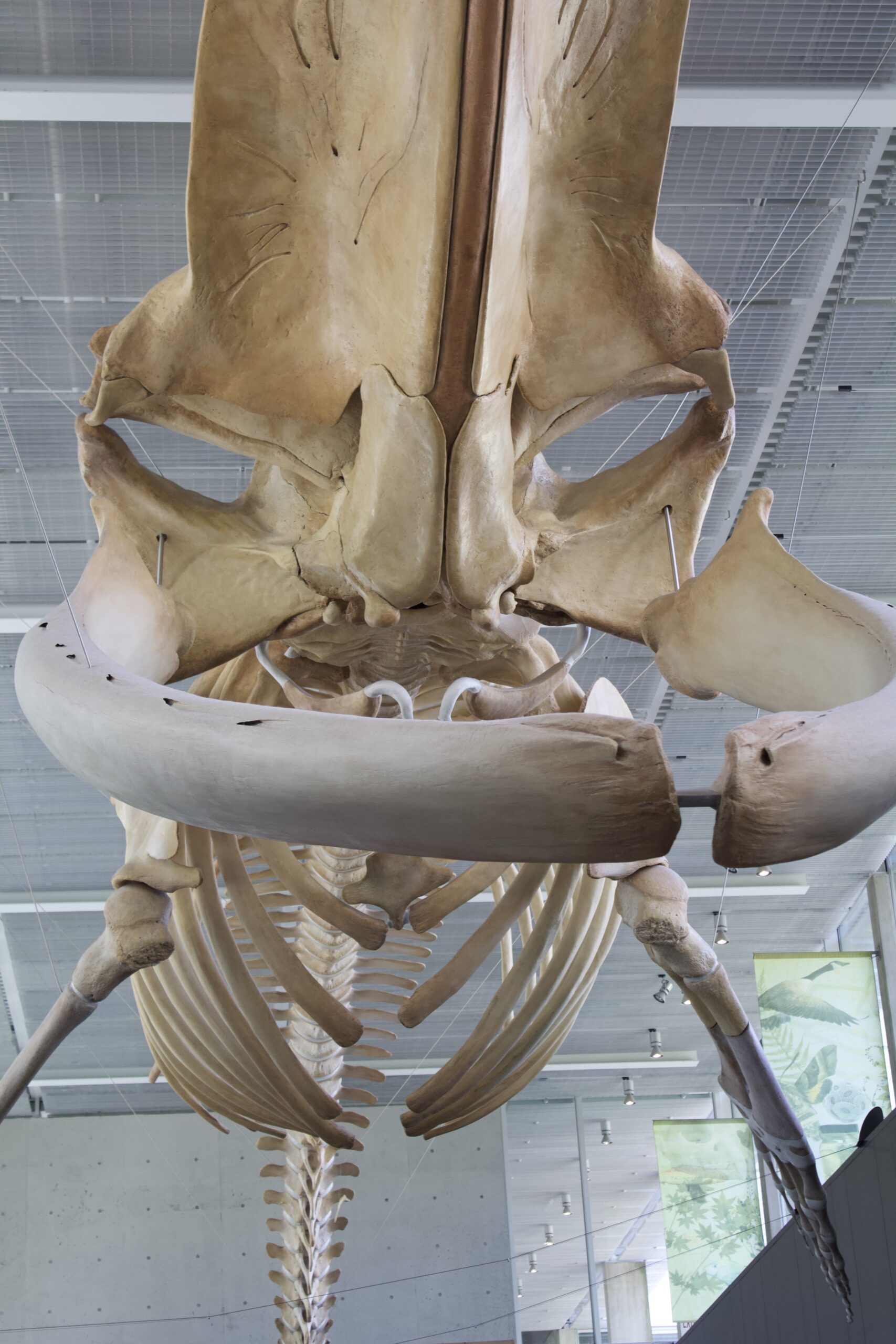
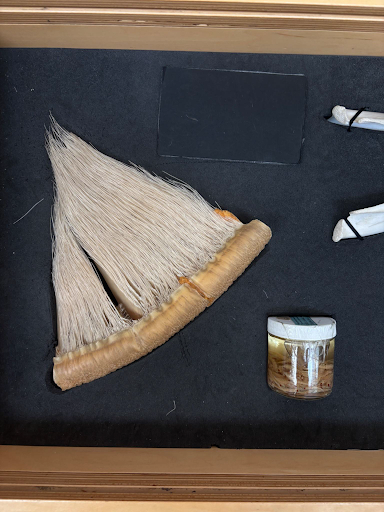
The museum’s education team organized a tour based on questions that we were interested in, such as: how their displays enable a deep understanding of bioorganic materials, from formation through decay; how the museum advances an other-than-human-life ethos; and how the specimens shape scientific illustration and communication. Two interpreters, Sofia Fan and Karmen Legge, led our hands-on tour, guiding us through a selection of museum collections and exhibits. We began at the museum’s most iconic and magnificent display, mounted at the atrium – a 26-metre-long blue female whale skeleton hanging from the ceiling. We heard the account of its discovery at Prince Edward Island in 1987, its burial, and, decades later, its recovery expedition, degreasing and installation. Adjacent to it was a piece of baleen from a young grey whale, which some members of our team likened to the bristles of a paintbrush, albeit with extraordinary sheen and turbidity. This glossy texture was owed to its keratin composition, the same protein found in human hair and fingernails.
-
The iconic 26-metre blue whale skeleton hanging in the atrium.
-
A piece of baleen from a young grey whale.
-
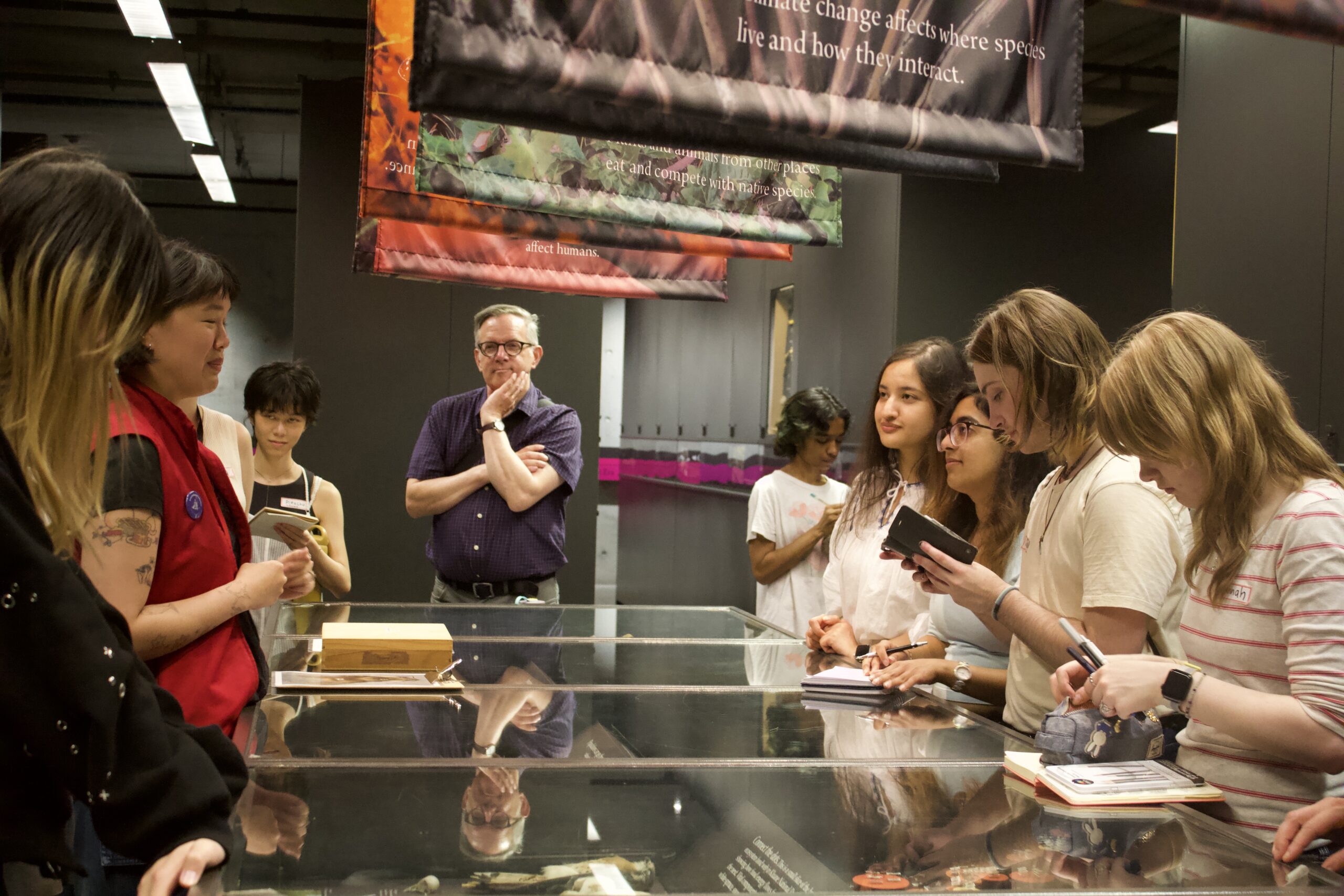
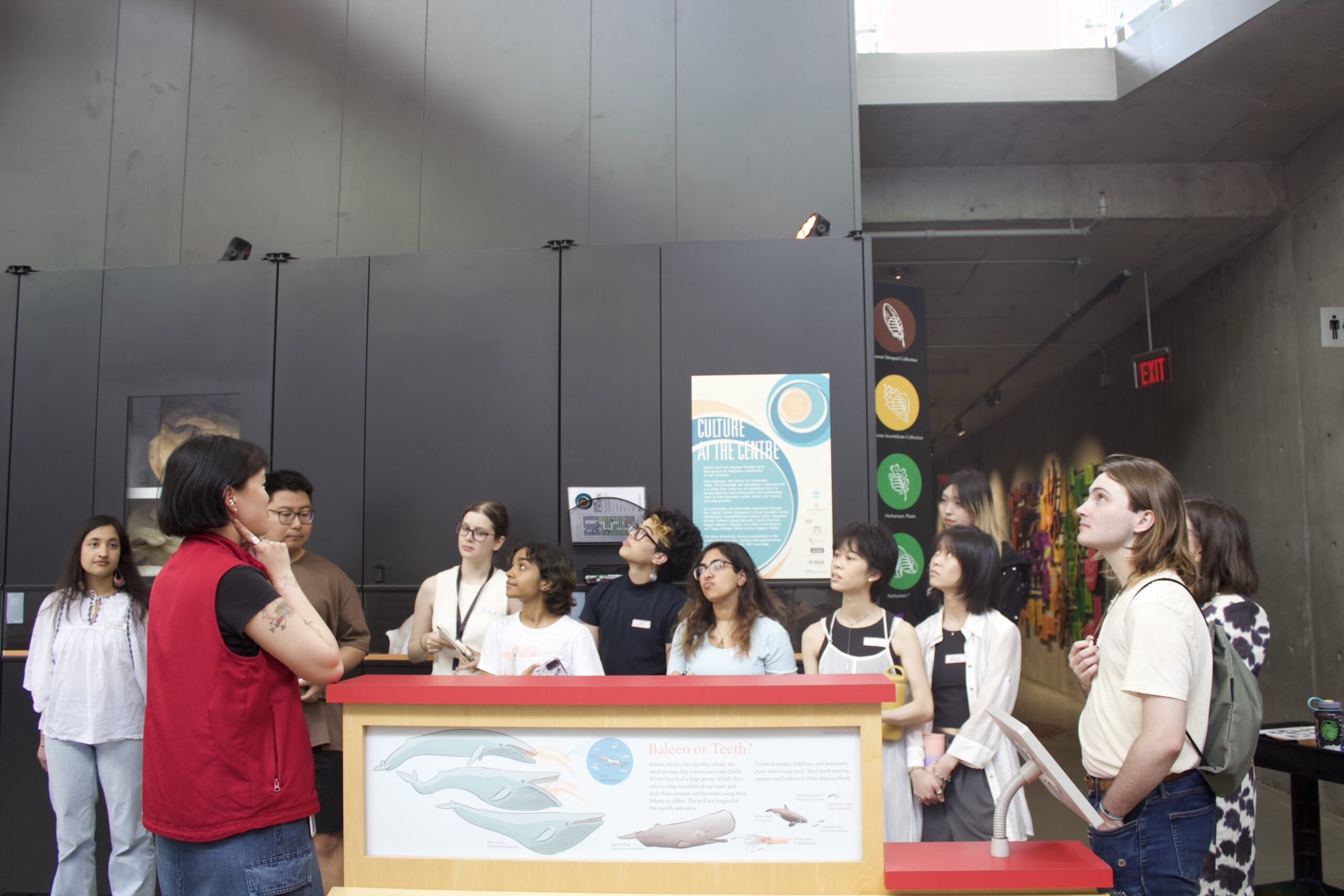
Museum interpreter Sofia Fan led the group tour through various displays.
The most insightful part of the tour was our time in the Herbarium, where we saw special collections donated by individual researchers. Among these contributors was Huber Moore, considered an early “citizen scientist.” Though he had no formal education, he was deeply interested in the natural world and began collecting specimens between Vancouver and the Okanagan, using public library resources to identify them. Some of his specimens even include detailed, hand-drawn maps showing how to reach the exact collection sites. Moore stored his collection creatively, reusing packaging and jars, and it remains preserved in those containers. His donation included hundreds of vascular plant and moss specimens and helped guide conservation decisions to prevent species extinction. Speaking about this invaluable contribution, Sofia explained that specimens from “outsiders” to academic institutions were often viewed with skepticism, and valuable research like Moore’s was frequently dismissed, even when it drew on knowledgeable resources. This collection was impactful for our workshop team because it demonstrated the history and value of fieldwork and research driven by genuine passion and investment in nature, rather than an abstract pursuit of knowledge or validation.
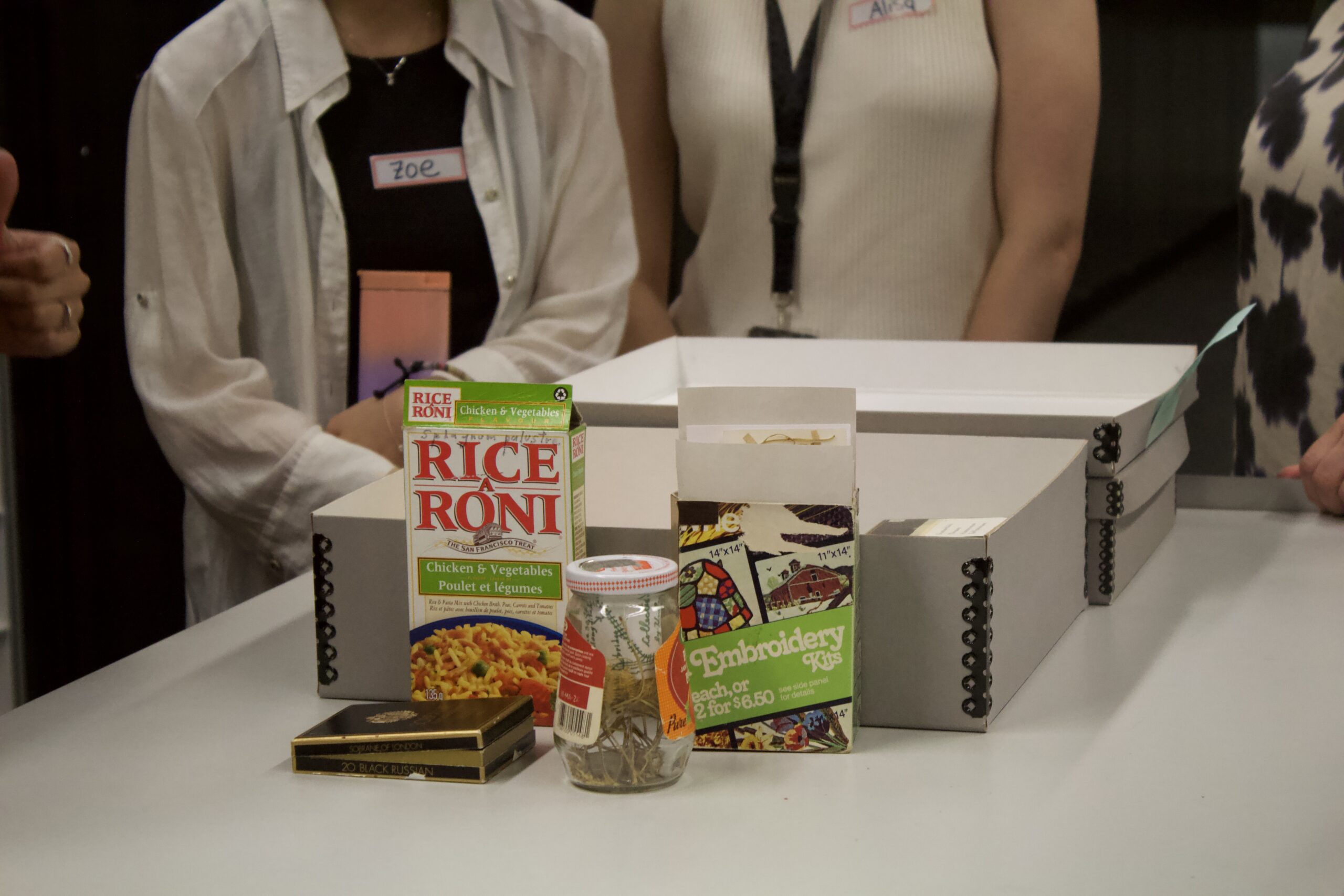
Citizen scientist Huber Moore preserved his collected specimens in reused packaging and jars.
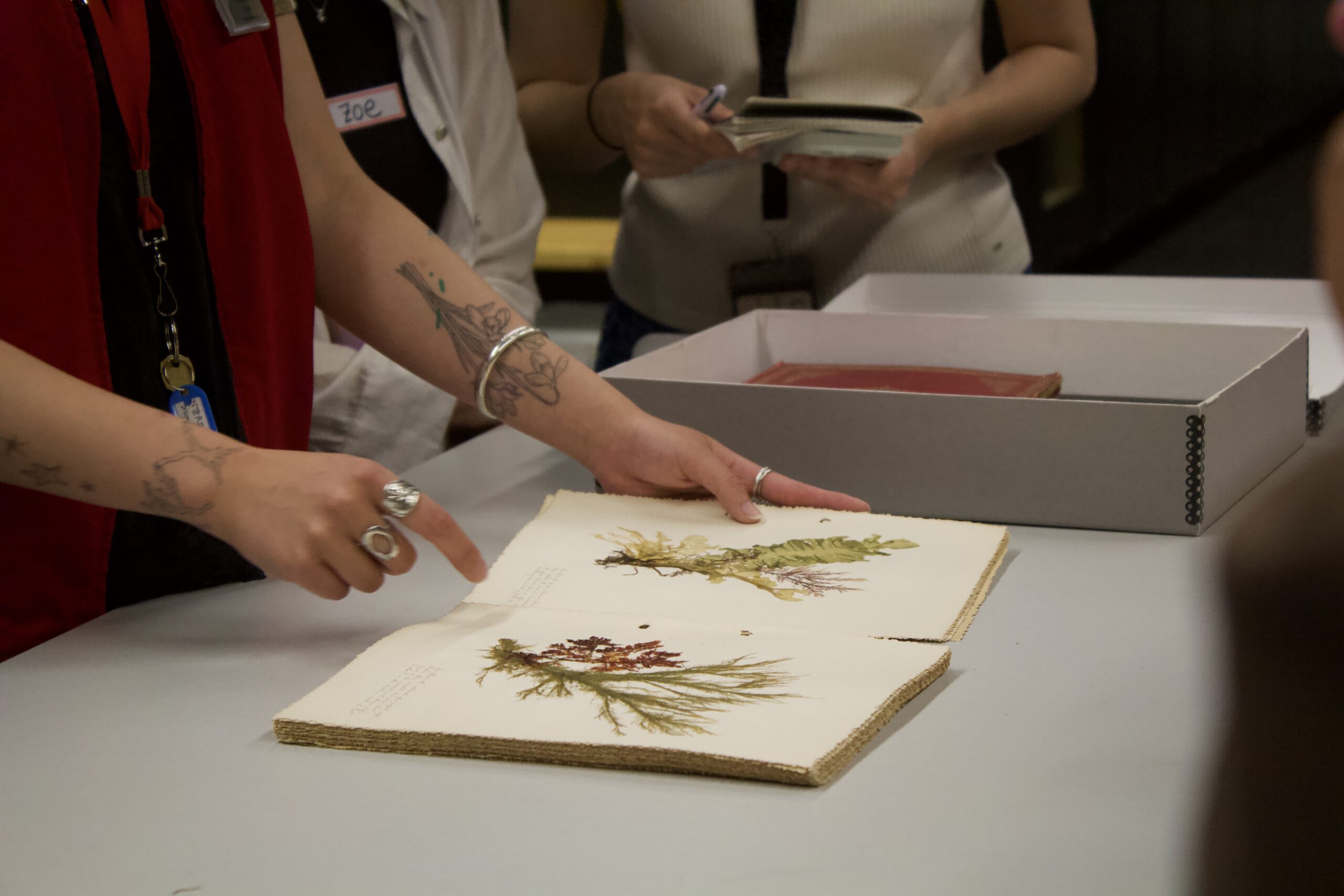
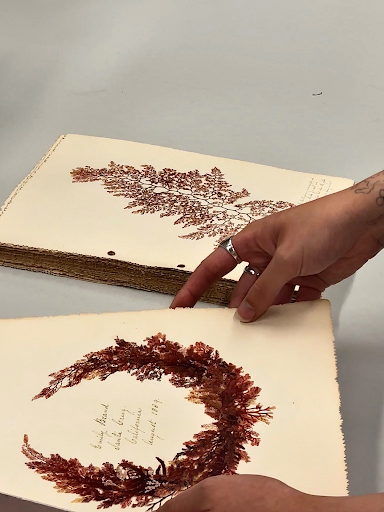
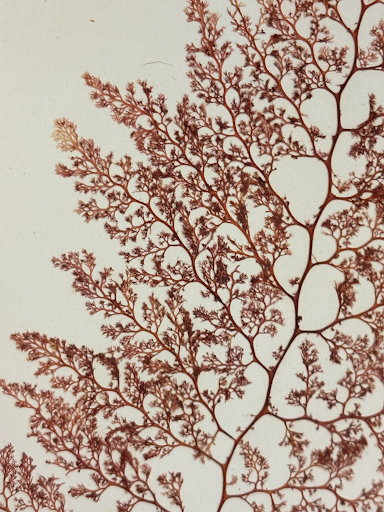
A similar story of credibility extended to the special collection of another individual researcher, Emily Brand. A Victorian woman, Brand collected pressed seaweed, accompanied by poems on each page and a hand-drawn illustration on the cover. Restrictions on women in academic spaces in that era led them to pursue their interest in bioorganisms through artistic endeavours like Brand’s, which, beyond their beautiful aesthetic function, served additional functions of preservation and systematic research. Workshop assistant Celine Chien drew a connection to English illustrator Beatrix Potter, best known as the creator of Peter Rabbit. Potter developed her painterly skills through her interest in rendering the natural world, driven by a keen interest in natural science, specifically mycology. Facing similar gender barriers, academic societies rebuffed her research, leaving her to channel her scientific interests into the highly detailed biological illustrations that defined the worlds in the picture books she published. Brand’s collection similarly shows the ways that working outside (or on the margins) of scientific disciplines created space for poetry and aesthetic response to the collected organisms.
-
A closer look at Emily Brand’s 1889 Victorian scrapbook with her pressed seaweed collection.
-
A closer look at Emily Brand’s 1889 Victorian scrapbook with her pressed seaweed collection.
-
A closer look at Emily Brand’s 1889 Victorian scrapbook with her pressed seaweed collection.
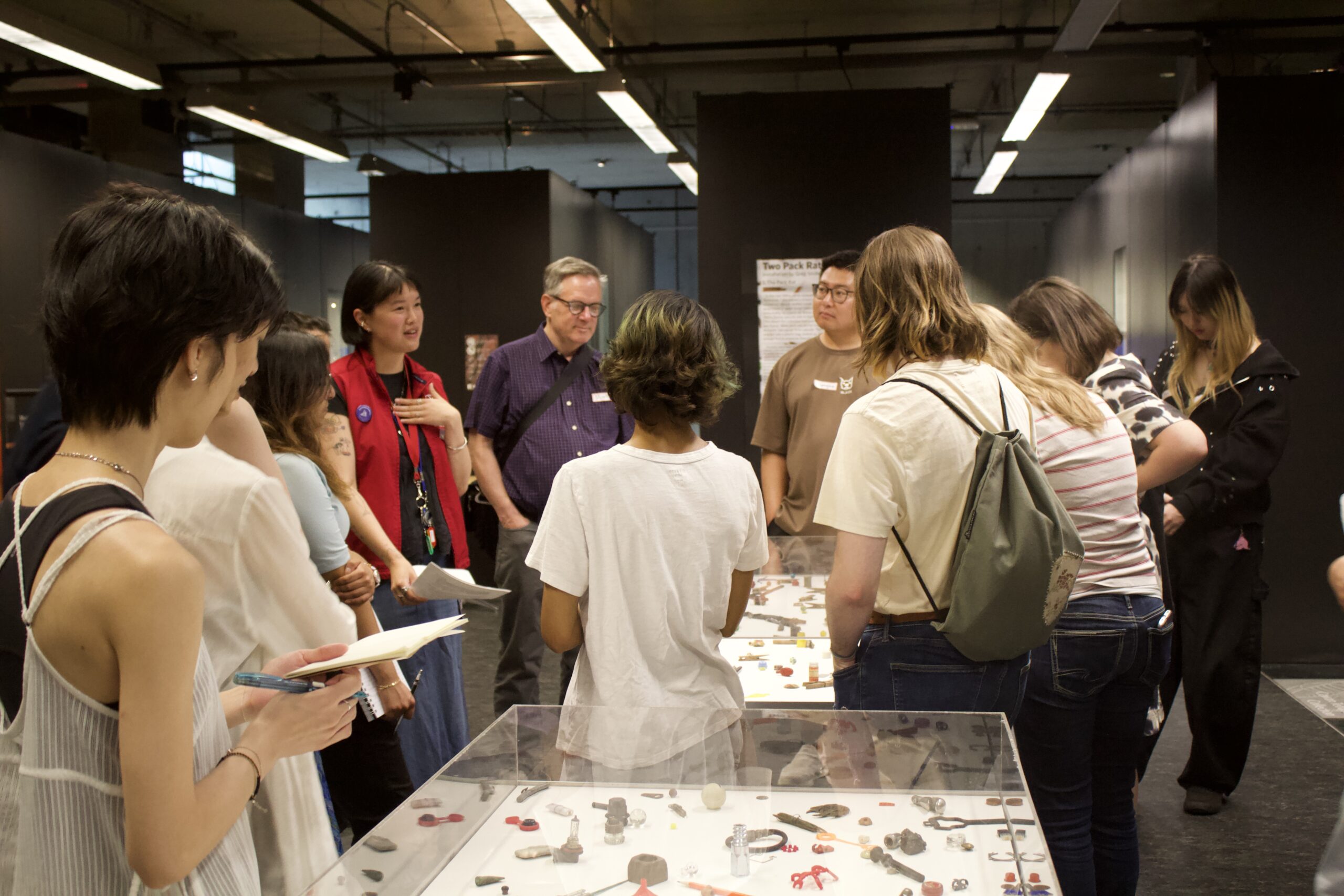
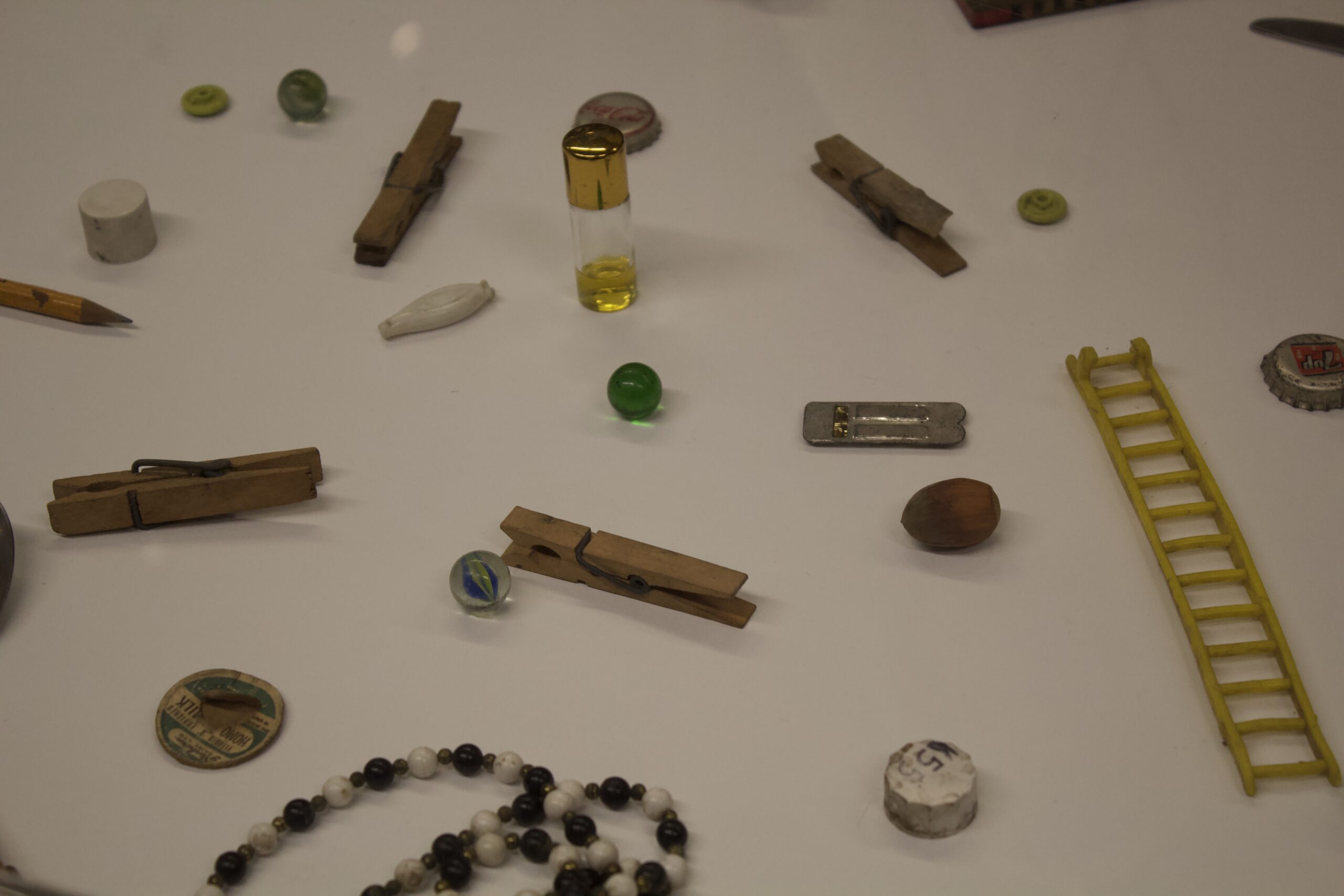
Other displays throughout the museum invite visitors to consider distinctions between scientific research and artistic expression. The installation Two Pack Rats (2023) by Greg Snider depicts an interactive exercise of putting oneself into the mind of a rodent. After years of gathering interesting items from the streets, Snider amassed a collection of random objects that he realized were uncannily similar to the treasures of a pack rat. This resonance inspired the exhibition of two adjacent vitrines containing an assortment of found objects– one gathered by a pack rat and the other collected by Snider. Snider described his discovery of the accumulated objects while renovating a house as “a kind of domestic Vancouver time capsule,” with some objects dating back to the mid-1950s. The artwork illuminated the collection research a rodent inadvertently carried out through its instinct to gather and its curiosity about mundane objects.
-
The installation “Two Pack Rats” (2023) by Greg Snider features two adjacent displays of object collections: one by a human and the other by a rodent.
-
A closer view of the assortment of found objects displayed in the installation.
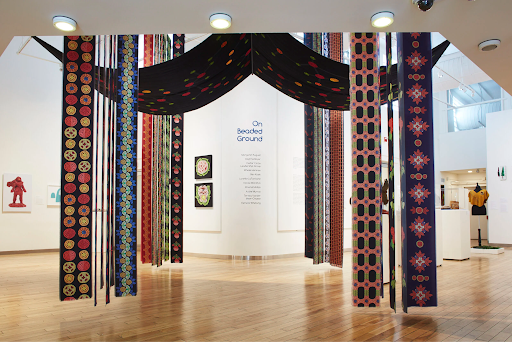
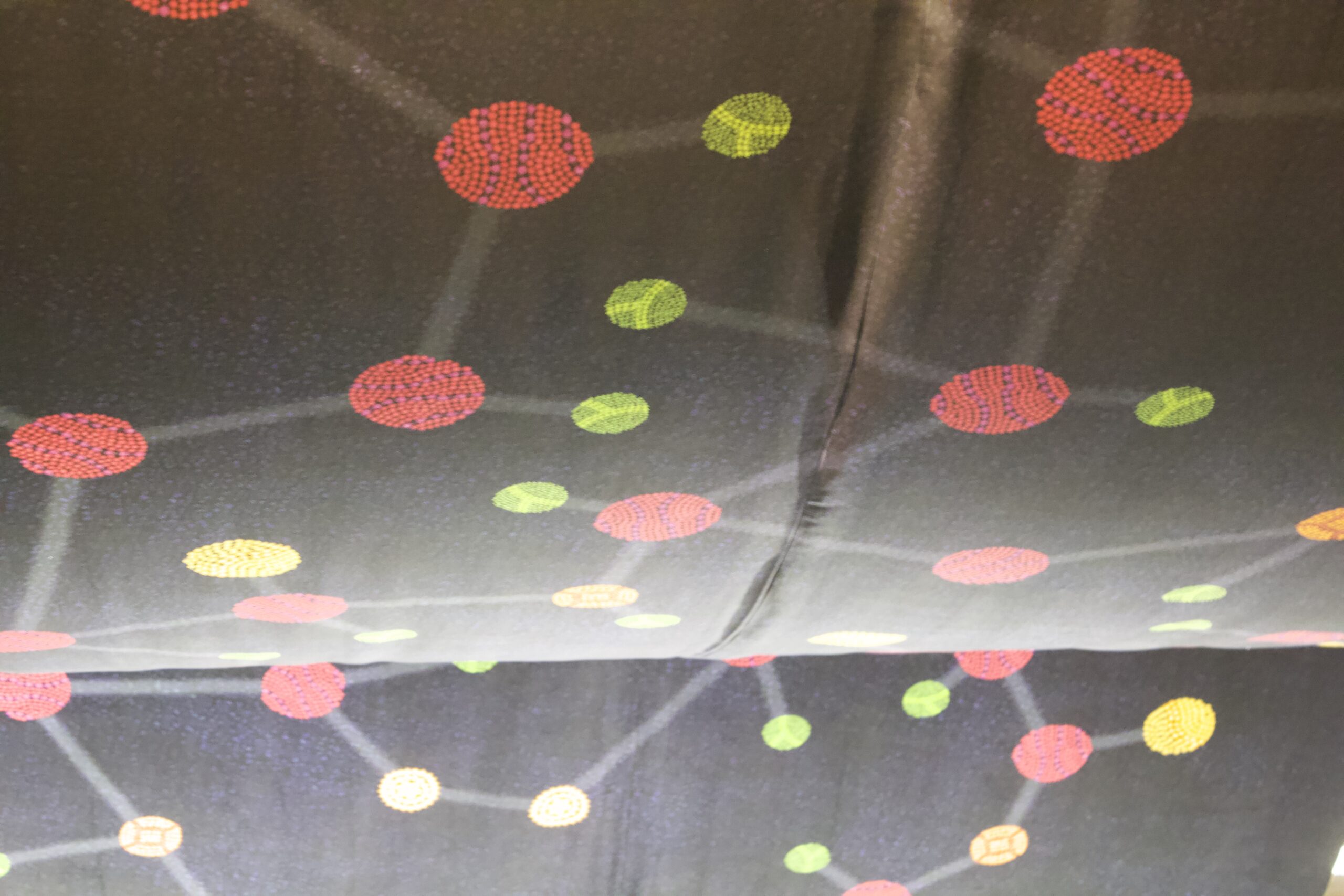
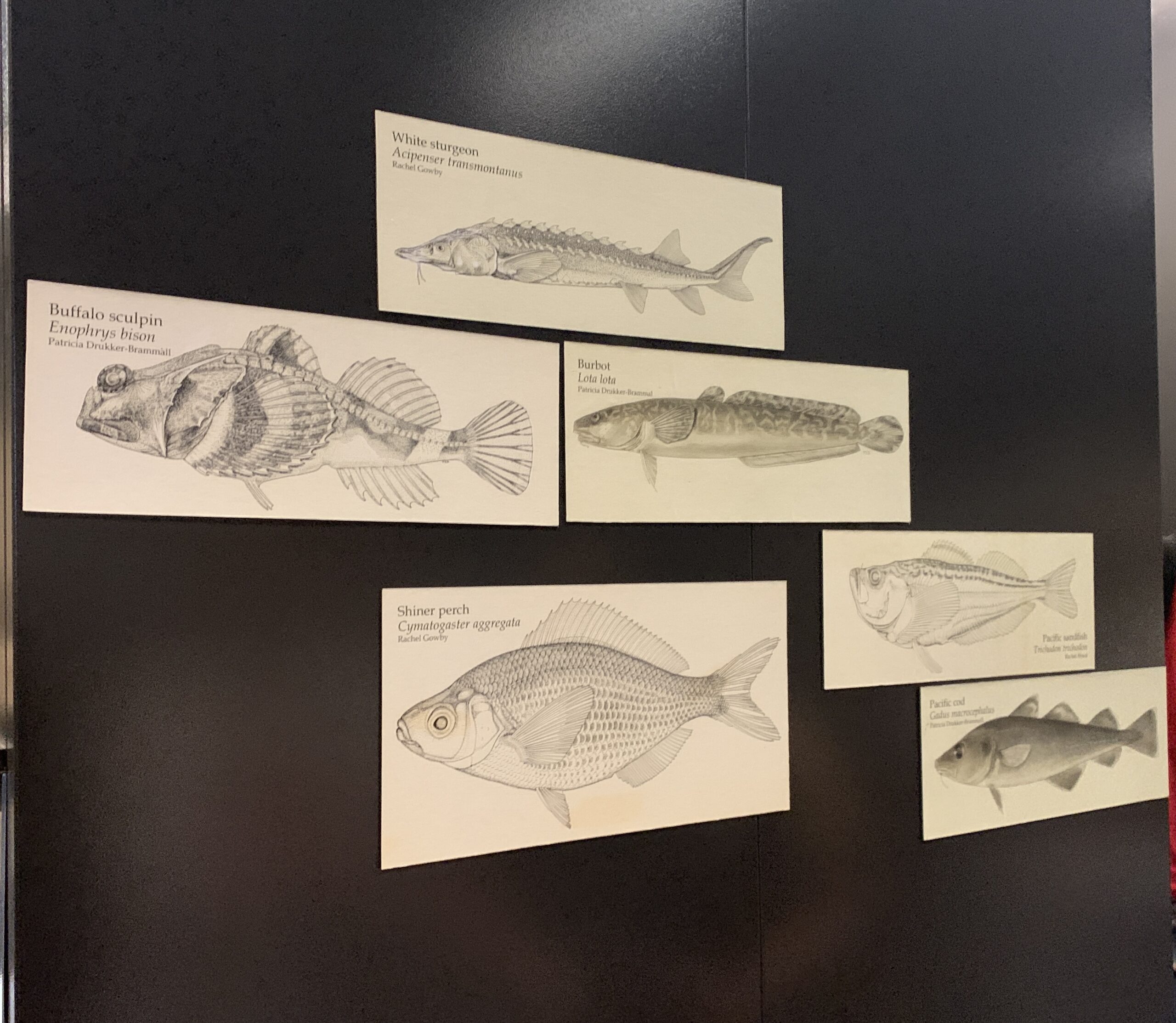
Another installation that stood out for many participants was visual artist and plant scientist Daphne Boyer’s Birthing Tents (2021), which uses her innovative digital beading technique. By digitally composing individually photographed berries and assembling them into a pattern, Boyer captures a semblance of traditional Métis beadwork. These patterns are printed onto the surface of the silk ribbons hanging from a central tented canopy. The canopy itself was composed of a molecular arrangement of the bead clusters to depict the structure of oxytocin, a hormone released during childbirth. A similar link between artistic and scientific research methods was evident in the diagrammatic fish illustrations displayed on the walls of the Fish Collection. We appreciated the precision and draftsmanship of the works that Sofia explained were made by artists in collaboration with scientists to illustrate the organisms as accurately as possible for the purposes of detailed study.
-
Daphne Boyer’s “Birthing Tents” (2021) uses a digital beading technique to evoke Métis beadwork.
-
The canopy of “Birthing Tents” arranges bead clusters to resemble the molecular structure of oxytocin.
-
Diagrammatic fish illustrations were displayed in the museum’s Fish Collection.
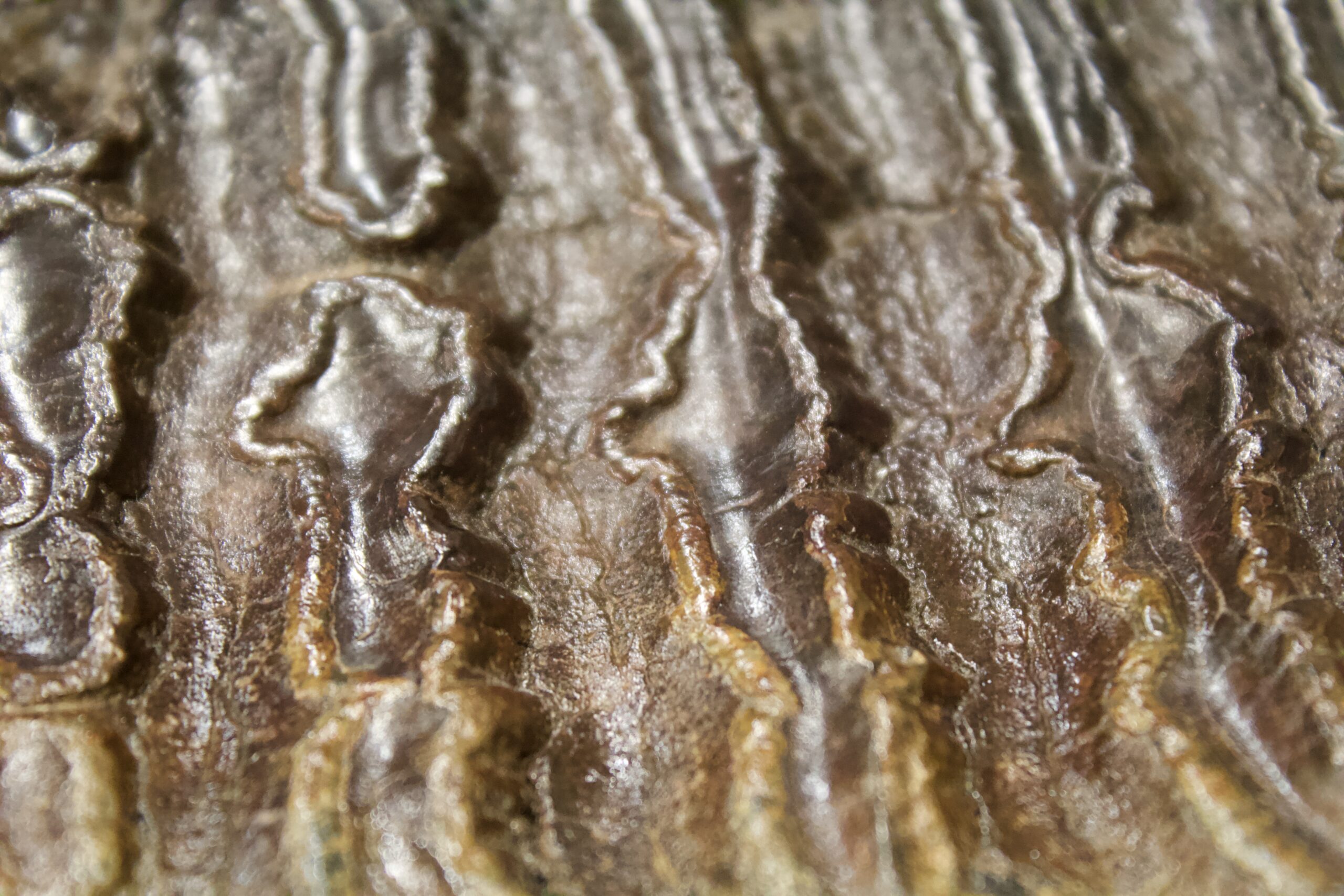
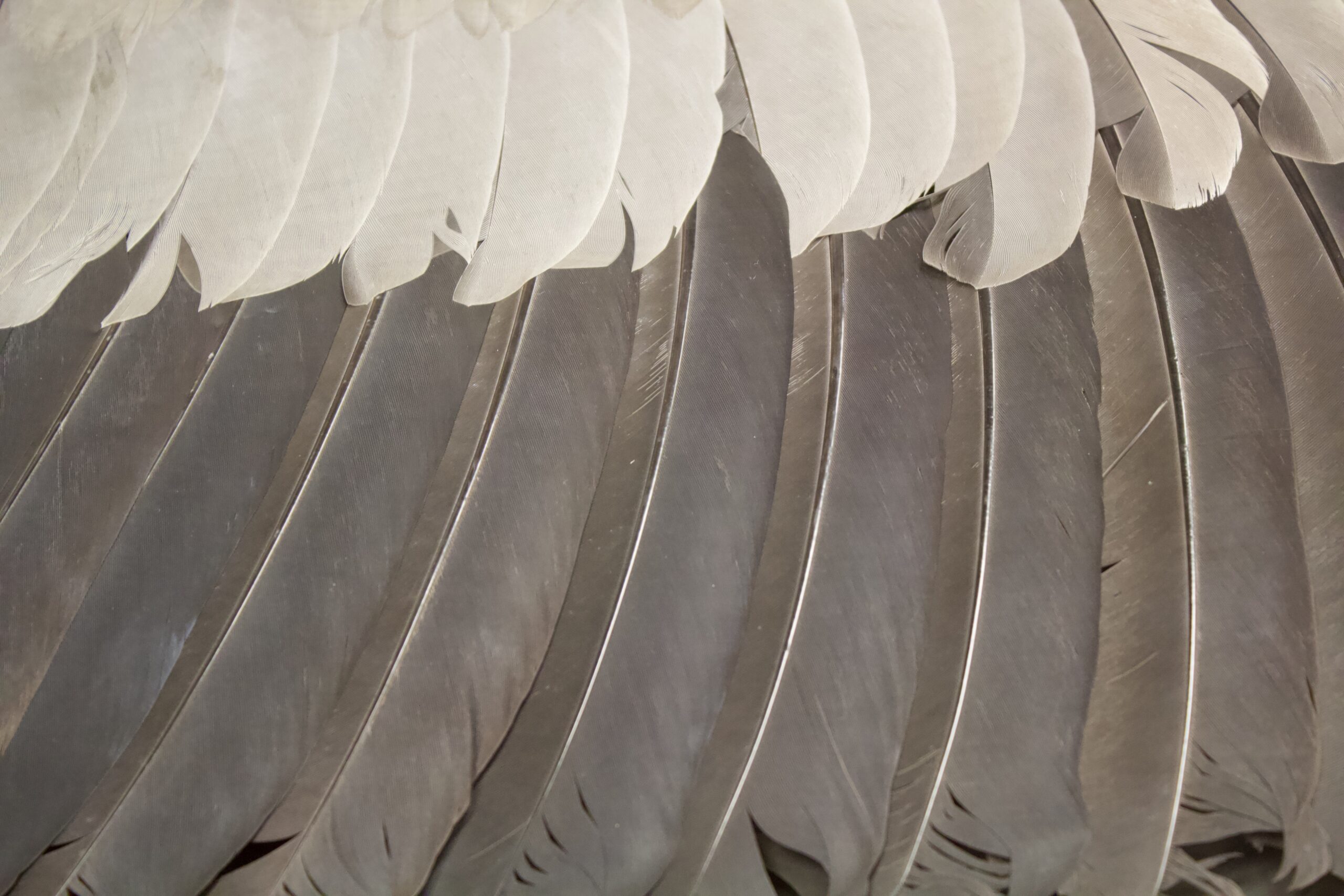
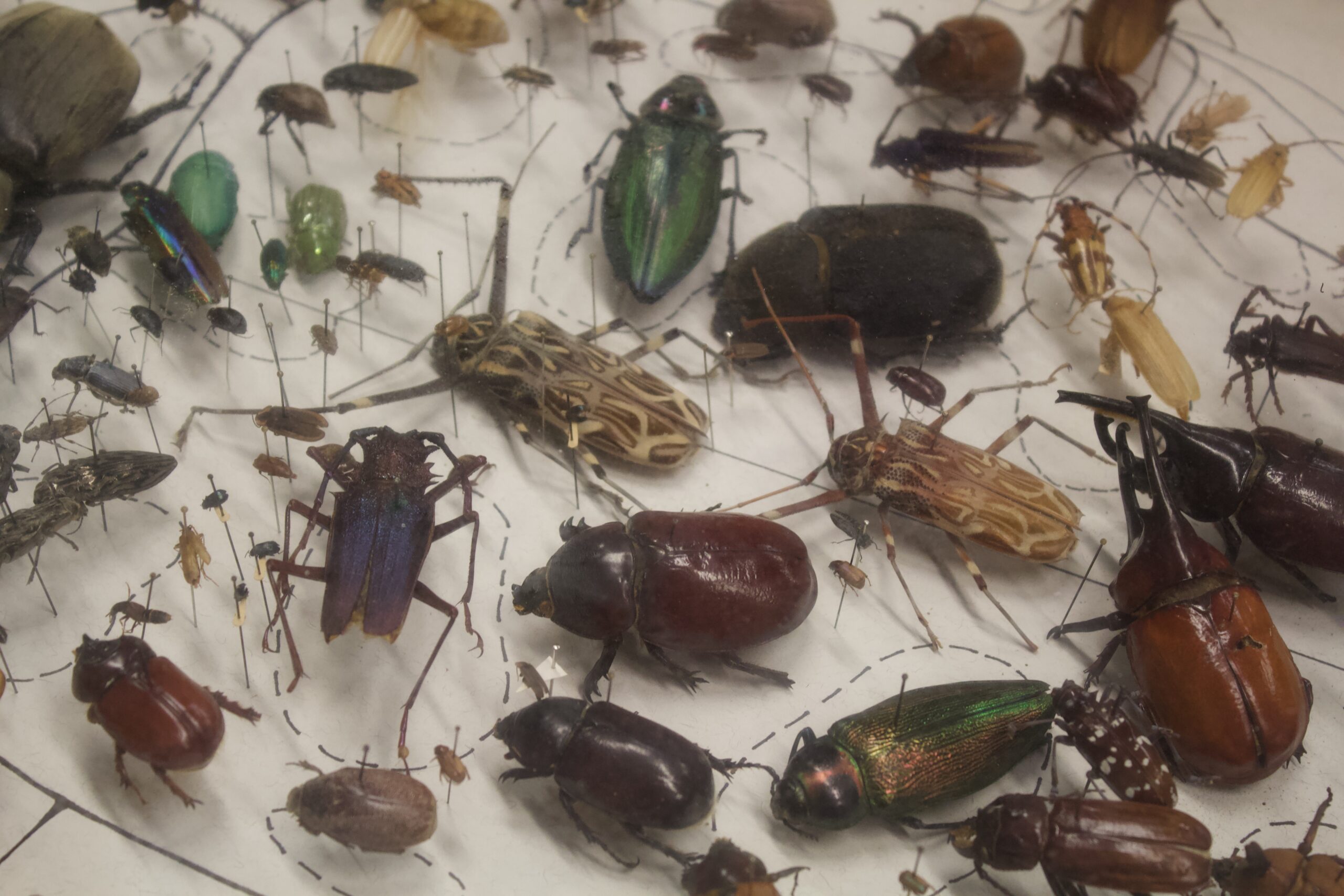
Going through each collection at the museum, we witnessed an array of biological specimens- from taxidermied wildlife at the Cowan Tetrapod Collection to lichen, crustaceans, and even insects and arthropods. Participants were intrigued by the rich textures as they viewed these specimens up close and, in many cases, could permissibly run their fingers over the surfaces to feel them. We ended our trip at the Allen Yap Discovery Lab, where curated specimens were laid out for us to observe up close. As Sophia explained, biological specimens in research collections are critical for medicine, informatics, and new discoveries, and, most importantly, they serve as physical baseline data for understanding how ecosystems change over time. Along with these vital bioorganic collections for research, the inclusion of artworks and shared stories of citizen scientists in the museum demonstrates the value of creative approaches and storytelling for empowering the public to understand themselves as part of knowledge systems.
-
A closer view of the texture of an alligator specimen.
-
A closer view of a Mallard’s wing specimen.
-
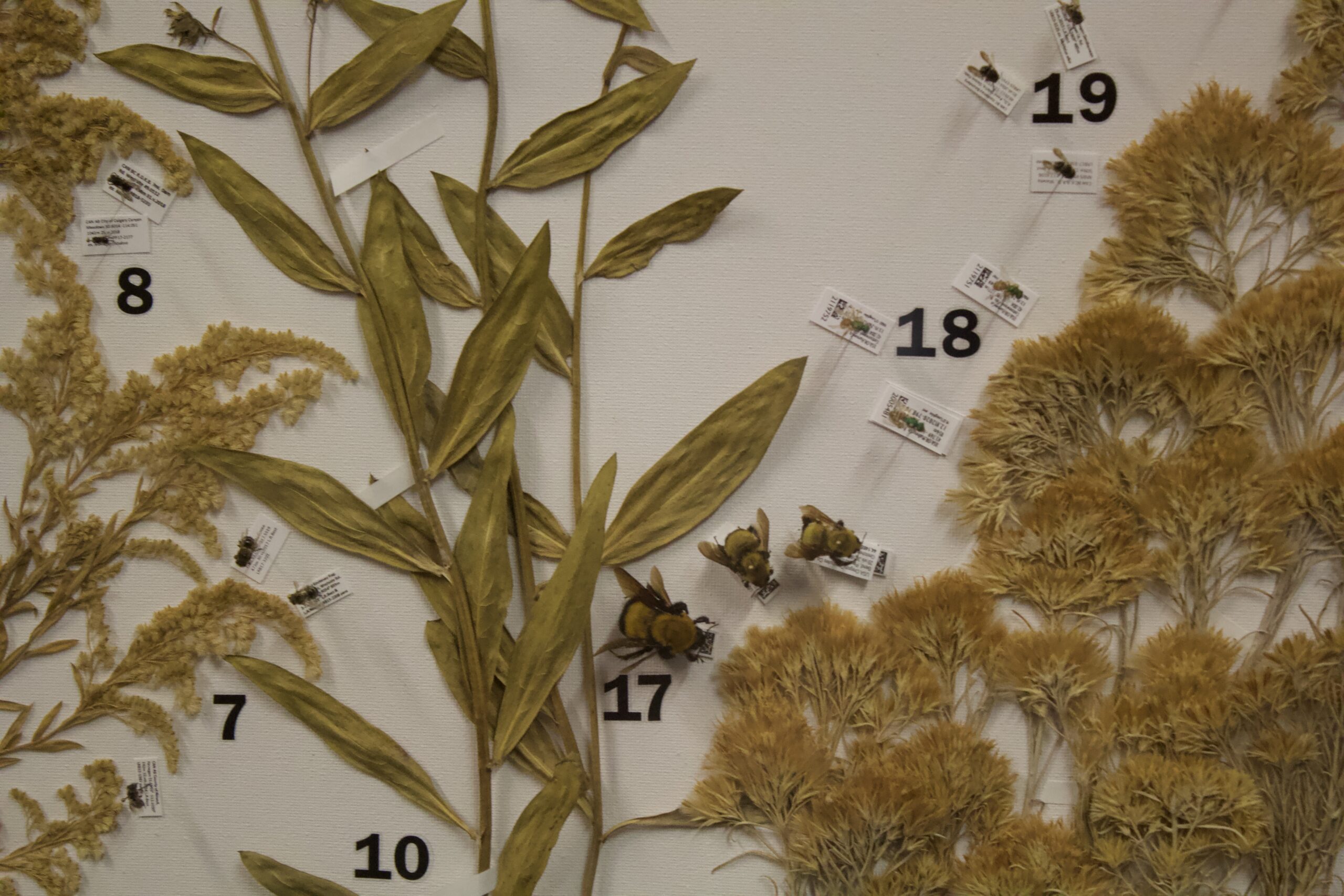
A display from the Entomological Collection.
Beaty Biodiversity Museum
Explore the full database of the Museum’s displayed and stored collections, and a feature on the 26-metre blue whale skeleton that is exhibited in the atrium.
Visit the website hereHuber Moore- An Early Citizen Scientist
Learn more about the contribution by individual researcher Huber Moore, and his creative approach to storing his specimens, in this article published by the Beaty Biodiversity Museum.
Read the article hereDaphne Boyer’s Birthing Tent
Learn more about Boyer’s installation, her innovative “Berries to Beads” technique and the inspirations behind the artwork on her website.
Visit the website here