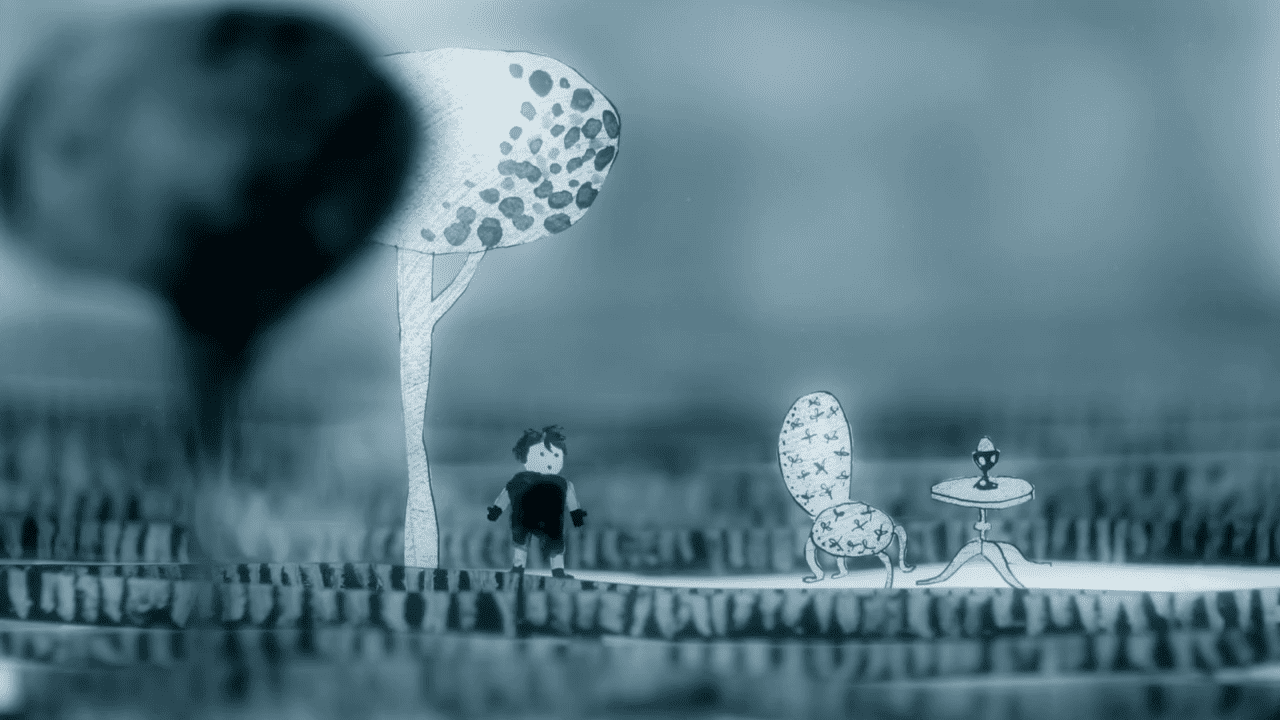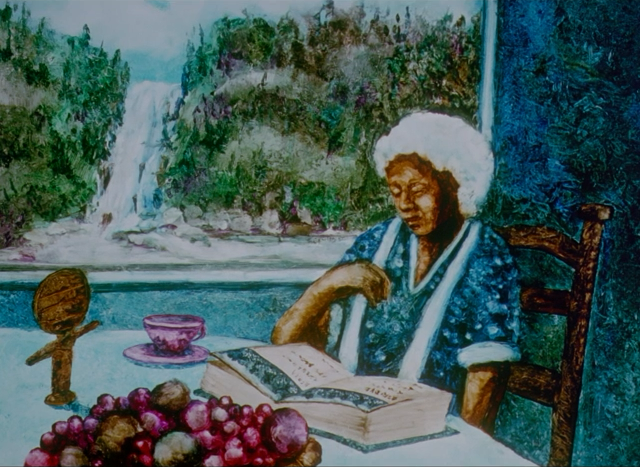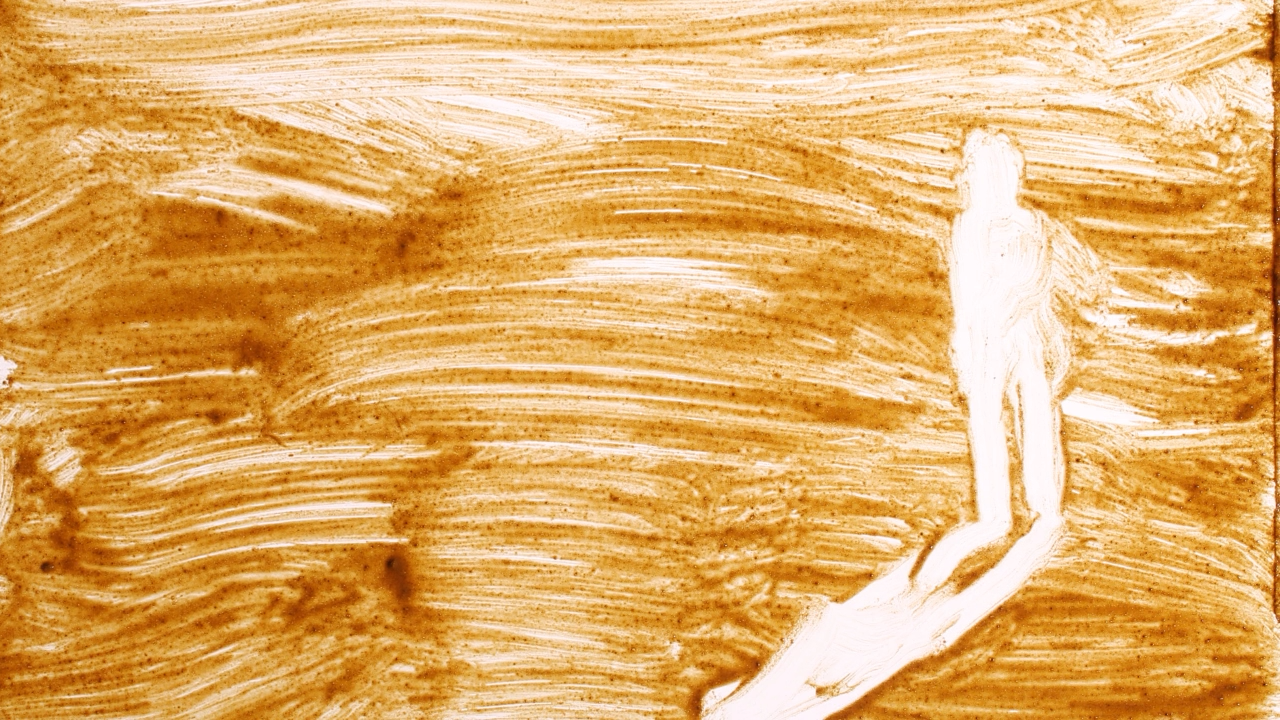
an animation frame of an abstracted landscape, painted on glass with wildcrafted Ochre paint
Animating Wildcrafted Ochre
“Gathering stones, crushing them into pigment, and mixing it with linseed oil grounded and humbled me to the connection between earth and paint. Handcrafting pigment at once gave me a much more expansive view of the materiality of paint, as well as made visible that at its most basic, paint is the elemental dynamic between earth and water.”
While it may pass unnoticed along the hiking trail or an oceanside cliff, the earth-clay Ochre has been harvested and used worldwide for half a million years. The oldest known pigment, Ochre gains its colouration from its base of iron minerals, which give it the common red, yellow, and brown appearance, or the more uncommon blue, black, or white appearance. It is categorized as an iron oxide mineral and is prevalent in any environment, where iron minerals form. During their time in the Animate Materials Workshop, painter Marina Levit sought to expand the history of Ochre through focused animation tests. Working intimately with the pigment, they harvested and crafted their own ochre paint to follow the process from ground to camera.
ochre in its raw form animated with improvised movements
Levit’s interest in Ochre is based on its global prevalence and its recurring importance for makers working across continents and millennia. Ochre’s functions were not only creative but also extended to uses like sunscreen and antiseptic. Beginning with improvised animation of Ochre in solid dirt and rock form, Levit was intrigued by the sensation of the material, noting its earthy feel, sound, and scent. Its form moves between different sizes of being crushed: full rocks, broken chunks, and dust created by the breakage. These stages suggest the Ochre’s potential for transformation, as it naturally exists in any size. The flowing movements are indicative of the transition between a solid and liquid state, as the process of creating and using paint changes between the two. The animation introduces Ochre not as a product, but as a harvested material which exists throughout its transformations.
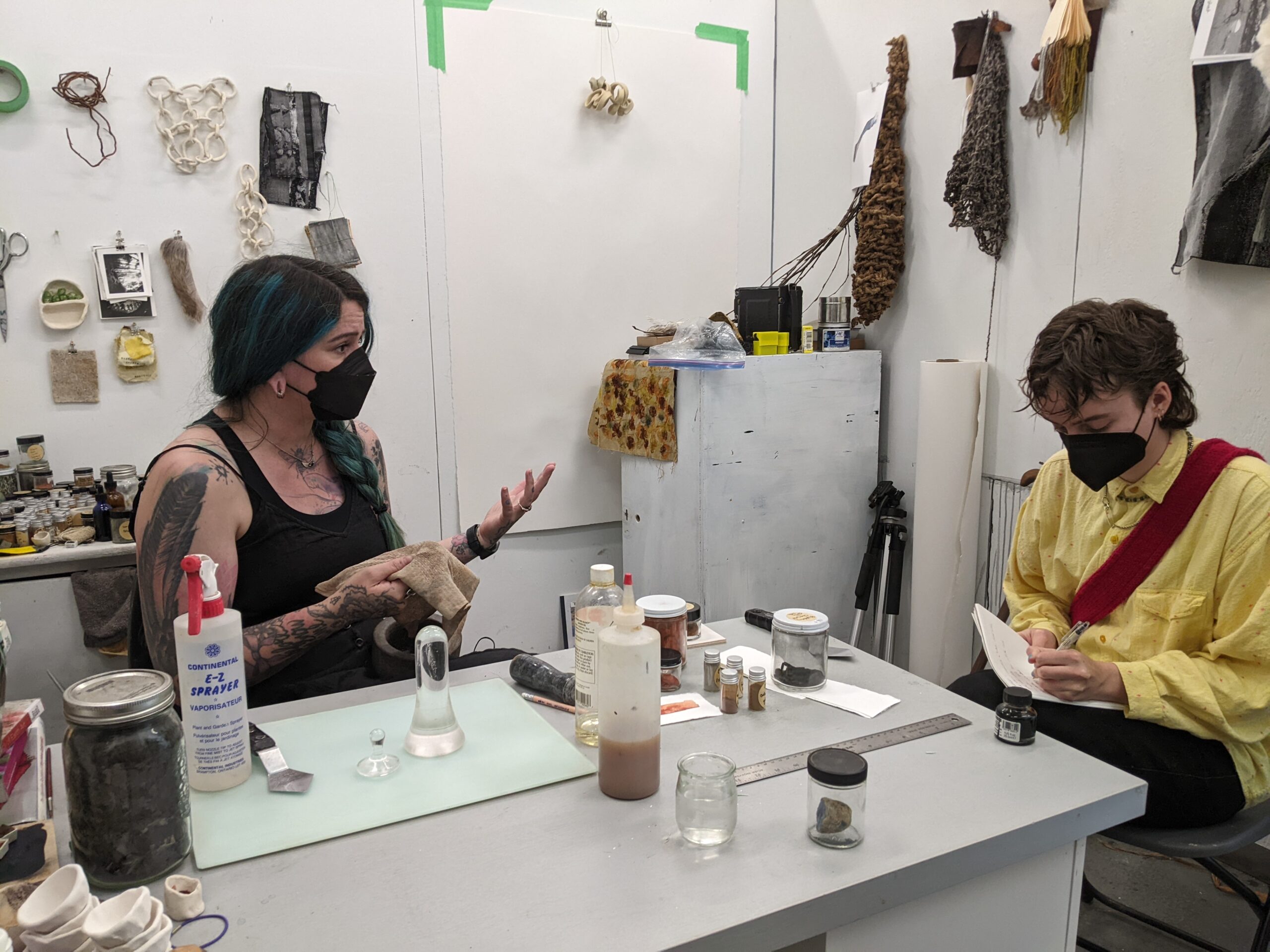
Marina Levit’s mentorship from Caitlin Ffrench informed their wildcraft harvest of Ochre
Levit’s work with Ochre was supported by a mentorship with artist Caitlin Ffrench, a prominent voice within the wildcrafted pigment movement and author of the book Gathering Colour. Previously, Levit had only worked with manufactured oil paints and synthetic acrylics. Their meetings with Ffrench introduced them to the regional history of Ochre, as well as best practices for ecologically sustainable foraging and pigment crafting. Levit learned how to rub small rocks against wet surfaces and their skin, in order to gauge whether they had enough workable Ochre to make pigment. They also learned the process of creating ochre oil paint, from harvesting to completion.
-
Marina Levit sourcing ochre pigment near a public trail in Northern Vancouver
-
Marina Levit sourcing ochre pigment near a public trail in Northern Vancouver
-
Marina Levit sourcing ochre pigment near a public trail in Northern Vancouver
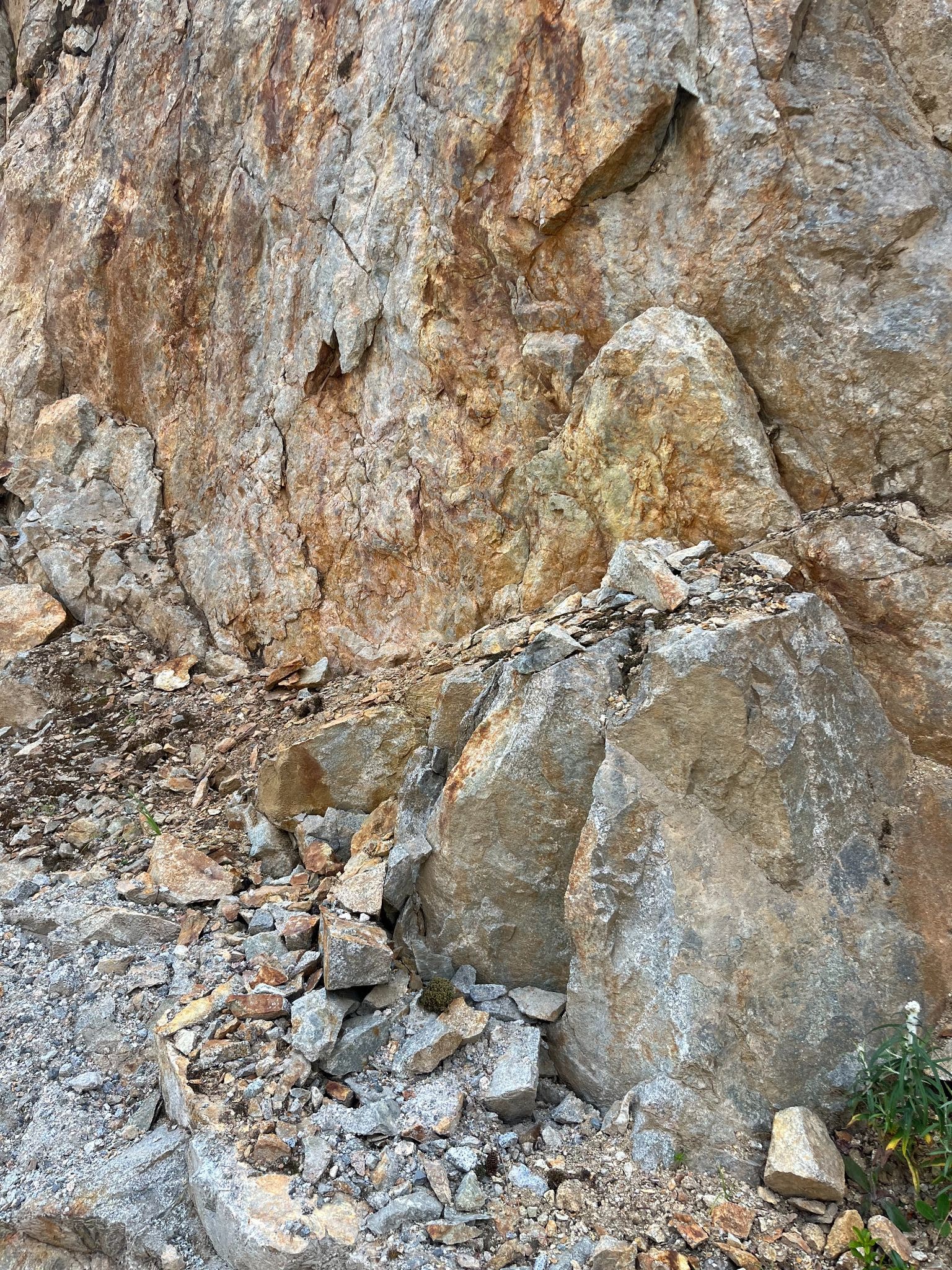
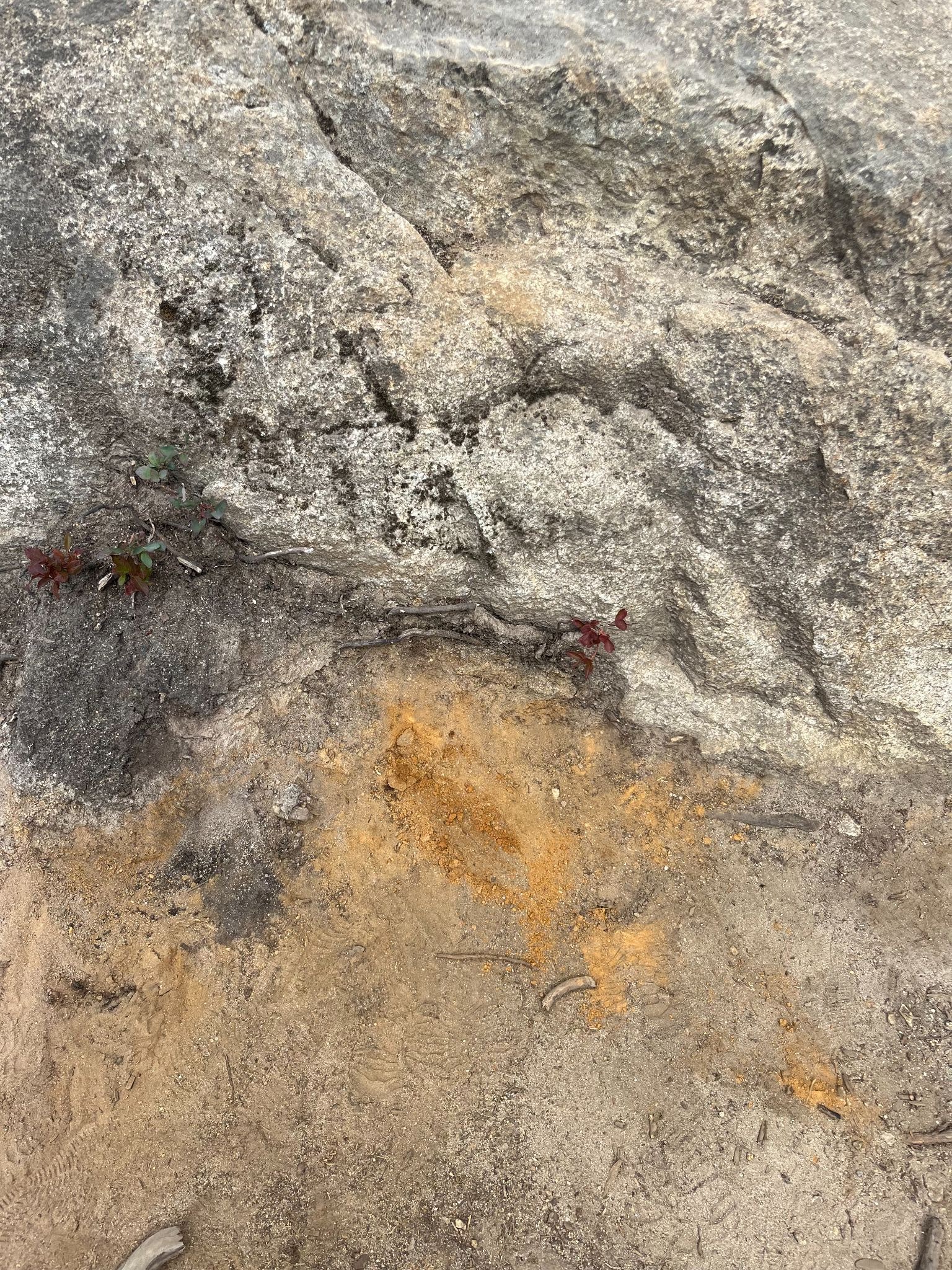
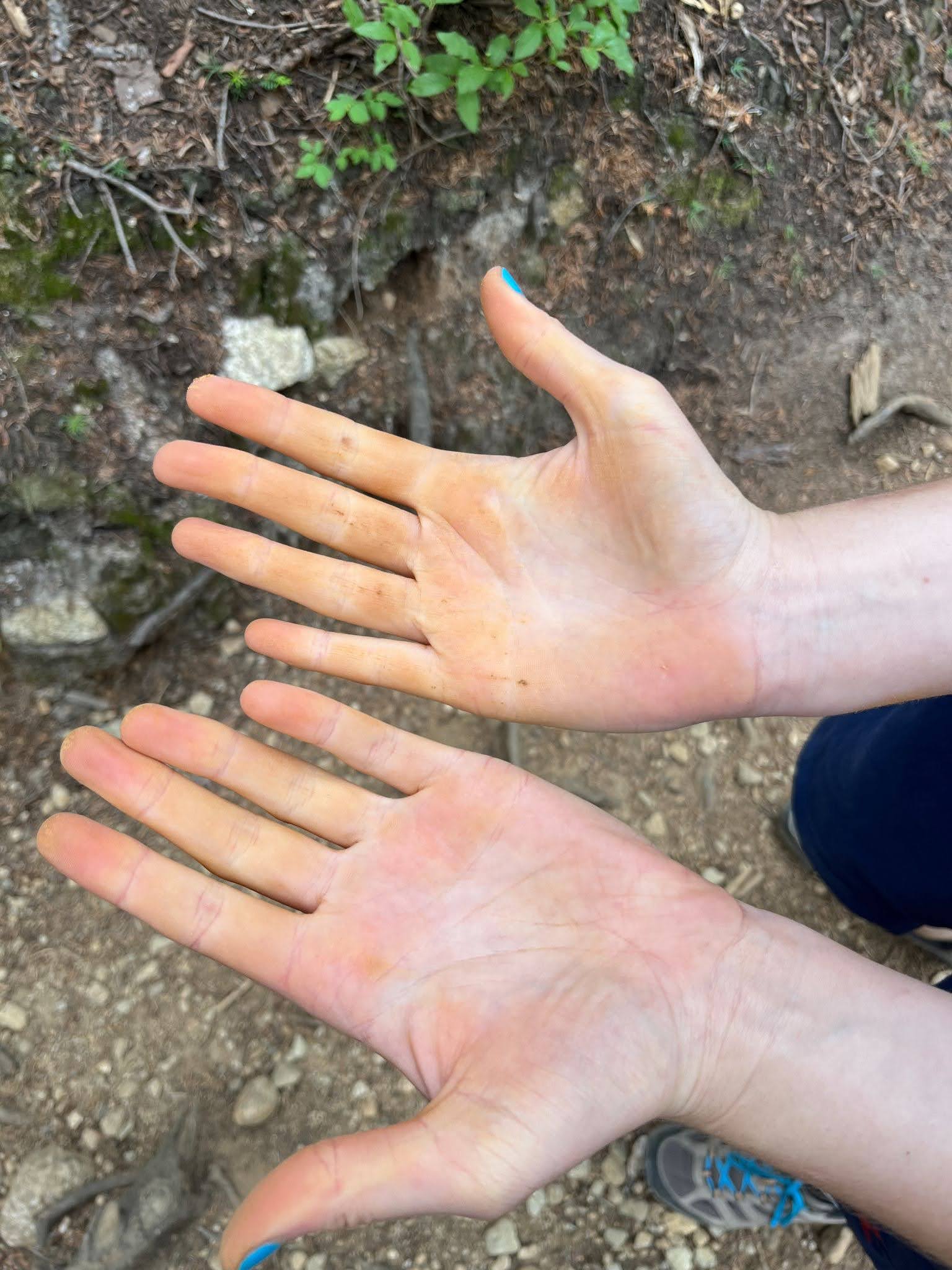
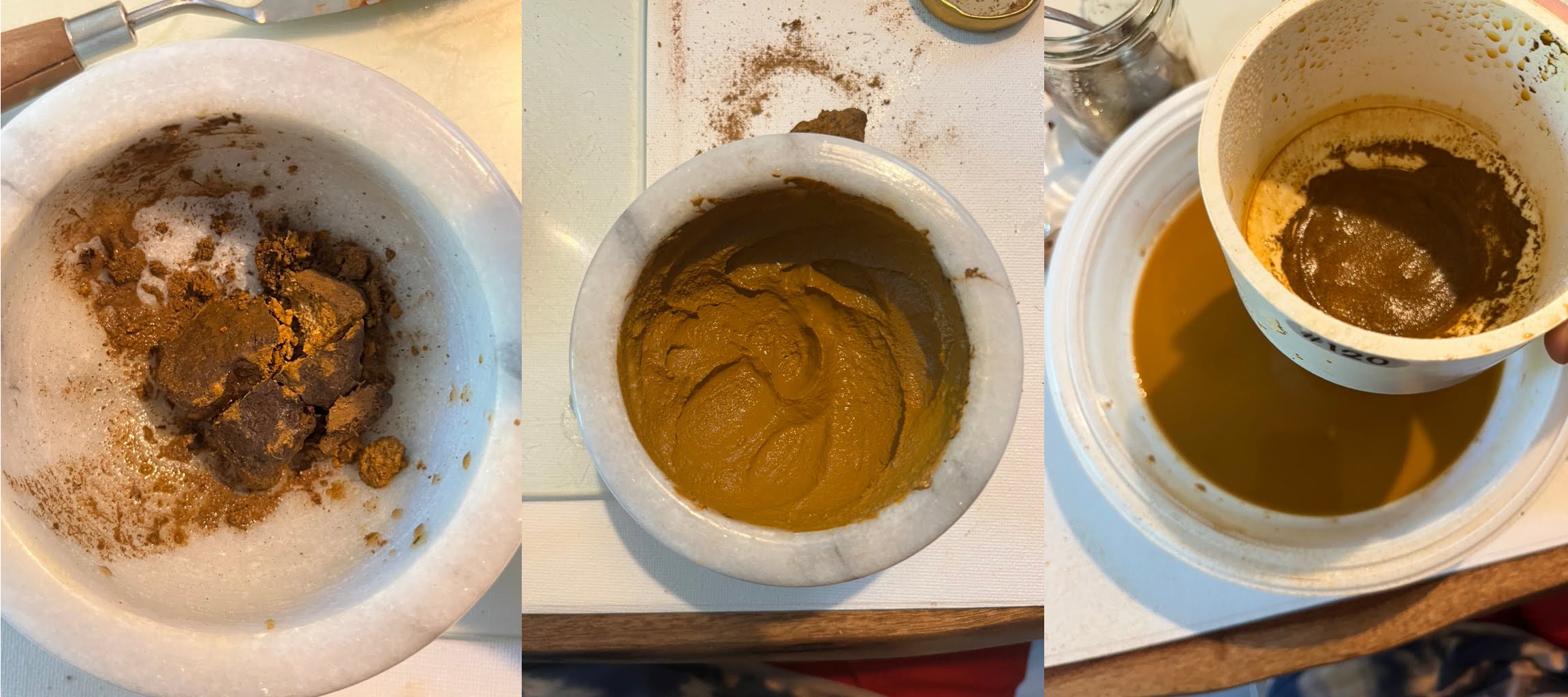
Levit locally sourced their Ochre by harvesting rocks on Cypress Mountain and Kitsilano Beach. Working with a mortar and pestle, sieve, glass plate, and muller, the pigment is combined with a binder over the following steps to create paint:
- The pigment-filled rocks are crushed with water inside the mortar and pestle.
- This slurry is repeatedly strained through a small sieve, grinding away any larger chunks until none remain.
- The water is left to evaporate until the ground pigment mineral is dry.
-
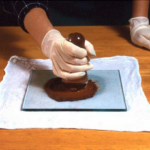
To make oil paint, the mineral is combined with linseed oil as a binder on a glass plate using a muller.
Levit found this experience gave them a more expansive view of the materiality of paint, noting a humbling effect as they connected with the earth as a creative material. As this was Levit’s first experience handmaking paint, the pigment was not fully refined and left visible texture as it was used. They felt this distinction significant, as grittiness was a reminder of the Ochre’s previous states.
-
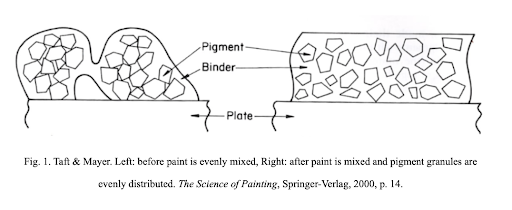
Step-by-step images of turning wildcraft pigment into paint with a diagram from “The Science of Painting” by Taft and Stulik
-
Step-by-step images of turning wildcraft pigment into paint with a diagram from “The Science of Painting” by Taft and Stulik
-
Step-by-step images of turning wildcraft pigment into paint with a diagram from “The Science of Painting” by Taft and Stulik
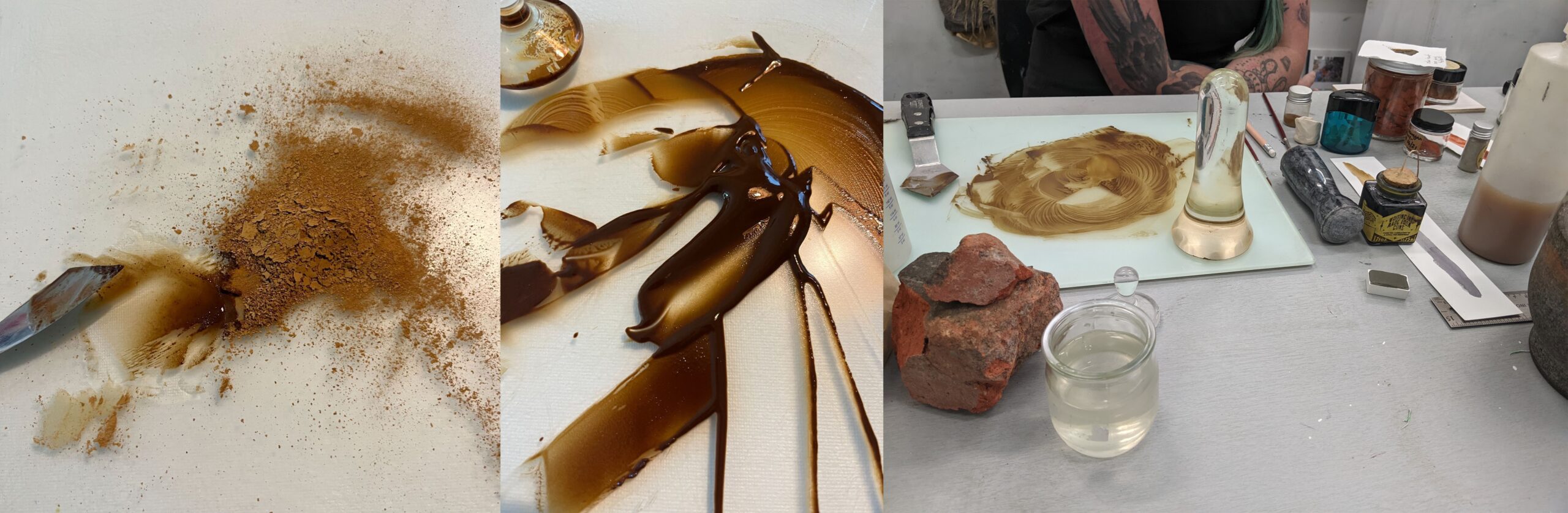
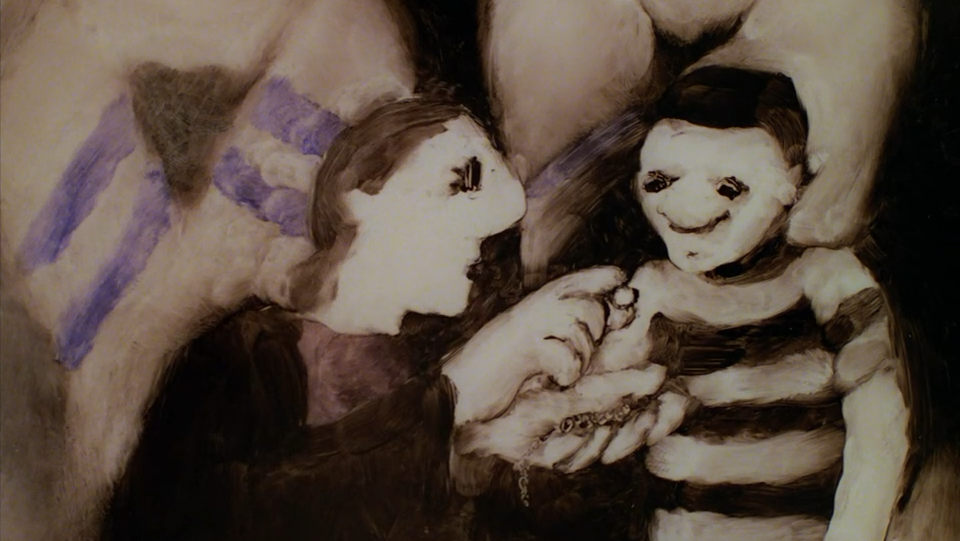
In addition to ochre paint made from harvested rocks, Levit experimented with foraged ochre in urban settings. They sourced a red brick and recycled it into paint, utilizing the same method as the raw ochre. Red bricks owe their colour to iron oxide, which means they contain a form of Ochre. Animating with pigment from this red brick, Levit practiced the paint-on-glass technique as a weaving loop. By painting over a smooth backlit surface, the grainy texture was further amplified. The unrefined texture made for a weaker tinting strength of the pigment, which was mediated through extra paint layering. Having found the brick along Vancouver’s seawall, Levit decided to depict human subjects to relate to its setting. The weaving loop format allows several movements to blend into each other, giving the effect of a longer animation with a limited amount of frames. The method is representative of the process of recycling and transformation of the material.
animated with ground Ochre from a found brick, this cyclical weaving loop echoes the process of recycling and transforming material.
For their final collaboration with Ochre, Levit worked with handmade raw ochre paint to make a connection between the material’s origin and its transformation. In the short animation, the Ochre dances across the screen, shifting between linear patterns, organic shapes, and recognizable figures. Through these subjects, Levit reflects on the interconnection between the materiality of Ochre and its deep connection to nature – both human and nonhuman. The linework and shapes switch between additive and subtractive forms, trying to capture “what is ephemeral about the everyday experience” (Levit). Set against bright, white backlighting, the paint’s handmade qualities come forward through its texture and naturally light opacity. The ethics of wildcrafting shaped the material limits Levit set for this animation: having made only a small amount of paint, they animated with preservation in mind, using a spatula to recover what they could between frames and reusing the same batch throughout.
Levit’s final comprehensive animated material exploration with wildcrafted Ochre paint-on-glass
Throughout Levit’s animation tests, they played with both improvisational and planned movements. This final work holds the two together, combining improvisations decided in the moment with figurative subjects rotoscoped (traced) from personal footage. In switching between these methods, Levit was inspired by the cyclical, repetitive process of working with wildcrafted paint.
Guide to making paint
A more detailed step-by-step guide to making paint from pigment by the Natural Earth Pigments company
Read the guide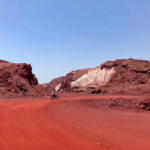
Ochre’s natural history
A thorough introduction to Ochre’s historic and contemporary use, written by leading ochre expert Heidi Gustafson
Read the article